Newsroom
Tether USDT Surpasses Ethereum in Major Valuation Shift
26 June, 2026 / News / AI / 645 reads / Tags: usdt, ethereum, tether, ramps, stablecoin
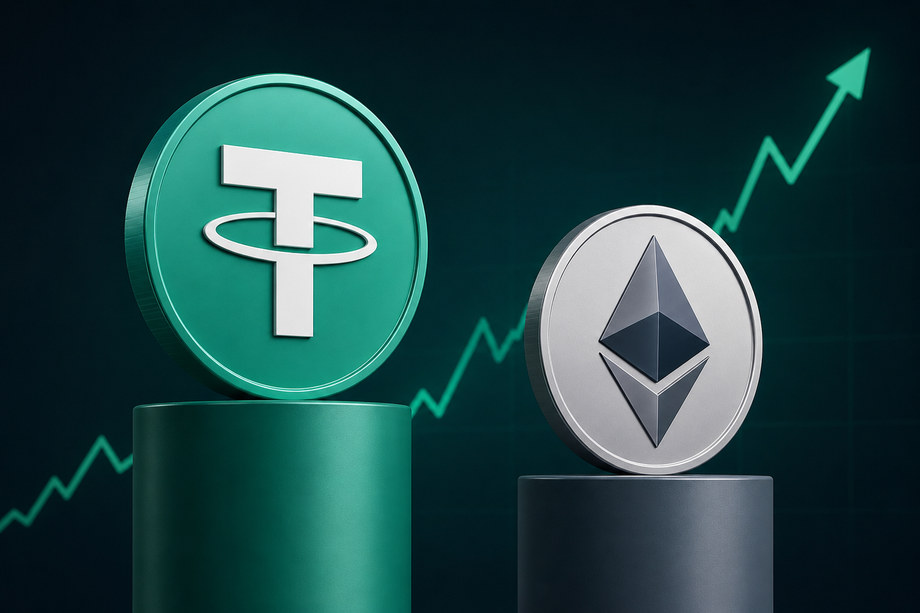
Tether's stablecoin USDT overtook Ethereum in market capitalization, reaching around $186 billion as ETH experienced a price drop to near $1,500 levels. This marks a notable change in crypto rankings driven by stablecoin demand and market conditions
The Market Cap Crossover
Tether's USDT briefly moved ahead of Ethereum to claim the second position by market capitalization behind Bitcoin. At the time of the shift, USDT stood at approximately $186.06 billion while Ethereum's valuation fell to about $185.66 billion following a roughly 5% price decline in 24 hours. ETH traded around $1,510 on major exchanges during this period.
This event represents one of the first times in roughly eight years that a stablecoin has held this position in the overall rankings. Ethereum later regained the spot as prices stabilized somewhat, but the occurrence drew attention to changing dynamics in asset valuations.
- USDT market cap reached $186 billion amid ongoing token issuance.
- Ethereum's market cap dropped below $185 billion after price movement.
- Stablecoins collectively account for nearly 15% of total crypto market capitalization.
- USDT maintains around 70% dominance within the stablecoin sector.
Factors Driving USDT Growth
Tether continues to issue new USDT tokens in response to demand for dollar-pegged liquidity in crypto markets. This issuance directly increases the stablecoin's circulating supply and market capitalization, which tracks the total tokens in circulation at its $1 peg.
Market observers noted increased preference for stability during periods of volatility. As risk assets faced pressure, capital flowed into stablecoins for liquidity and trading purposes. Tether's reserves reportedly exceeded $193 billion, supporting the expanded supply.
Broader stablecoin supply has reached record levels, contrasting with contractions seen in previous market cycles. One analysis described this as evidence of stablecoins establishing themselves as a core part of crypto infrastructure.
Ethereum Context and Ecosystem Developments
Ethereum continues to serve as the primary platform for decentralized finance, smart contracts, and layer-2 scaling solutions. Despite the temporary valuation change, it maintains a leading role in on-chain activity and developer engagement.
Recent Ethereum Foundation adjustments included executive departures and workforce changes. At the same time, new initiatives such as Ethlabs emerged, backed by entities including Bitmine and Sharplink, to support ongoing research and development.
Some Ethereum-aligned treasuries engaged in purchases during the price weakness. Sharplink acquired 5,000 ETH, its first such move in eight months, while Bitmine added substantial holdings.
- Circle's USDC surpassed XRP in market capitalization during the same session.
- USDC reached approximately $73.6 billion compared to XRP near $64 billion.
- Tether reported moving $100 billion in value across networks in record time.
Broader Implications for Crypto Structure
The valuation shift underscores the expanded role of stablecoins in providing on-ramps, off-ramps, and liquidity during various market conditions. USDT's growth aligns with its use in trading pairs, payments, and cross-chain transfers.
Observers pointed to symbiotic elements, as Ethereum infrastructure supports significant stablecoin activity through networks like Arbitrum. Regulatory attention on stablecoin operations and reserves remains ongoing, with focus on transparency and supply practices.
Tether CEO Paolo Ardoino has referenced expanding applications, including potential integration with AI systems and agentic economies requiring reliable digital dollar settlement.
Market data from sources like CoinGecko tracked the FDV changes as well, with USDT figures reaching higher levels in fully diluted terms amid the developments.
| Asset | Approximate Market Cap at Shift |
|---|---|
| USDT | $186 billion |
| ETH | $185.66 billion |
Disclaimer
This article was generated by AI using information from multiple industry sources. It has not been reviewed or verified by a human editor and may contain inaccuracies, omissions, or misinformation. Readers are encouraged to independently verify any information before making decisions based on its content.Associated articles

SharpLink Resumes ETH Purchases After Eight-Month Pause With 5,000 ETH Acquisition
Stablecoin Market Shrinks by $10 Billion in Sharpest Drop Since Terra Collapse

Bitmine Acquires 52K ETH Pushing Holdings Near 5% of Supply as Tom Lee Predicts Stronger Crypto Years Ahead

Bitmine Expands Ethereum Treasury to 5.77 Million ETH on Robinhood Chain Momentum
T. Rowe Price Launches First Actively Managed Multi-Token Crypto ETF
Latest articles

Michael Saylor Frames Bitcoin as Digital Energy Amid Strategy’s Expanding Credit Platform

Fed Research Links Crypto Ownership to Beliefs and Past Returns

Alibaba Seeks $10.2 Billion in Hong Kong Share Placement to Fund Full-Stack AI Push

Solana Activates First Slot Time Reduction to 350 Milliseconds on Mainnet