Newsroom
Cardano Unveils Two-Phase Dijkstra Upgrade Roadmap Targeting 2026-2027
18 August, 2026 / News / AI / Tags: peras, phase, dijkstra, governance, leios
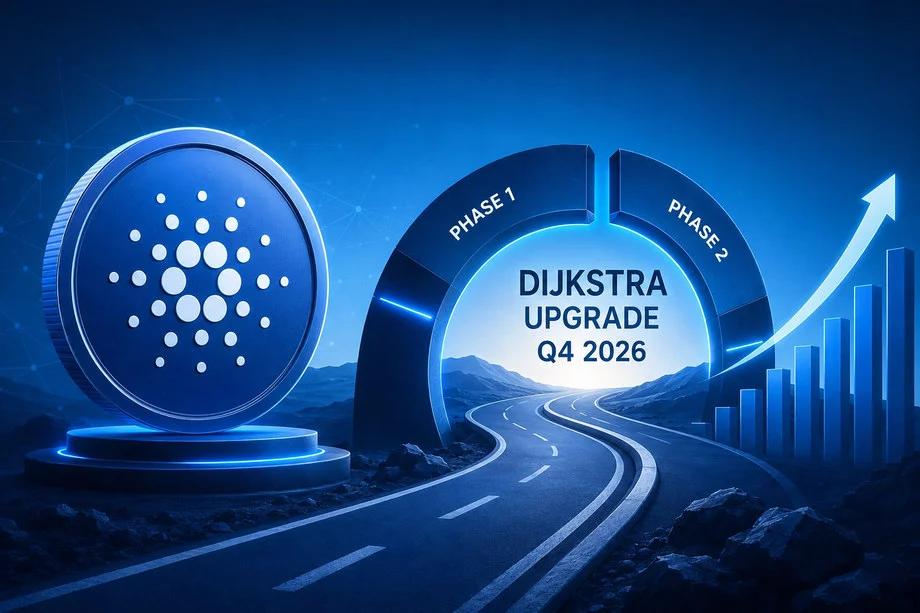
Intersect outlines Linear Leios for late 2026 and Peras for mid-2027 as developers shift focus to testing and ecosystem readiness ahead of key planning deadlines
Cardano is advancing its next major protocol upgrade under a newly detailed two-phase roadmap known as Dijkstra. Governance organization Intersect confirmed the plan remains on schedule, with teams now concentrating on testing, ecosystem preparedness and support for alternative node implementations as a September planning deadline approaches.
The upgrade addresses longstanding challenges around network throughput and transaction finality. It will proceed through structured testnet stages and on-chain governance votes before any mainnet activation.
Phase One Centers on Linear Leios and Throughput Gains
Phase one targets code completion in the fourth quarter of 2026. It introduces Protocol Version 12 and establishes the Dijkstra ledger era. The centerpiece is Ouroboros Linear Leios, which adds supplementary Endorser Blocks alongside existing Ranking Blocks based on the Praos security model.
Endorser Blocks carry references to additional transactions rather than the full data. Once certified by aggregated signatures representing a 75 percent quorum of active stakeholders, a subsequent Ranking Block applies those transactions to the ledger. This design allows higher transaction volumes without enlarging blocks or accelerating slots.
Accompanying features include nested transactions under CIP-118, which enable applications to cover network fees for users; guard scripts under CIP-112 that separate validation logic; account-address enhancements; simplified staking-reward withdrawals via CIP-181; PlutusV4 updates; new transaction data structures; and protocol-parameter adjustments. These changes also install the codec extensions and parameters required for the later phase, though Peras itself will remain inactive.
Phase Two Activates Ouroboros Peras for Faster Finality
Phase two is planned as an intra-era hard fork in the second quarter of 2027. It will activate Ouroboros Peras, adding a stake-pool voting layer designed to accelerate settlement compared with standard Praos chain-depth rules.
Because phase one already embeds the necessary block structures and parameters, phase two can proceed without creating an entirely new ledger era. The second phase will still require its own sequence of preview and pre-production deployments plus a separate on-chain governance action.
Staged Testing and Governance Path
Both phases follow a consistent rollout sequence. A Dijkstra-compatible node first becomes available to testnet operators. A governance vote then occurs on the Preview network, followed by a roughly two-week testing window covering integration, tooling validation, Endorser Block propagation and throughput benchmarks.
The same steps repeat on Pre-production with a shorter one-to-two-week window. Mainnet activation depends on a final Hard Fork Initiation governance action ratified by delegated representatives, stake-pool operators and the Constitutional Committee. No fixed mainnet activation dates have been set beyond the code-completion and phase targets.
Intersect has published a tracker for developers and node operators to monitor testing requirements. The organization also noted continued progress on Amaru, a Rust-based alternative node implementation that can already relay, validate and synchronize with the network tip. Its developers aim for mainnet block production in November 2026.
Governance Tools and Broader Ecosystem Moves
In parallel, CIP-179 has introduced an on-chain system for structured surveys and polls under metadata label 17. The mechanism supports ranked choices, point allocation, numerical ranges and comparisons, giving the community a coordination step between informal discussion and formal proposals under the existing CIP-1694 framework. Client-side tallies and both public and sealed response options are available, with tools such as Tessera already integrating the system.
Cardano founder Charles Hoskinson recently described plans for private decentralized finance through the Midnight privacy sidechain. Under the model, ADA would be locked in a Cardano smart contract to generate a private stablecoin that could move across ecosystems including Ethereum, Solana and Hyperliquid while preserving transaction privacy.
Additional technical adjustments under consideration include a constitutional amendment to support governance of the new capabilities and parameters related to fair minimum fees and staking rewards leverage.
Market Context Amid Upgrade Preparations
As of mid-August 2026, ADA traded near $0.175 to $0.177, with 24-hour volume showing notable increases in some reports while market capitalization hovered around $6.4 billion to $6.5 billion. The token ranked near the 15th position by market capitalization during a period of relatively range-bound trading.
Intersect’s latest weekly update stated that the agreed technical scope and target dates remain unchanged. Teams are shifting emphasis from pure engineering toward testnet reporting, ecosystem readiness and support for multiple node implementations as the September planning window nears.
The multi-year development cycle for features such as Leios and Peras underscores the deliberate, community-governed approach that has characterized Cardano’s evolution. Success of the Dijkstra program will depend on the completion of testnet cycles, the effectiveness of new governance tools such as CIP-179, and the subsequent on-chain ratification process.

Disclaimer
This article was generated by AI using information from multiple industry sources. It has not been reviewed or verified by a human editor and may contain inaccuracies, omissions, or misinformation. Readers are encouraged to independently verify any information before making decisions based on its content.Tired of the noise?
Let the bots trade for you.
Trade 24/7, without emotion, with data-driven strategies.
Associated articles

Cardano Founder Ties Network Completion to Leios Throughput Upgrade as Testnet Hits Peak Capacity
Cardano Prepares Dijkstra Era Upgrade With Phased Hard Fork Timeline Into 2027

Cardano Activates Protocol Version 11 in Historic Governance-Led Hard Fork
Cardano Activates Van Rossem Hard Fork, Marking First Fully Onchain Governed Upgrade

BNB Chain Prepares Pasteur Hard Fork for August 25 Activation
Latest articles

SpaceX and Tesla Set Up Committees to Explore Merger That Would Combine Holdings of Over 30,000 Bitcoins

UK Banks Face Thousands of Complaints Over Crypto Transfer Restrictions

Ripple Backs SEC Proposed Crypto Asset Rules After $150 Million Legal Battle

Blockchain.com Introduces Options Trading on Seven Major Crypto Assets