Newsroom
Cardano Prepares Dijkstra Era Upgrade With Phased Hard Fork Timeline Into 2027
7 September, 2026 / News / AI / Tags: dijkstra, node, fork, leios, cardano
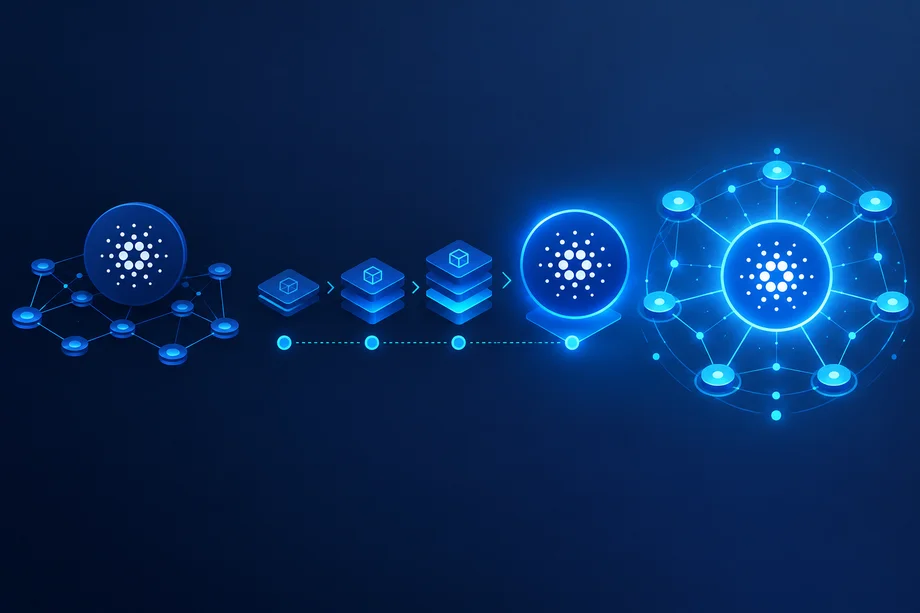
Cardano advances its Dijkstra development phase through staged node releases, a dedicated testnet, and a two-part feature rollout targeting mainnet activation between late 2026 and early 2027
Cardano is moving forward with preparations for its Dijkstra era, a major network upgrade designed to introduce new transaction capabilities and consensus improvements. The plan centers on a two-phase implementation managed through successive node software releases, community testing, and governance steps overseen by the membership-based organization Intersect.
Two-Phase Feature Rollout
The upgrade follows a structured sequence. The first phase focuses on Nested Transactions and Linear Leios, with deployment targeted for the Cardano mainnet by the end of 2026. The second phase will bring in the Peras feature through a separate intra-era hard fork expected in the second quarter of 2027.
This approach allows incremental integration of the new capabilities while maintaining network stability. Development work continues across core node software, broader ecosystem readiness, and supporting tools.
Upcoming Node Releases
Four major Haskell-based node versions form the technical backbone of the transition. Cardano-node-11.1.1 is scheduled for availability around September 7, 2026, for mainnet use. It removes the legacy tracing system and resolves known issues originating from Genesis.
Cardano-node-11.2 is expected roughly one month later. This release will deliver the core Dijkstra feature set in a form suitable for testing, though it will exclude Leios components that primarily affect consensus and block production. It will not serve as the final hard fork candidate.
The subsequent Cardano-node-11.3 version, anticipated within one to two months after the previous release, is positioned as the hard fork candidate. It is set to incorporate the full suite of Dijkstra functionalities, including Leios, enabling the network to cross the hard fork threshold.
Cardano-node-12.0 will serve as the definitive hard fork release, though its exact launch date has not yet been fixed.
| Node Release | Key Features | Planned Timing |
|---|---|---|
| 11.1.1 | Removes legacy tracing, addresses Genesis issues | Around September 7, 2026 |
| 11.2 | Dijkstra features for testing (excludes Leios) | Within about one month after 11.1.1 |
| 11.3 | Hard fork candidate, includes full Dijkstra features including Leios | One to two months after 11.2 |
| 12.0 | Definitive hard fork release | To be determined |
Public Testing Environment and Community Events
After the release of node 11.2, a public test network called DijkstraNet will become available. Participants will be able to evaluate components such as Plutus V4, Nested Transactions, and CIP-50. DijkstraNet will operate in parallel with MusashiNet, which continues to support ongoing Leios development and assessment.
Intersect has also scheduled node diversity workshops to support infrastructure readiness. One session is planned in Singapore on October 6 during TOKEN2049, followed by another in London on November 13 and 14.
Governance activity is expected to include public presentation of constitutional amendments connected to the Dijkstra changes, giving stakeholders an opportunity to engage with the proposed updates.
Hard Fork Timing Windows
After a recalibration of the technical delivery schedule, the projected window for the Dijkstra hard fork on mainnet has been refined. A moderate-confidence range runs from December 5, 2026, to January 4, 2027. A higher-confidence period extends from February 24, 2027, to March 26, 2027.
Progress on the intermediate node releases and testing phases will determine where the activation ultimately falls within these ranges. The phased structure is intended to provide extended opportunities for technical validation and community input before the full upgrade takes effect.

Disclaimer
This article was generated by AI using information from multiple industry sources. It has not been reviewed or verified by a human editor and may contain inaccuracies, omissions, or misinformation. Readers are encouraged to independently verify any information before making decisions based on its content.Tired of the noise?
Let the bots trade for you.
Trade 24/7, without emotion, with data-driven strategies.
Associated articles
Cardano Unveils Two-Phase Dijkstra Upgrade Roadmap Targeting 2026-2027

Cardano Activates Protocol Version 11 in Historic Governance-Led Hard Fork

Cardano Founder Ties Network Completion to Leios Throughput Upgrade as Testnet Hits Peak Capacity
Cardano Activates Van Rossem Hard Fork, Marking First Fully Onchain Governed Upgrade

Solana Alpenglow Consensus Reaches Devnet With 150-Millisecond Finality Target
Latest articles

SkyAI Exits Solana Holdings Completely, Launches $201 Million Share Buyback

Strategy Buys 267 Bitcoin and Raises Preferred Share Buyback Cap to $3 Billion

Dormant 2013 Bitcoin Wallets Shift Over $67 Million After More Than a Decade

Binance Rolls Out AI Pro Tool for Chat-Based Automated Trading Strategies