Newsroom
US Treasury Orders Cutoff of MEXC Global Over $16 Billion in Alleged Illicit Crypto Flows
9 November, 2026 / News / AI / Tags: mexc, fincen, sanctions, iranian, sanctioned
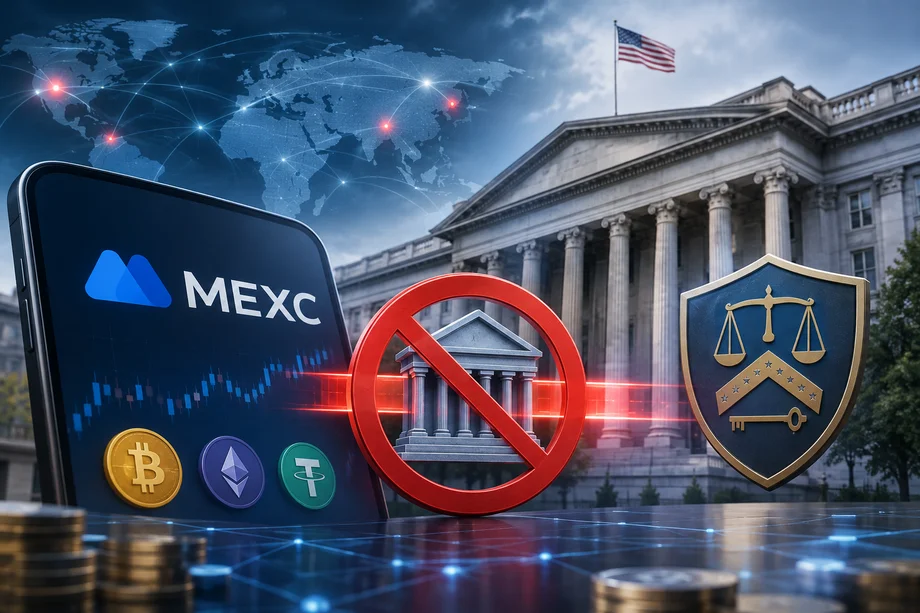
FinCEN bars US banks from processing transfers involving the exchange, citing sanctions evasion linked to Iran, Russia and North Korea as part of a broader enforcement campaign
The US Treasury Department’s Financial Crimes Enforcement Network has issued an order that will prohibit American financial institutions from processing fund transfers involving cryptocurrency exchange MEXC Global. The measure, announced on November 6, targets what regulators described as at least $16 billion in transactions tied to sanctions evasion, cybercrime and other illicit activity between May 2021 and May 2026.
The restriction forms part of Operation Economic Outcast, a Treasury initiative aimed at disrupting financial networks that allegedly help sanctioned entities move funds through both traditional banking channels and cryptocurrency platforms. The order relies on Section 9714 of the Combating Russian Money Laundering Act and takes effect 30 days after its publication in the Federal Register. It has no set expiration date.
Details of the Alleged Activity
FinCEN identified MEXC as a foreign financial institution of primary money laundering concern. According to the agency, the exchange facilitated transactions involving entities connected to Russia, Iran and North Korea despite stated restrictions on users from sanctioned jurisdictions. Officials attributed the activity in part to weaknesses in the platform’s anti-money-laundering controls.
Nearly $1.5 billion was linked to Russian sanctions evasion, including roughly $232 million in direct transactions with entities already sanctioned by the United States, European Union or United Kingdom. Regulators said MEXC continued processing activity involving the sanctioned Russian exchanges Garantex and its successor Grinex as recently as June 2026. Approximately $200 million involved A7A5, a ruble-backed stablecoin associated with Russia’s A7 financial network.
On the Iranian side, FinCEN alleged about $1 billion in direct transactions with more than 40 Iranian cryptocurrency exchanges. Another $22 million involved Iran’s central bank and the Islamic Revolutionary Guard Corps, including its Qods Force. Some sources put the overall figure at $16.7 billion. The order covers MEXC Global and named affiliates in jurisdictions including Seychelles, Estonia, Switzerland, the United Kingdom and Singapore, along with any successor entities.
Exchange Response and Operational Status
MEXC, registered in Seychelles and serving users in more than 170 countries, stated that its platform continues to function normally and that customer assets are secure. The company said its legal and compliance teams are reviewing the order and that it has launched an independent examination of its anti-money-laundering and sanctions procedures. It also indicated plans for constructive engagement with FinCEN and other authorities.
Chief Executive Vugar Usi reported that deposits and withdrawals remained available, although withdrawal volumes had risen. He described the activity as orderly and said customer support teams were assisting users. Usi added that the exchange was working with blockchain analytics firms, including Elliptic, to address any special risk classifications applied to its addresses.
Treasury estimates placed MEXC’s daily transaction volume above $1 billion and its reserves at approximately $5 billion as of September 2026.
Market and Counterparty Reactions
The announcement has already prompted adjustments by other market participants. Reserve said it plans to withdraw liquidity support for its LCAP and CMC20 tokens from MEXC, while leaving liquidity on other venues and on-chain markets unaffected. The firm cited the FinCEN order as the reason for the change.
OKX founder and Chief Executive Star Xu warned users against sending funds directly from MEXC, noting that the exchange had strengthened its controls ahead of the formal effective date. He stated that funds associated with affected platforms may be frozen and that related accounts could face further investigation. Users subsequently reported delays, risk screenings or refund reviews for transfers from MEXC arriving at OKX, Binance and Gate. Bitget Wallet temporarily stopped accepting card deposits identified as originating from MEXC.
The order does not freeze customer crypto balances or prohibit all trading worldwide. It specifically restricts US financial institutions from initiating or receiving transfers involving the covered entities. Existing Bank Secrecy Act reporting requirements and sanctions obligations remain in force, and violations can carry civil or criminal penalties.
Related Sanctions Actions
On the same day, the Treasury’s Office of Foreign Assets Control designated eight Canadian money services businesses accused of facilitating transactions linked to Iranian entities and sanctioned cryptocurrency exchanges. The firms, operating in Ontario and British Columbia, were alleged to have converted Iranian rials into cryptocurrencies that moved through accounts tied to Iranian exchanges and the IRGC. Some activity was also connected to drug proceeds associated with a former Olympic athlete accused of running an international narcotics network.
Canada’s financial intelligence agency FINTRAC confirmed coordination with US authorities and reported that it had revoked 161 money services business registrations since the start of 2026. The agency said it had imposed more than C$198 million in administrative penalties against nine firms for compliance failures during the past year and referred 28 additional cases to law enforcement.
Treasury Secretary Scott Bessent stated that Canada cannot serve as a safe haven for illicit financial facilitators providing sanctions-evasion services to Iran. The combined actions continue a broader campaign targeting Iranian and Russian use of cryptocurrency channels that began earlier in 2026.
MEXC has faced regulatory attention in other jurisdictions in the past, including a prior cease-and-desist order in Dubai related to alleged unlicensed operations. The current FinCEN measure represents one of the more significant restrictions placed on a major global exchange’s access to the US financial system in recent years.
Disclaimer
This article was generated by AI using information from multiple industry sources. It has not been reviewed or verified by a human editor and may contain inaccuracies, omissions, or misinformation. Readers are encouraged to independently verify any information before making decisions based on its content.Tired of the noise?
Let the bots trade for you.
Trade 24/7, without emotion, with data-driven strategies.
Associated articles

US Treasury Cuts Off Crypto Exchange MEXC Over Alleged $16 Billion in Illicit Flows

US Treasury Designates Russian A7 Network Transnational Criminal Group Over Iran Sanctions Evasion

US Treasury Sanctions Shelbit and Aban Tether Over Alleged Iran Sanctions Evasion

Binance Restricts Transactions With HTX, EXMO and 14 Other Crypto Platforms Over Sanctions Compliance
DOJ Reviews Binance Compliance With 2023 Settlement Amid Iran Sanctions Probe
Latest articles

Finnish Homes Heat with Bitcoin Miners While BTC Holds Above $70,000
Zcash Developers Propose Cutting Block Times to 20 Seconds After NU7

Senator Blumenthal Sets January Deadline for Binance, Tether and Trump Crypto Firms

Nvidia Board Launches Probe Into CEO Jensen Huang Over Foreign Intelligence Reports