Newsroom
Bitcoin-Altcoin Rotation Collapses: Has Altseason Era Ended?
21 June, 2026 / News / AI / 587 reads / Tags: altcoin, altcoins, bitcoin, cryptoquant, rallies
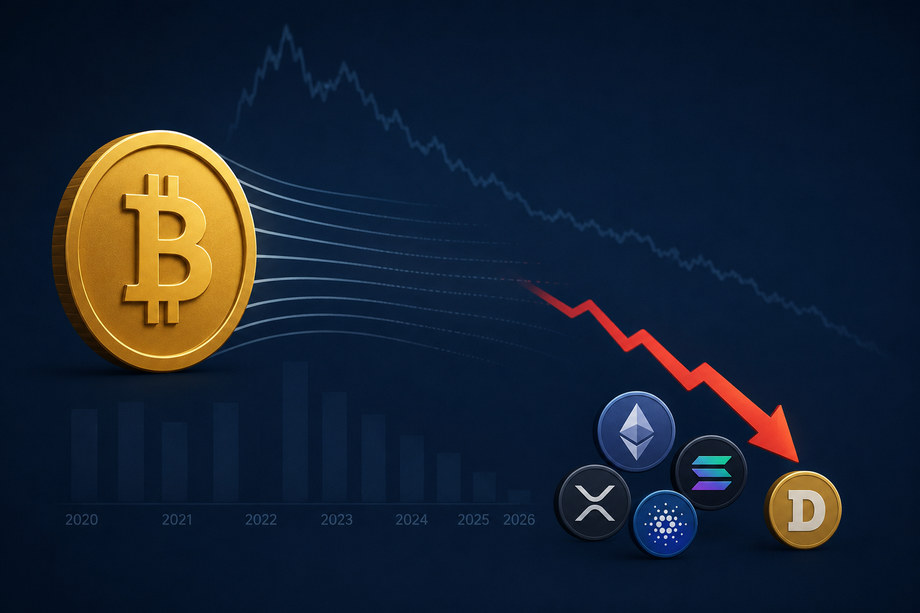
The traditional flow of capital from Bitcoin gains into a broad range of altcoins has sharply weakened since 2021, with trading volumes in BTC pairs hitting multi-year lows and capital concentrating in fewer large assets
Market Structure Shift in Crypto Cycles
Data from on-chain analytics provider CryptoQuant indicates that the once-reliable pattern of investors rotating profits from Bitcoin into smaller cryptocurrencies has significantly diminished. This change challenges the assumptions that drove previous bull market phases where altcoin seasons followed Bitcoin rallies.
In earlier cycles, particularly 2017-2018 and 2021, gains in Bitcoin frequently fueled widespread buying across alternative tokens. Trading volumes for altcoins priced in BTC surged during those periods, supporting broad rallies. Recent metrics, however, show these volumes have collapsed to levels not seen since 2021, even as Bitcoin has maintained relative strength.
- BTC-pair altcoin trading volume remains near post-2021 lows.
- Capital increasingly concentrates in top large-cap altcoins rather than spreading widely.
- Number of altcoins with over $1 billion market cap dropped from around 106 in 2021 to about 50 in mid-2026.
Insights from CryptoQuant CEO Ki Young Ju
Ki Young Ju, CEO of CryptoQuant, highlighted the trend in recent statements. He noted that the Bitcoin-to-altcoin asset rotation that once powered alt seasons has "basically disappeared." According to his analysis, the era of altcoins pumping simply because Bitcoin pumps may be over.
This view is supported by aggregated data excluding major assets like Ethereum, XRP, BNB, and Solana to focus on mid- and lower-cap tokens. The decline in activity suggests investors are no longer using Bitcoin gains as readily to fund speculative positions in smaller coins.
Rising Market Concentration
Beyond reduced rotation, the altcoin sector shows greater concentration. As of recent data, the non-Bitcoin, non-stablecoin market totaled roughly $600 billion, with the top 10 altcoins capturing about 80.5% of that value. This shift means fewer tokens benefit from available capital flows compared to past cycles.
Observers point to a maturing market where participants evaluate projects based on fundamentals such as actual usage, revenue generation, and ecosystem development rather than broad momentum. Stablecoin trading pairs have also gained prominence, potentially reducing Bitcoin's direct influence on many altcoins.
| Period | Capital Flow Behavior |
|---|---|
| 2017-2018 & 2021 | Strong BTC profits rotated into wide altcoin rallies |
| Post-2021 | Weakened rotation, focus on select large caps and fundamentals |
Bitcoin Dominance and Near-Term Outlook
Bitcoin's market dominance has shown signs of rebounding from key support levels around 58.75%, potentially moving toward 60%. Analysts like Rekt Capital have noted bullish divergence on dominance charts, suggesting altseason could be postponed as capital favors Bitcoin.
Ki Young Ju has emphasized selectivity, suggesting that narrative-driven tokens without real utility face challenges. Stronger performance may come from areas like revenue-generating DeFi protocols, stablecoins, tokenized real-world assets, and AI-related applications. He has advised caution, noting that the vast majority of altcoins may not warrant attention in this environment.
- Real revenue and usage in DeFi and tokenized assets
- Project-specific adoption metrics and ecosystem growth
- Broader liquidity conditions and institutional preferences
Implications for Investors and Traders
This evolution points to a more discerning crypto market. Broad, indiscriminate altcoin rallies may become rarer, replaced by targeted opportunities in projects demonstrating tangible value. While Bitcoin continues to attract significant inflows, including through traditional finance channels, altcoin success will likely depend on individual merits rather than overall market beta.
Disclaimer
This article was generated by AI using information from multiple industry sources. It has not been reviewed or verified by a human editor and may contain inaccuracies, omissions, or misinformation. Readers are encouraged to independently verify any information before making decisions based on its content.Associated articles

Ethereum Breaks Key Bitcoin Resistance as Tom Lee Signals Market Shift

Wintermute Report Shows Institutions Account for Record 72% of Spot OTC Crypto Flow

Bitcoin Holds Near $64K as SpaceX Mega-IPO Dominates Markets
Strategy CEO Sets Bitcoin Debt Risk Threshold at $8,000 to $10,000

Satsuma Shareholders Vote to Liquidate Bitcoin Holdings and Delist from London Exchange
Latest articles

Capital B Adds 5 Bitcoin to Treasury, Total Holdings Reach 3,145 BTC

Michael Saylor Frames Bitcoin as a Deep Freeze for Long-Term Wealth Storage

World Gold Council Chief Predicts Bitcoin Path to Zero as CZ Offers Counterpoint

Apple Patches macOS Screen Sharing Flaw Used to Install Monero Miners