Newsroom
Zcash NU7 Upgrade Goes Live With 25-Second Block Times and Privacy Enhancements
6 November, 2026 / News / AI / Tags: zcash, upgrade, shielded, intervals, privacy
Zcash's Network Upgrade 7 activated on mainnet at block 3,543,405, slashing target block intervals from 75 to 25 seconds while introducing shielded transaction limits and a fee reserve mechanism for long-term sustainability
Network Speed Boost and User Impact
Zcash activated its flagship NU7 upgrade on November 6, 2026, enabling blocks to be produced at a target interval of 25 seconds instead of the previous 75-second spacing. This change multiplies network throughput roughly threefold without altering the fixed 21 million ZEC supply cap or the scheduled daily issuance of coins. The upgrade process ran smoothly on mainnet, with the new rules taking effect once miners reached the required block height.
Users depositing or receiving ZEC now face a significantly compressed confirmation timeline. An exchange requiring six confirmations, for example, would target roughly 2.5 minutes instead of 7.5 minutes under the prior spacing. Merchants or wallets that rely on multiple confirmations before finalizing funds stand to benefit similarly, though actual wait times hinge on mining difficulty adjustments and exchange policies.
Shielded transactions, which underpin Zcash's privacy model, also gain from the faster pace. Orchard capacity estimates rose from about 2.9 to 6.6 transactions per second under the new per-block limits, easing resource demands on wallets that must scan the chain for decryption keys. Nodes and wallets updated to Zebra 7.0.0 or compatible software maintained full compatibility, with no widespread disruptions reported.
This retirement clears outdated code but affects a small subset of legacy users. The foundation had provided extended notice and outlined future recovery possibilities, though no approved mechanism exists yet.
Miner Rewards and Fee Dynamics
Transaction fees shifted distribution under NU7, with miners receiving 40 percent immediately while the remaining 60 percent flows into a Network Sustainability Mechanism. These reserved funds are slated to support new mining rewards beginning around February 2031, helping preserve the network's long-term economics. The block subsidy itself was reduced proportionally so daily issuance remains steady despite the higher block frequency.
Miners and pools continue earning rewards, but the increased block cadence requires operators to track fee shares across more intervals. Early observations after activation showed average intervals around 39 seconds as the network stabilized from its prior difficulty target.
Price Reaction and Market Context
Zcash traded near $1,283 following the upgrade, reflecting a 2.24 percent decline in the 24 hours prior. Broader market pressures, including leveraged liquidations exceeding $15 million, contributed to the move alongside the token's position within a recent consolidation range between approximately $1,101 and $1,315.
Institutional flows showed mixed signals, with recent ETF net outflows totaling millions offset by a $3.43 million inflow on one day. Analysts noted the upgrade's potential to support adoption through faster private payments, though the legacy fund retirement and fee reserve mechanics added minor uncertainty for some holders.
Forward-Looking Developments
The NU7 changes clear the way for next-stage work, including Project Tachyon aimed at further scalability and privacy improvements. Developers also continue exploring quantum-safe recovery options for affected legacy funds. Node operators and wallet maintainers reported no immediate operational hurdles after the activation.
Early network metrics indicate the upgrade maintained security while expanding capacity for shielded activity. As the ecosystem tests real-world payment flows and bridge activity, the updated mechanics will reveal how the sustainability reserve performs in practice.

Disclaimer
This article was generated by AI using information from multiple industry sources. It has not been reviewed or verified by a human editor and may contain inaccuracies, omissions, or misinformation. Readers are encouraged to independently verify any information before making decisions based on its content.Tired of the noise?
Let the bots trade for you.
Trade 24/7, without emotion, with data-driven strategies.
Associated articles
Zcash Activates NU7 at Block 3,543,405 to Cut Block Times to 25 Seconds
Zcash Activates NU7 Upgrade on Testnet with 25-Second Blocks
Zcash NU7 Upgrade Set for November 5 After Holders Back Faster Blocks and Halvings
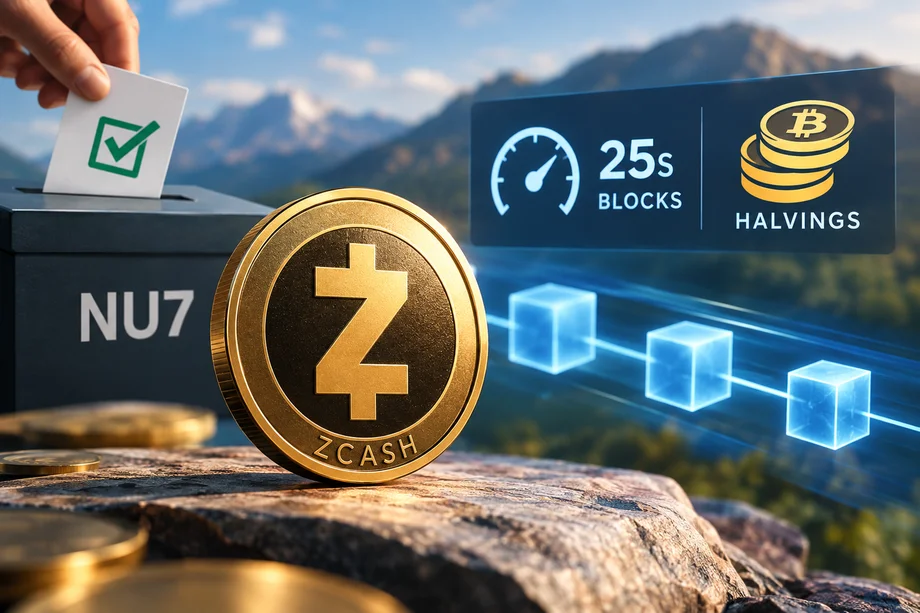
Zcash Holders Approve 25-Second Blocks and Retain Halving Schedule in NU7 Vote

Zcash Sets Ironwood Network Upgrade for July 28 Activation
Latest articles

Greece Passes 10% Crypto Gains Tax With €500 Annual Exemption

GOPAX Halts All Services After Hack Threat, Moves Assets to Cold Storage

Keel Infrastructure Dumps Entire Bitcoin Treasury for $192 Million as It Shifts to AI

Hyperliquid Strategies Applies for U.S. Futures Broker License to Access Onchain Perpetual Markets