Newsroom
Spain Empowers Anti-Money Laundering Unit to Freeze Crypto Accounts Without Court Order
26 November, 2026 / News / AI / Tags: sepblac, spain, decree, freeze, suspension
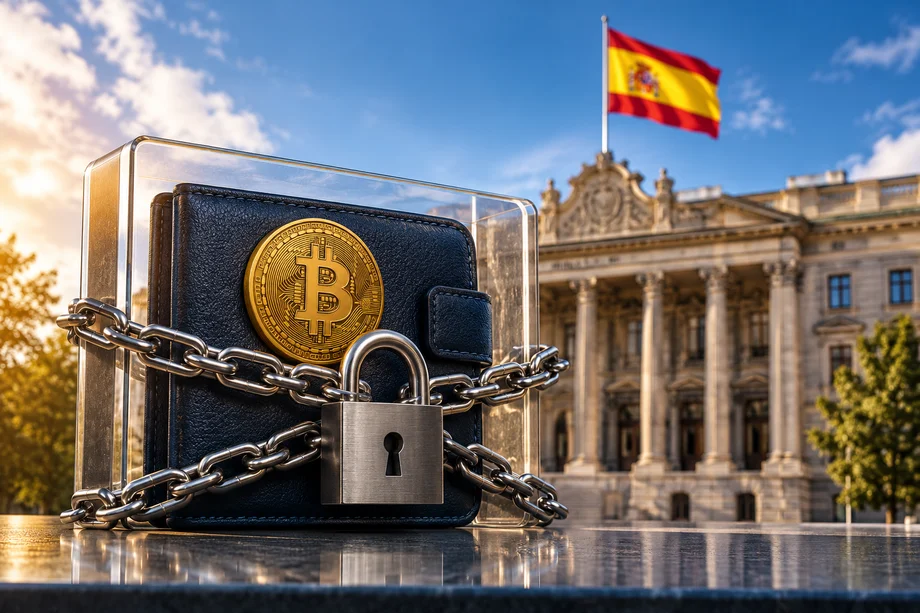
A new royal decree allows Sepblac to suspend crypto, bank and payment accounts for up to five business days on its own analysis, taking effect in late January pending parliamentary approval
Spain has granted its financial intelligence unit broader authority to act quickly against suspected illicit finance involving digital assets. Under Real Decreto-ley 44/2026, published in the official state gazette on November 25, 2026, Sepblac can now freeze crypto-asset accounts, bank accounts and payment accounts for a limited period without first obtaining a judge’s approval.
The measure inserts a new Article 46 bis into Ley 10/2010, the country’s primary anti-money laundering statute. Sepblac may trigger the suspension when it identifies indications of money laundering or terrorist financing. The agency can act on its own analysis rather than waiting for a formal request from a foreign financial intelligence unit, which had been the previous requirement.
Scope and Duration of Freezes
Account suspensions are limited to a maximum of five business days. For transactions already in progress, Sepblac can block the movement for up to ten business days. These temporary holds are designed to prevent the movement of funds while the unit conducts its analysis and, if warranted, refers the matter to judicial or police authorities.
Once the initial period expires, the freeze ends automatically unless a public prosecutor obtains a court order to ratify or extend it. When a suspicious transaction report from a regulated firm prompts the action, Sepblac must issue any suspension order within three business days of receiving the report.
Effective Date and Parliamentary Process
The royal decree-law is scheduled to take effect on January 25, 2027, approximately two months after publication. As a decree-law, it carries immediate force of law but requires validation by Spain’s parliament within 30 days of publication. With the Cortes dissolved in some procedural contexts, that responsibility may fall to the Permanent Deputation.
Crypto-asset service providers operating in Spain will have until the effective date to prepare for the possibility of direct freeze orders from Sepblac.
Context of Spain’s Anti-Money Laundering Framework
The change forms part of efforts to strengthen Spain’s preventive framework ahead of its mutual evaluation by the Financial Action Task Force. Sepblac has historically focused on gathering intelligence and referring cases rather than exercising direct freeze powers domestically. The new provision shortens the interval between identification of risk and temporary restriction of access to funds.
Court-driven seizures of crypto assets had already been rising. In 2025, Spanish courts assigned more than 17.4 million US dollars in crypto assets to the Office for Asset Recovery and Management. The administrative freeze mechanism adds a faster interim tool alongside existing judicial processes.
The decree itself forms part of a broader package primarily addressing consumer credit rules and the transposition of related European Union directives. The anti-money laundering amendment appears in a final provision of the text.
Custodial platforms and other regulated crypto service providers in Spain face the most immediate operational implications, as accounts held with them fall within the reach of the new suspension power. The temporary nature of the freezes and the requirement for subsequent judicial involvement for any extension provide defined boundaries on the authority.
Disclaimer
This article was generated by AI using information from multiple industry sources. It has not been reviewed or verified by a human editor and may contain inaccuracies, omissions, or misinformation. Readers are encouraged to independently verify any information before making decisions based on its content.Tired of the noise?
Let the bots trade for you.
Trade 24/7, without emotion, with data-driven strategies.
Associated articles

T3 Crime Unit Freezes $450M in Illicit Crypto Funds Tied to Hacks and Terror Financing

Germany Advances Powers for Customs to Freeze Crypto Assets Over $115,000 Without Charges
Poland Advances Bill to Include Cryptocurrencies in Sanctions Framework

Trump Directs Fed to Review Fintech and Crypto Access to Payment Systems

Bulgaria Approves Crypto Reporting Law Aligning with EU Tax Rules
Latest articles

Zodia Custody Confirms Data Breach After Probe Attempts, Client Contact Details Accessed

KuCoin Ends Monero Spot Trading on November 30 Amid Privacy Coin Restrictions

Cournot Secures $5 Million to Advance AI-Native Oracle for Onchain Verification

PrimeXBT Marks Eighth Anniversary With Expanded Multi-Asset Platform and Deposit Bonus