Newsroom
TSMC Weighs 3D DRAM at Nvidia Request, Then Affirms Focus on Logic Foundry
8 November, 2026 / News / AI / Tags: tsmc, memory, dram, foundry, logic
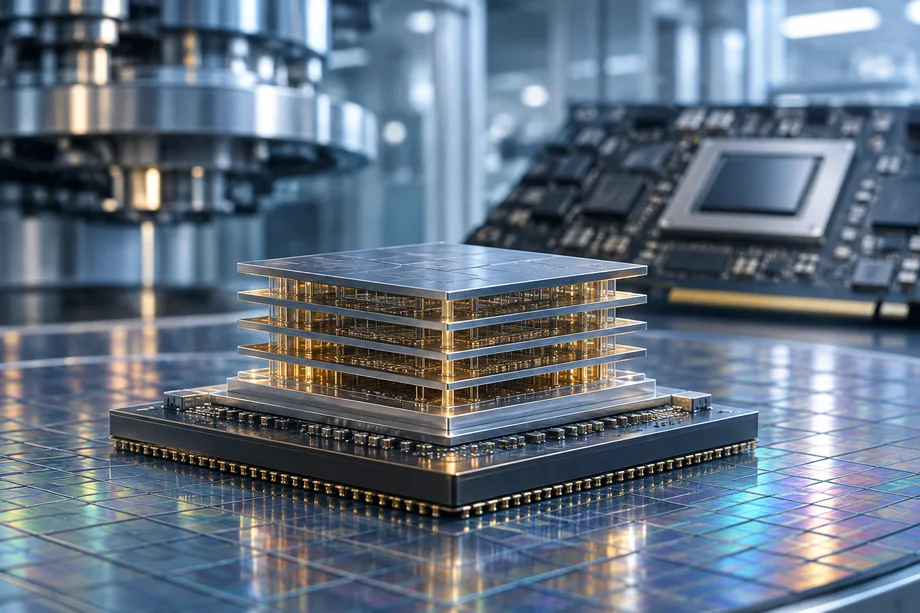
Reports of early planning for stacked memory chips amid AI-driven shortages meet a firm company statement that production remains years away and outside its core business
Taiwan Semiconductor Manufacturing Co. has drawn attention after reports that the company began internal discussions on producing 3D DRAM following a request from Nvidia, its largest customer. The development comes against a backdrop of tight memory supplies and rising prices driven by artificial intelligence hardware demand. TSMC later stated that it remains a pure-play logic foundry and intends to stay focused on that role, adding that advanced memory technology is still years from commercial viability.
Report Details on Early Planning
According to accounts citing people familiar with the matter, TSMC started reviewing options for manufacturing 3D DRAM, a form of dynamic random-access memory that stacks storage cells vertically within a single chip rather than placing them in a single horizontal layer. Conventional DRAM designs limit capacity by spreading cells across a flat plane; the three-dimensional approach aims to increase density and performance for data-intensive workloads.
The evaluation is said to be led by Hsu Kuo-chin, a TSMC vice president who oversees advanced packaging operations. Two primary paths have been discussed: constructing new fabrication facilities dedicated to the technology, or acquiring an existing plant and converting it for DRAM production. No production timeline or investment figures have been disclosed, and the work remains at a preliminary stage.
Nvidia’s reported request fits a broader pattern of efforts by chip designers to secure additional memory sources. AI accelerators and related systems have placed heavy pressure on global DRAM and high-bandwidth memory supplies, contributing to shortages expected to continue for some time. Designers including Nvidia and Apple have sought extra capacity, with the latter raising device prices earlier this year in response to higher memory costs.
Market Reaction and Competitive Context
News of the potential expansion initially lifted TSMC shares, which rose 7.5 percent in premarket trading on one recent session. The company already dominates advanced logic chip production and plays a central role in packaging technologies used for AI processors. Entering DRAM manufacturing would place it in direct competition with the three established producers—Samsung Electronics, SK hynix and Micron Technology—which currently dominate the market and are themselves developing 3D DRAM approaches.
Memory production has long been a specialized, capital-intensive and cyclical business separate from TSMC’s traditional foundry model. Expanding into it would represent a significant strategic shift, potentially increasing the company’s exposure to price swings and capacity cycles that pure-play foundries have historically avoided.
Company Response
TSMC has pushed back against the characterization that it is actively exploring 3D DRAM production. The company reiterated that it operates as a pure-play logic foundry and plans to continue in that capacity. Officials indicated that the advanced memory technology under discussion remains years away from market readiness, underscoring the technical and commercial hurdles still ahead.
The statement effectively distances the firm from near-term entry into DRAM manufacturing while acknowledging the longer-term technological trajectory of stacked memory designs. Industry roadmaps for existing memory makers still include multiple generations of planar DRAM processes before widespread commercial 3D DRAM becomes practical.
Broader Supply Chain Pressures
The episode illustrates the strain that rapid AI adoption has placed on the semiconductor supply chain. Memory chips form a critical bottleneck for training and inference systems, and limited supplier diversity has amplified price volatility. Chip designers have explored multiple avenues to ease constraints, including requests for specialized base dies manufactured on advanced logic processes and efforts to bring new capacity online more quickly.
Whether TSMC ultimately pursues any form of memory production remains uncertain. For now, the company has reaffirmed its commitment to logic foundry services, leaving the development of next-generation DRAM primarily with the incumbent memory specialists. The combination of customer interest, technical complexity and strategic caution continues to shape decisions across the industry as demand for high-performance computing hardware remains elevated.

Disclaimer
This article was generated by AI using information from multiple industry sources. It has not been reviewed or verified by a human editor and may contain inaccuracies, omissions, or misinformation. Readers are encouraged to independently verify any information before making decisions based on its content.Tired of the noise?
Let the bots trade for you.
Trade 24/7, without emotion, with data-driven strategies.
Associated articles
Microsoft Launches Maia 300 AI Chip With 2027 Production Rollout

China Weighs Approving Nvidia RTX Pro 5500 Purchases for Alibaba and ByteDance
Nvidia Lifts AI Server Prices Over 15% Amid Memory Cost Surge

SK Hynix Shares Surge After Record $29 Billion Buyback as Bond Yields Ease
Nvidia’s $92 Billion Earnings Test AI Infrastructure Boom Amid Rising Costs
Latest articles
Nvidia Board Launches Probe Into CEO Jensen Huang Over Foreign Intelligence Reports

Binance Restores HYPE and APT Withdrawals in Phased Post-Breach Recovery

Keplr Suspends Social Logins After Web3Auth Breach Triggers Millions in Cosmos Transfers

Vitalik Buterin Urges Ethereum Community to Value ETH as Store of Value Over Fee Burns