Newsroom
Nvidia Lifts AI Server Prices Over 15% Amid Memory Cost Surge
24 August, 2026 / News / AI / Tags: memory, nvidia, micron, bandwidth, sanjay
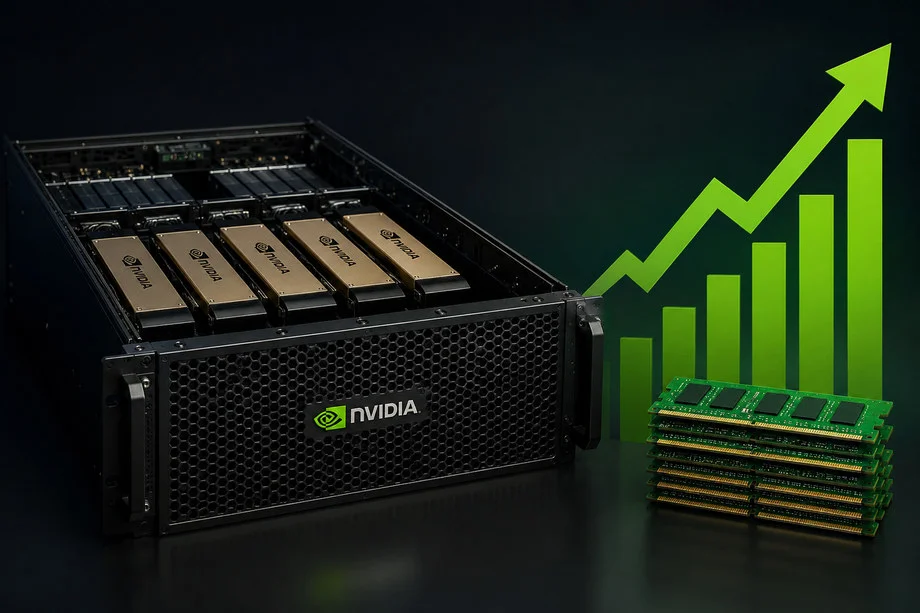
Rising DRAM and high-bandwidth memory expenses drive increases on systems shipping early next year, including Vera Rubin and Grace Blackwell platforms, ahead of Nvidia’s earnings report
Nvidia has notified major customers of price increases exceeding 15 percent on certain AI server systems set to ship early next year. The adjustments vary according to chip generation and memory setup, according to reports of communications sent to server manufacturers.
Systems built around the company’s Vera Rubin and Grace Blackwell platforms are among those affected. Hardware suppliers that serve large data-center operators, including Microsoft, Google and Oracle, have received word of the changes. The moves come as soaring costs for dynamic random-access memory and high-bandwidth memory ripple through the AI infrastructure supply chain.
Memory Supply Constraints Drive Cost Pressure
Advanced Nvidia accelerators require substantial volumes of DRAM and high-bandwidth memory, making overall server pricing highly sensitive to shifts in those component markets. Samsung, SK Hynix and Micron control the bulk of global DRAM production. AI data centers continue to absorb growing shares of available output.
Industry supply is expected to remain well below demand through 2026 and beyond, as AI workloads demand more memory capacity per server. Micron has publicly noted this imbalance and recently announced plans to invest $10 billion in a new research facility in Boise focused on next-generation memory technology.
The resulting tightness has given memory producers significant leverage. Micron Chief Executive Sanjay Mehrotra has described the situation in clear terms:
Other technology firms, including Apple and Qualcomm, have also raised product prices in response to broader chip shortages. Major cloud providers such as Amazon, Microsoft, Google and Meta continue to purchase Nvidia hardware even while developing their own internal chips, placing them in direct competition for the same limited memory supplies.
Timing Ahead of Nvidia Earnings Report
The price adjustments arrive just days before Nvidia reports fiscal second-quarter 2027 results on Wednesday, August 26, with the earnings call scheduled for 5 p.m. Eastern Time. In its most recent quarter the company posted a 75 percent non-GAAP gross margin, record revenue of $81.6 billion and Data Center sales of $75.2 billion.
By passing higher memory costs through to customers rather than absorbing them, Nvidia aims to protect profitability as component prices climb. Shares closed Friday near $214.70 after several consecutive sessions of declines.
For hyperscale operators the issue extends beyond short-term pricing. Persistent memory scarcity could keep the cost of deploying each successive generation of AI infrastructure elevated even as GPU performance advances. Rising component expenses may also add pressure to overall data-center construction budgets already stretched by spending on accelerators, networking, power and cooling systems.

Disclaimer
This article was generated by AI using information from multiple industry sources. It has not been reviewed or verified by a human editor and may contain inaccuracies, omissions, or misinformation. Readers are encouraged to independently verify any information before making decisions based on its content.Tired of the noise?
Let the bots trade for you.
Trade 24/7, without emotion, with data-driven strategies.
Associated articles

Nvidia’s $92 Billion Earnings Test AI Infrastructure Boom Amid Rising Costs

Apple Faces Sharp Rise in iPhone 18 Pro Memory Costs, Price Increases Expected

Micron Posts $54.23 Billion Revenue Surge on AI Memory Demand, Raises Outlook
SpaceX Seeks $40 Billion Debt Package for Nvidia AI Chips Amid Orbital Compute Push

China Weighs Approving Nvidia RTX Pro 5500 Purchases for Alibaba and ByteDance
Latest articles

SpaceX and Tesla Set Up Committees to Explore Merger That Would Combine Holdings of Over 30,000 Bitcoins

UK Banks Face Thousands of Complaints Over Crypto Transfer Restrictions

Ripple Backs SEC Proposed Crypto Asset Rules After $150 Million Legal Battle

Blockchain.com Introduces Options Trading on Seven Major Crypto Assets