Newsroom
Nvidia Stops Licensed Hopper Chip Shipments to China After $2.4 Billion Sales
18 November, 2026 / News / AI / Tags: hopper, china, kress, nvidia, interim
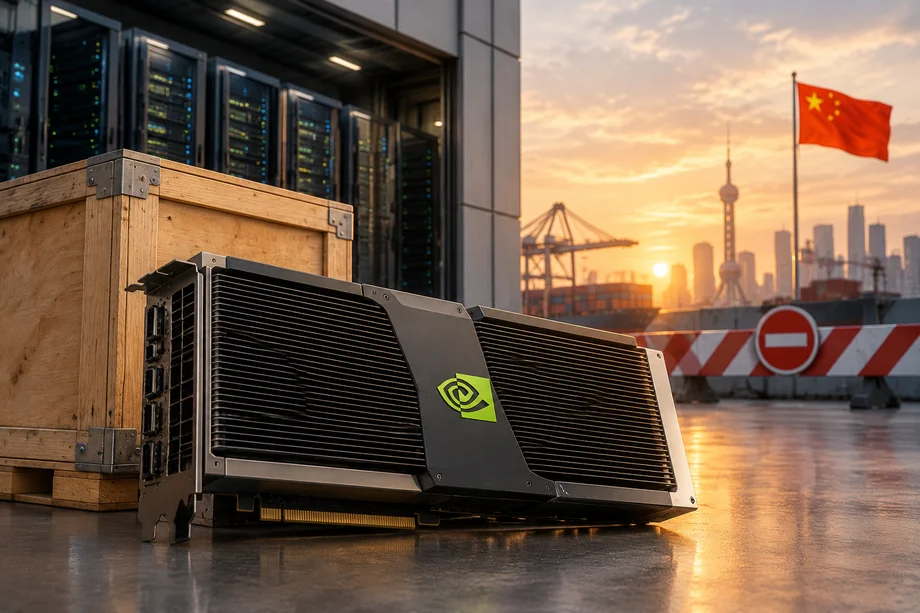
Interim CEO Colette Kress confirmed the halt on the earnings call, excluding China data center revenue from the fourth-quarter outlook while raising longer-term growth projections
Nvidia has ceased shipments of its U.S.-licensed Hopper architecture data center products, including the H200, to Chinese customers. The decision was announced by interim Chief Executive Officer and Chief Financial Officer Colette Kress during the company's earnings call covering the fiscal third quarter ended October 25.
In that period, Nvidia recorded $2.4 billion in sales of the affected chips in China. The figure represented roughly 2.2 percent of the company's $107.6 billion in data center revenue for the quarter. Nvidia's fourth-quarter revenue guidance assumes no contribution from China data center computing sales tied to these licensed products.
Kress provided no explanation for ending the shipments. The company has not indicated whether the pause is temporary or permanent and has not set a date for any possible restart.
Export Framework and Recent Regulatory Moves
The U.S. government had previously permitted Nvidia to export certain Hopper-based H200 chips to approved Chinese buyers under specified security conditions. That arrangement followed earlier advocacy for expanded access to the Chinese market. Sales of more advanced Blackwell and Rubin processors remain restricted in China.
The halt comes shortly after a U.S. Commerce Department interim final rule issued on November 16. The rule tightens limits on remote access to advanced artificial intelligence chips and servers, aiming to block entities subject to U.S. export controls from gaining high-performance computing capacity through data centers located in third countries. Nvidia has not connected its shipment decision directly to the new rule.
The licensed Hopper products were manufactured in Taiwan by Taiwan Semiconductor Manufacturing Company. Gaming graphics cards were not included in the change.
Revenue Outlook Adjusted Higher Despite China Uncertainty
Despite removing the China data center contribution from near-term guidance, Nvidia raised its projected revenue growth for fiscal 2028 to approximately 75 percent, up from an earlier expectation of about 70 percent. Kress described overall demand as remaining well above available supply and pointed to continued strong performance across the business.
The $2.4 billion China figure from the prior quarter stands as a completed result and is not part of the updated forward outlook. The company continues to focus on securing supply of critical components while operating under existing export rules.
Hopper sits two generations behind Nvidia's current leading architecture. The company had previously sought approval to sell more advanced chips into China but did not receive it.
Leadership Transition Context
The announcement marked the first earnings discussion under Kress as interim chief executive following the departure of co-founder Jensen Huang. The board is working with an executive search firm to evaluate internal and external candidates for a permanent successor. Operations are continuing under the current management structure during the transition.
A new board committee has been established to address national security and export compliance matters. The next permanent chief executive will be expected to manage evolving regulatory requirements in the semiconductor sector.

Disclaimer
This article was generated by AI using information from multiple industry sources. It has not been reviewed or verified by a human editor and may contain inaccuracies, omissions, or misinformation. Readers are encouraged to independently verify any information before making decisions based on its content.Tired of the noise?
Let the bots trade for you.
Trade 24/7, without emotion, with data-driven strategies.
Associated articles

Nvidia’s $92 Billion Earnings Test AI Infrastructure Boom Amid Rising Costs
Nvidia CEO Jensen Huang Resigns Amid Personal Controversies; CFO Colette Kress Named Interim Chief

AMD Shares Climb as Nvidia Leadership Change Fuels AI Chip Competition Shift
Nvidia Board Contacts Arm CEO Rene Haas in Search for Permanent Leader

US Tightens AI Chip Controls, Nvidia Limits Sales as Global Markets Decline
Latest articles

Binance Wallet Closes $500 Million Anthropic Tokenized Stock Campaign After Cap Hit

XRP Ledger Secures Independent Verification of Architecture and Resiliency Under Global Framework

ZachXBT Claims Indian Authorities Wrongly Froze $3M Gate Account in Scam Probe

Vitalik Buterin Urges Crypto to Build Long-Term Stability Like Housing