Newsroom
Shielded Bitcoin Proposal Aims to Bring Zcash-Style Privacy to Transactions Without Soft Fork
25 September, 2026 / News / AI / Tags: shielded, privacy, nullifiers, bitcoin, indexers
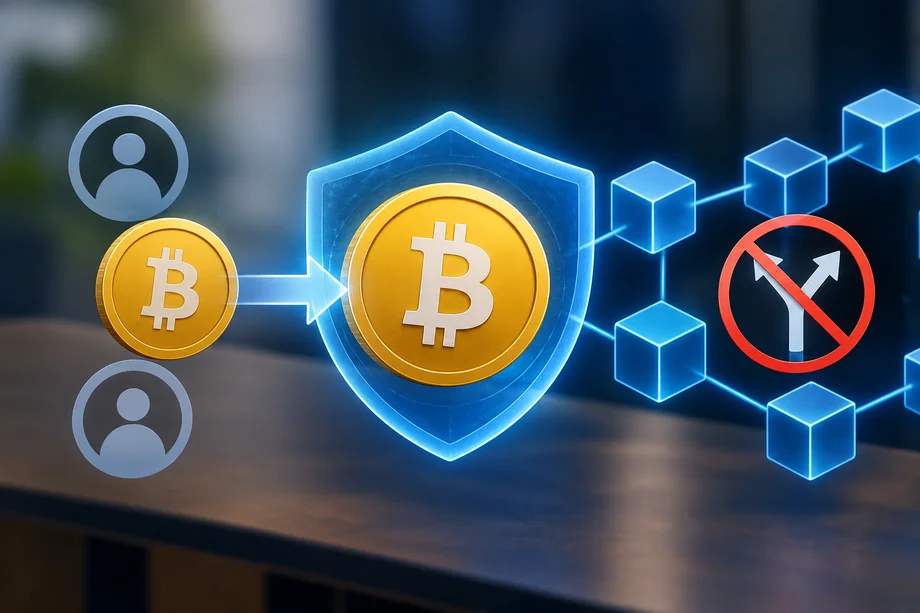
Researchers at Alloc Init have outlined a method to add private transfers to Bitcoin using encrypted notes and zero-knowledge proofs, without changing the core protocol or requiring a soft fork
Developers from the cryptography firm Alloc Init have published a proposal for Shielded Bitcoin, a system that would allow users to send confidential transfers while keeping amounts, senders, receivers and prior spending links hidden. The design draws directly from Zcash architecture but operates as an optional overlay on the existing Bitcoin network, avoiding the need for consensus upgrades that have stalled other privacy efforts.
Core Mechanics of the Shielded Approach
Instead of embedding privacy rules into Bitcoin’s consensus layer, the proposal treats the cryptocurrency as a neutral publication and ordering platform. Users would create and spend funds represented as encrypted notes, each linked to a Bitcoin UTXO. Public nullifiers would mark notes as spent to prevent double-spending without revealing the note contents themselves.
Zero-knowledge proofs would then demonstrate that each nullifier originated from a valid note, confirming authorization and avoiding reuse of funds while keeping the underlying details concealed. Separate indexers—independent software components—would interpret the on-chain history, verify the proofs, ignore invalid entries, and reconstruct the shielded state of balances. This external verification layer means the Bitcoin network itself never enforces or validates the privacy rules, allowing any miner or node to record the transactions as standard entries.
Funds can be deposited into the shielded pool via Bitcoin transactions, and withdrawals would return value to a regular UTXO. Recovering a shielded balance requires only a standard Bitcoin node and an indexer, with no central operator or off-chain custodian needed.
How the Design Differs From Zcash
Zcash has long relied on shielded pools and its own consensus to maintain anonymity. Shielded Bitcoin adapts the same tools—encrypted notes, nullifiers and zero-knowledge proofs—but integrates them into Bitcoin’s existing infrastructure without creating a parallel chain or altering mining or validation rules. The result is a privacy enhancement that can be adopted gradually, with wallets and relayers choosing whether to use it rather than forcing network-wide changes.
This modular structure shifts the burden of verification and state management away from the base layer and onto specialized indexers. It also positions Bitcoin as a settlement and ordering layer, similar to how some other privacy-focused projects have operated, while still allowing seamless interoperability with ordinary Bitcoin transactions.
Community Reactions and Technical Questions
The proposal has sparked discussion among developers and cryptographers. One participant noted that much of the cryptographic foundation already exists in Zcash and questioned the immediate privacy benefits of a new system. Another contributor highlighted that the construction is not quantum-resistant and suggested exploring post-quantum alternatives if Bitcoin later adopts updated signature schemes.
Supporters of the vision pointed back to the original Zerocash research, which sought to bring privacy to Bitcoin itself. They expressed hope that zero-knowledge proofs could eventually enhance both privacy and scalability on the base layer, even if the current proposal remains an external layer.
While the architecture offers a path to stronger privacy without consensus friction, its effectiveness will depend on how quickly a meaningful anonymity set develops as more users participate. Early stages may see limited mixing if activity concentrates among a few actors or if wallet behaviors reveal patterns.
Implementation Details and Practical Considerations
Shielded Bitcoin transactions would carry a prefixed marker, such as shbtc:, in fields like OP_RETURN or witness data. The Bitcoin network records these without validation, creating an open ledger that indexers then analyze. Notes corresponding to UTXOs would be maintained by the indexers, with public nullifiers ensuring spent funds cannot be reused.
This setup allows private transfers to coexist with the public Bitcoin blockchain, potentially increasing user adoption of privacy features where regulatory or user preferences make full protocol upgrades impractical. The design also emphasizes self-custody, as no trusted third party is required to manage the shielded state.
| Feature | Description |
|---|---|
| Privacy Tools | Encrypted notes, public nullifiers, zero-knowledge proofs |
| Consensus Role | Bitcoin serves only as publication and ordering layer |
| Verification | Performed by external indexers |
| Comparison to Zcash | No separate shielded blockchain or consensus change |
The proposal remains a research document circulating among developers, with follow-up work likely focused on wallet implementations, indexer software and real-world usability testing. As Bitcoin continues to evolve, such modular privacy solutions may offer a pragmatic bridge toward stronger confidentiality in digital asset transactions.


Disclaimer
This article was generated by AI using information from multiple industry sources. It has not been reviewed or verified by a human editor and may contain inaccuracies, omissions, or misinformation. Readers are encouraged to independently verify any information before making decisions based on its content.Tired of the noise?
Let the bots trade for you.
Trade 24/7, without emotion, with data-driven strategies.
Associated articles
QuFi Network Deploys Post-Quantum Verification Layer With Bitcoin Testnet Demo
Zcash Private Transactions Speed Up to Under 200 Milliseconds

Zcash Rapidly Fixes Critical Orchard Bug as ZEC Price Surges Over 10%

Zcash Rebounds Strongly After Critical Orchard Bug and Launches Historic Ironwood Upgrade

AmericanFortress Proposes Quantum-Safe Wallet Scheme Without Fund Migration
Latest articles
Babylon Labs Advances Proposal for Native Bitcoin Lending on Aave V4

TSMC Posts Record Q3 Profit Surge on AI Chip Demand, Lifts Full-Year Outlook

ASIC Opens Consultation on Capital and Custody Rules for Digital Asset Platforms

GTA 6 Leaker Cyberleek Drops Full Build Plan After Memecoin Collapse, Activates Dead Man’s Switch Threat