Newsroom
Babylon Labs Advances Proposal for Native Bitcoin Lending on Aave V4
15 October, 2026 / News / AI / Tags: babylon, aave, bitcoin, arfc, collateral
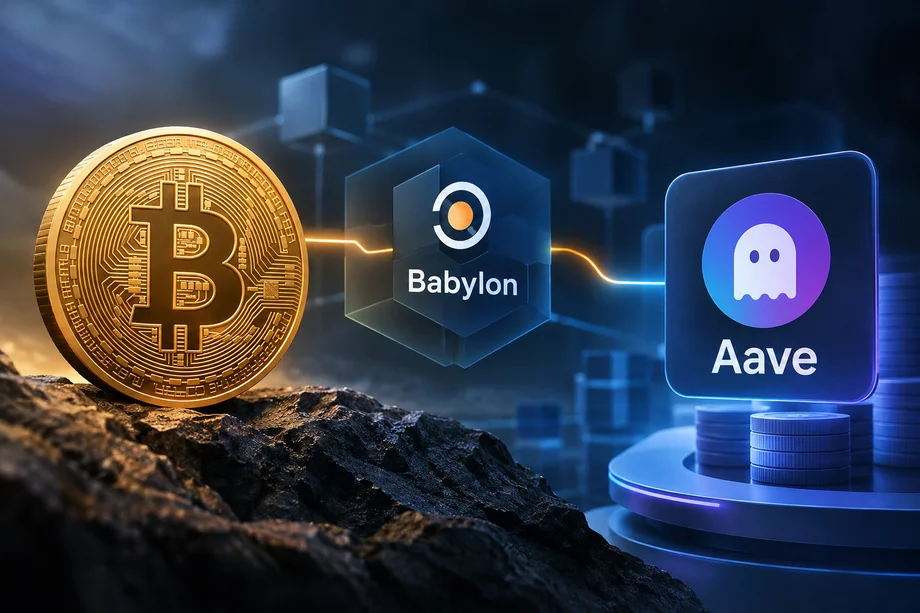
Babylon Labs has submitted a proposal to Aave that would allow users to borrow stablecoins against Bitcoin held on its native network, keeping the underlying asset on Bitcoin while using a non-transferable Ethereum token to represent each collateral position
Babylon Labs Develops Native Bitcoin Collateral Option
Babylon Labs has moved its initiative to integrate native Bitcoin as collateral for Aave V4 one step closer to potential adoption. The plan was published on Oct. 14 for community comment and risk review, following an earlier temperature check that passed in June.
Under the structure, users would deposit Bitcoin into vaults maintained on the Bitcoin network itself. Each position would then be represented by a non-transferable token on Ethereum, enabling borrowing of stablecoins through Aave without moving or wrapping the underlying BTC. This keeps the actual collateral on its home chain.
The approach contrasts with Aave’s existing support for Wrapped Bitcoin and Coinbase Wrapped Bitcoin, both of which rely on third-party custodians to hold the underlying asset. Babylon’s design aims to reduce counterparty risk tied to those custodians by maintaining direct control on the Bitcoin side.
Governance and Implementation Timeline
Aave has opened the request for comment period, inviting users to examine the technical details, security model, and risk assumptions. Feedback and analysis are required before any further advancement.
If the community reaches consensus, the proposal could advance to a three-day off-chain Snapshot vote. At least 320,000 AAVE-equivalent votes in favor would be needed to proceed. A subsequent formal on-chain vote would then need to meet quorum and approval thresholds.
The process traces back to May 25, when Babylon Labs first submitted the temperature check. That preliminary vote passed on June 10, paving the way for the current ARFC submission.
| Governance Stage | Status |
|---|---|
| Temperature Check | Passed June 10 |
| ARFC Community Review | Open, submitted Oct. 14 |
| Potential Snapshot Vote | Conditional on consensus |
| On-Chain Vote | Requires quorum and approval |
Revenue Allocation and Economic Incentives
The proposal includes an allocation that would direct the first $500,000 in qualifying protocol-level fee revenue generated by the integration each year to the Aave DAO treasury. This covers qualifying fees rather than all borrower interest payments.
The arrangement provides a mechanism for the Aave DAO to benefit from the new collateral option while aligning incentives between the Babylon integration and the lending protocol’s governance body.
Technical Details of the Native Collateral System
Users lock Bitcoin in Bitcoin-native vaults. The non-transferable Ethereum token then represents those locked positions within Aave’s lending logic. Borrowing capacity is calculated based on the Ethereum representation, but the underlying Bitcoin never leaves its network.
This architecture separates the roles of the two chains: Bitcoin handles collateral storage and security, while Ethereum manages the transferable lending position. The model is designed to avoid the custodial dependencies present in wrapped Bitcoin alternatives.
Security analysis and audits would still be required as part of any launch preparation. The proposal emphasizes trustless vault operations on the Bitcoin side to support the overall collateralization.
Earlier plans for this native Bitcoin lending approach were outlined by Babylon Labs and HashKey Cloud in prior announcements. The current ARFC submission builds on that foundation.


Disclaimer
This article was generated by AI using information from multiple industry sources. It has not been reviewed or verified by a human editor and may contain inaccuracies, omissions, or misinformation. Readers are encouraged to independently verify any information before making decisions based on its content.Tired of the noise?
Let the bots trade for you.
Trade 24/7, without emotion, with data-driven strategies.
Associated articles

Zest Protocol Debuts Capped Demo for Native Bitcoin Collateral on USDC Loans

Aave Founder Stani Kulechov Denies Kraken Stake Sale at Steep Discount
Harmony Proposes Full Shutdown of Layer-1 Network and ONE Token Shift to Ethereum

Circle Enables Institutions to Borrow USDC Against Bitcoin Collateral

Optimism Governance Approves Shift of 546.9 Million OP to Strategic Ecosystem Fund
Latest articles

TSMC Posts Record Q3 Profit Surge on AI Chip Demand, Lifts Full-Year Outlook

ASIC Opens Consultation on Capital and Custody Rules for Digital Asset Platforms

GTA 6 Leaker Cyberleek Drops Full Build Plan After Memecoin Collapse, Activates Dead Man’s Switch Threat

EBA Designates USDC as First Significant E-Money Token Under MiCA Rules