Newsroom
QuFi Network Deploys Post-Quantum Verification Layer With Bitcoin Testnet Demo
5 September, 2026 / News / AI / Tags: quantum, qufi, verification, post, signatures
Startup introduces external verification system and uBTC proof-of-concept to shield digital assets from quantum risks without altering existing settlement chains
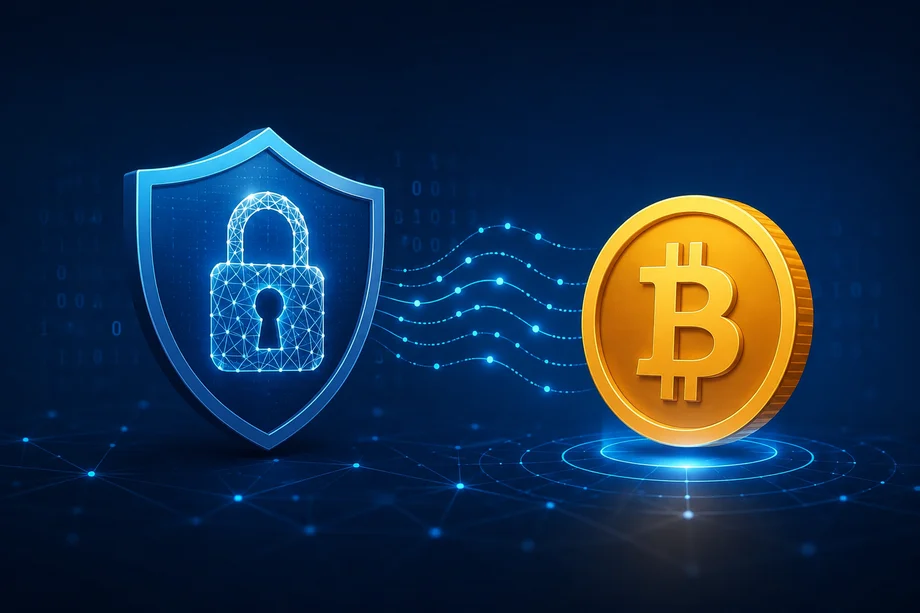
Post-quantum infrastructure firm QuFi Network has released a verification platform designed to safeguard digital assets against potential quantum computing threats. The system performs cryptographic checks using post-quantum standards before transactions reach existing blockchain networks for final settlement, avoiding the need for protocol upgrades or hard forks on those chains.
The architecture relies on a decentralized network of nodes that handle validation separately from settlement. QuFi positions this separation as a practical response to the higher storage, bandwidth and computational demands that larger post-quantum keys and signatures can impose when integrated directly into blockchain protocols.
Cryptographic Standards and Platform Design
The platform incorporates three post-quantum standards: ML-DSA-65 and SLH-DSA for digital signatures, together with ML-KEM-1024 for secure key exchange. These components generate and verify cryptographic proofs prior to settlement on established networks.
By keeping verification off the settlement path, the design seeks to limit the performance overhead that can accompany direct adoption of post-quantum primitives within individual blockchains. Transactions undergo post-quantum validation first; value then moves according to the resulting proofs while final settlement remains compatible with current network rules.
uBTC Proof-of-Concept on Bitcoin Testnet
Alongside the core platform, QuFi introduced uBTC, a proof-of-concept focused on Bitcoin. The system currently operates on Bitcoin Testnet4. It verifies BTC collateral and produces cryptographic proofs that determine how value can transfer between settlement environments. Redemptions complete as ordinary Bitcoin transactions, so the Bitcoin network itself does not need to process post-quantum signatures during the final step.
This approach keeps the base settlement layer unchanged while introducing stronger verification elsewhere. Success will depend on proof generation under realistic conditions, governance of the verification nodes, and integration with wallets and custody systems.
Broader Industry Efforts on Quantum Resistance
The launch coincides with multiple initiatives aimed at preparing blockchains for quantum-era risks. In August, StarkWare conducted a quantum-resistant Bitcoin transaction on mainnet without a fork. The experiment required hours of computation, cost between $150 and $200, and used a nonstandard format that needed direct submission to a miner.
In the same period, banks and regulators from Europe, the Middle East and Asia participated in a pilot testing post-quantum wallets and on-chain transfers that employed ML-DSA-65. The Ethereum Foundation removed the Poseidon hash function from its planned post-quantum architecture in favor of more established options such as SHA or BLAKE.
Bitcoin developers have explored protocol-level options as well. Blockstream researchers published a Bitcoin Improvement Proposal for SHRINCS, an experimental post-quantum signature scheme intended to lower size and performance costs. SHRINCS relies on stateful signatures, requiring wallets to track previously used keys. The scheme remains early-stage without a completed security proof and adds operational complexity that could raise the risk of user error.
QuFi’s method differs from these protocol-level experiments by placing post-quantum checks in a separate infrastructure layer. Future evaluation will center on verification network security, end-to-end proof performance, and the ability to support production redemptions without nonstandard transaction formats or specialized miner pathways. Progress beyond the current testnet stage, including interoperability with existing wallet and custody tooling, will shape the practical reach of verification-layer protection.

Disclaimer
This article was generated by AI using information from multiple industry sources. It has not been reviewed or verified by a human editor and may contain inaccuracies, omissions, or misinformation. Readers are encouraged to independently verify any information before making decisions based on its content.Tired of the noise?
Let the bots trade for you.
Trade 24/7, without emotion, with data-driven strategies.
Associated articles

AmericanFortress Proposes Quantum-Safe Wallet Scheme Without Fund Migration
Sui Targets Q1 2027 Mainnet for Native Quantum-Safe Account Authentication

Solana Advances Quantum-Resistant Security with Quantumglow Proposal

Ethereum Developers Draft Post-Quantum Deposit Contract to Retire BLS Signatures
Zcash Private Transactions Speed Up to Under 200 Milliseconds
Latest articles
Lighter Token Climbs More Than 20% on Planned CFTC Filing and Research Note
Samsung and SK Hynix Upgrade China NAND Factories Amid AI Demand and Local Rivalry

China Prosecutors Move to Confiscate $5.1 Billion Bitcoin Haul Seized in UK Fraud Case

Bank of Korea Holds Rate at 3% After Consecutive Hikes, Eyes Data for Next Move