Newsroom
FASB Proposes Rules for Treating Stablecoins as Cash Equivalents
19 August, 2026 / News / AI / Tags: cash, equivalents, fasb, redemption, accounting

US accounting standards board outlines conditions allowing certain stablecoins to be classified as cash equivalents under GAAP, with public comments open until November
Proposal Aims to Resolve Inconsistent Treatments
The Financial Accounting Standards Board has issued a proposed Accounting Standards Update clarifying when companies may present certain stablecoins as cash equivalents in financial statements prepared under US generally accepted accounting principles. The proposal, released this week, adds illustrative examples to Topic 230 on the statement of cash flows without altering the existing definition of cash equivalents.
FASB initiated the project after stakeholders reported uncertainty and varying practices during its 2025 agenda consultation. Some companies have already begun classifying selected payment stablecoins as cash equivalents based on redemption and reserve features, while others have not, creating differences in reported figures.
Three Key Conditions for Qualification
Under the proposed guidance, a digital asset would need to meet specific tests to qualify. The holder must possess an on-demand contractual right to redeem the asset. That right must permit direct redemption with the issuer for a known amount of cash. In addition, the issuer must maintain at least one-to-one segregated reserves consisting of short-term, highly liquid assets that can be readily converted into known amounts of cash.
Meeting these conditions would not require a company to classify the asset as a cash equivalent. Firms would retain the option to apply that presentation while taking relevant laws and regulations into account.
Secondary Markets and Certain Reserves Fall Short
One illustrative example addresses a token that trades actively on secondary markets but lacks a direct contractual redemption right with its issuer. FASB concluded that market liquidity alone would not satisfy the cash-equivalent definition. Although an active market may allow rapid sale, prices can diverge from the stated value during periods of stress. Direct redemption provides a contractual path to a fixed cash amount.
Another example rules out cash-equivalent treatment when reserves include crypto assets or gold. Price fluctuations in those holdings could prevent the holder from receiving a known cash sum. As a result, algorithmic tokens, certain overcollateralized crypto-backed products, and other assets lacking direct issuer redemption would not qualify even if marketed as stablecoins.
Additional Disclosure Requirements
The proposal would also require every reporting entity to disclose the major components of its cash equivalents and the corresponding amounts. This obligation would apply whether or not digital assets are included among those holdings.
FASB noted that the examples are intended to promote more consistent application of the existing rules. The board has invited public comments through November 19. After reviewing stakeholder input, it will decide whether to finalize the update and establish an effective date.
Context Within Broader Stablecoin Developments
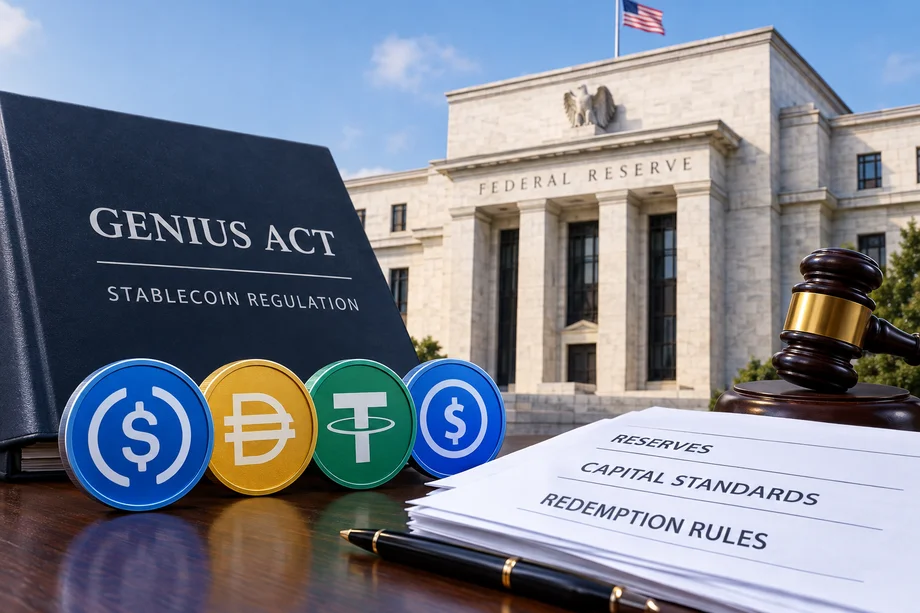
The accounting proposal comes as federal agencies continue implementing the GENIUS Act, which established a framework for US payment stablecoins covering licensing, reserves, redemption, and disclosures. That law is generally set to take effect in 2027. FASB’s process remains independent of those regulatory proceedings. A token could comply with federal issuance requirements yet still fail the accounting tests if a holder lacks direct redemption rights or if reserves contain volatile assets.
Companies already applying cash-equivalent treatment to certain stablecoins, such as those redeemable one-to-one and backed by cash equivalents in segregated accounts, may find their existing approaches aligned with the proposed examples once finalized. The guidance does not determine whether an issuer may legally offer a particular token or whether its reserves meet separate regulatory standards.
Disclaimer
This article was generated by AI using information from multiple industry sources. It has not been reviewed or verified by a human editor and may contain inaccuracies, omissions, or misinformation. Readers are encouraged to independently verify any information before making decisions based on its content.Tired of the noise?
Let the bots trade for you.
Trade 24/7, without emotion, with data-driven strategies.
Associated articles

SEC Proposes Crypto Custody Framework for Investment Advisers and Funds

Strategy Challenges MSCI Proposal to Exclude Digital Asset Firms From Global Indexes

Singapore Proposes Full Reserves and Interest Ban for Stablecoin Issuers
Federal Reserve Proposes Capital and Redemption Rules for Stablecoin Issuers Under GENIUS Act

MSCI Consultation Puts Strategy and Metaplanet at Risk of Index Exclusion
Latest articles

SpaceX and Tesla Set Up Committees to Explore Merger That Would Combine Holdings of Over 30,000 Bitcoins

UK Banks Face Thousands of Complaints Over Crypto Transfer Restrictions

Ripple Backs SEC Proposed Crypto Asset Rules After $150 Million Legal Battle

Blockchain.com Introduces Options Trading on Seven Major Crypto Assets