Newsroom
Cardano Founder Challenges Buterin on AI Risks to Lattice Cryptography
9 October, 2026 / News / AI / Tags: lattice, hoskinson, buterin, quantum, mathematical
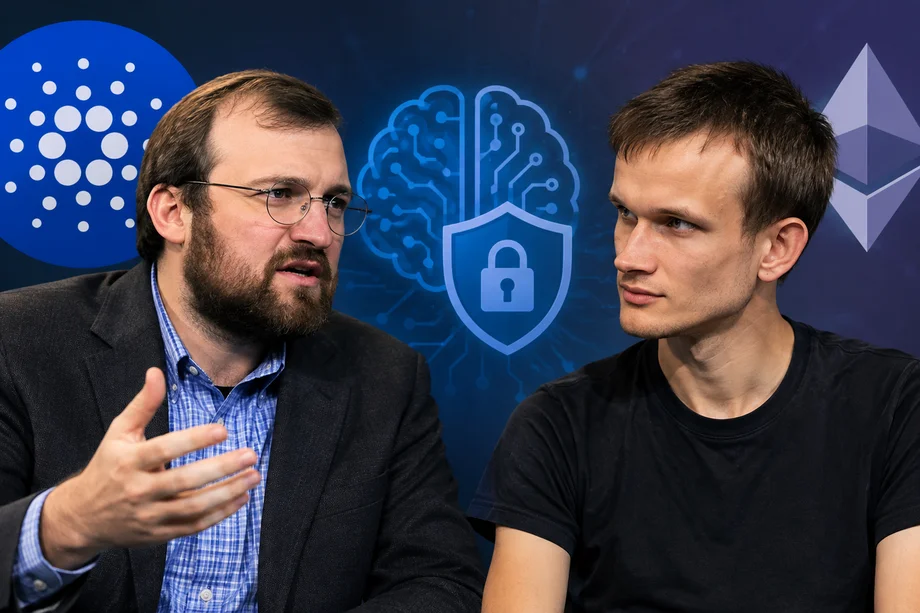
Charles Hoskinson rejected Vitalik Buterin’s caution that AI could soon undermine lattice-based encryption, calling the warnings speculative and lacking concrete evidence of attacks
Cardano founder Charles Hoskinson has sharply disputed Ethereum co-founder Vitalik Buterin’s recent warnings that artificial intelligence could accelerate mathematical breakthroughs capable of weakening lattice-based cryptography. Hoskinson argued that the concerns rest on incomplete reasoning rather than demonstrated vulnerabilities and risk slowing adoption of post-quantum security standards.
The exchange centers on how blockchain networks should prepare for potential advances in AI-assisted cryptanalysis. Buterin had urged developers to take seriously the chance that AI might uncover new shortcuts against both elliptic-curve systems and lattice constructions currently viewed as quantum-resistant options.
Buterin’s Warning on Accelerated Mathematical Advances
Buterin referenced the historical path of integer factorization, where early difficulty estimates proved far higher than later algorithms such as the General Number Field Sieve ultimately achieved. He suggested AI could produce comparable leaps against elliptic curves or lattice problems far more quickly than traditional research timelines.
In comments posted on October 7, 2026, Buterin stated that users need not rush to move funds into new wallets. At the same time, he advised minimizing long-term exposure to cryptography that might prove vulnerable to AI-driven discoveries. He floated the idea that lattice schemes might require far more conservative parameters, including the possibility of increasing key sizes by a factor of ten for extended protection.
The remarks aligned with earlier comments from Ethereum researcher Justin Drake, who had raised the possibility that advanced AI could eventually threaten the Elliptic Curve Digital Signature Algorithm by enabling recovery of private keys from public ones. Buterin backed the broader call for caution while discouraging hasty operational changes that themselves carry risks of lost funds.
Ethereum’s own post-quantum efforts have leaned toward hash-based approaches. Its Lean Consensus work includes schemes such as leanXMSS, with wider infrastructure milestones targeted around 2029.
Hoskinson Rejects Speculative Parameter Changes
Hoskinson responded on October 9, 2026, contending that lattice cryptography has already undergone decades of intensive cryptanalysis involving techniques such as LLL, BKZ, enumeration and improved sieving. Modern parameter sets, he said, already incorporate that history of progressive attack improvements.
He labeled the proposed tenfold increase in key sizes as essentially numerology, insisting that any parameter adjustments must follow a defined attack model and measurable security calculation rather than general apprehension about future AI discoveries. Hoskinson also disputed the factorization analogy, arguing that an unknown future attack on lattices would require an identifiable mathematical mechanism instead of appeals to hidden structure.
The Cardano founder warned that unsupported predictions could discourage organizations from adopting post-quantum encryption, thereby leaving sensitive information more exposed to eventual quantum computing threats. He maintained that researchers routinely revise security assumptions when concrete new attack techniques appear, and that questioning established systems without demonstrated weaknesses could hinder broader cybersecurity preparations.
Standards Bodies Support Multiple Approaches
Current standardization efforts already include both families of algorithms. In August 2024, NIST finalized ML-KEM, a module-lattice key-encapsulation mechanism, and ML-DSA, a module-lattice digital-signature standard. It simultaneously standardized SLH-DSA, a hash-based signature scheme derived from SPHINCS+, to provide diversity should problems arise in one family.
NIST continues to describe the lattice-based standards as believed secure against adversaries equipped with large-scale quantum computers. No concrete AI-assisted mathematical break of the leading lattice schemes has been presented in the current debate.
Hoskinson further noted that hash functions themselves are not free of structural scrutiny. Ethereum has funded cryptanalysis of constructions such as Poseidon and Poseidon2, including algebraic attacks, demonstrating that hash-based systems also face ongoing examination.
Differing Paths Toward Post-Quantum Readiness
Both founders agree that existing cryptography should not be regarded as permanently secure. Their disagreement lies in the appropriate response. Buterin favors reducing reliance on structured cryptography where practical hash-based alternatives exist. Hoskinson contends that lattice systems should not be downgraded absent a named attack, quantifiable cost and clear evidence that current parameters fall short.
Cardano’s 2026 research roadmap includes a dedicated post-quantum workstream covering cryptographic migration and quantum-secure alternatives. The project has also explored lattice-based methods for future zero-knowledge systems, making the technical dispute directly relevant to its development plans.
The discussion forms part of a wider industry conversation on how rapidly advancing AI capabilities may interact with the mathematical foundations that secure blockchain networks and digital assets.


Disclaimer
This article was generated by AI using information from multiple industry sources. It has not been reviewed or verified by a human editor and may contain inaccuracies, omissions, or misinformation. Readers are encouraged to independently verify any information before making decisions based on its content.Tired of the noise?
Let the bots trade for you.
Trade 24/7, without emotion, with data-driven strategies.
Associated articles
Vitalik Buterin Urges Caution on Crypto Wallet Migrations Amid AI Cryptographic Threats

Crypto Experts Warn of AI Threat to Blockchain Encryption, Urge 'Bunker Mode'
Ethereum Foundation Abandons Poseidon Hash in Post-Quantum Roadmap Shift

G7 Urges Immediate Shift to Quantum-Resistant Encryption as Crypto Networks Face Upgrade Pressures

Quantum Computing Threat Could Strike Crypto as Ordinary Key Thefts
Latest articles

UK Sanctions Crypto Platforms Linked to Russian Sanctions Evasion Networks

US Government Transfers Over $1.8 Billion in Bitcoin and Tether Across Three Days

Robinhood Explores Stock Token Tied to Actively Managed ETF With T. Rowe Price

Fidelity Says Institutional Shift to Tokenized On-Chain Finance Has No Reversal