Newsroom
Crypto Experts Warn of AI Threat to Blockchain Encryption, Urge 'Bunker Mode'
8 October, 2026 / News / AI / Tags: drake, bunker, mathematical, quantum, buterin
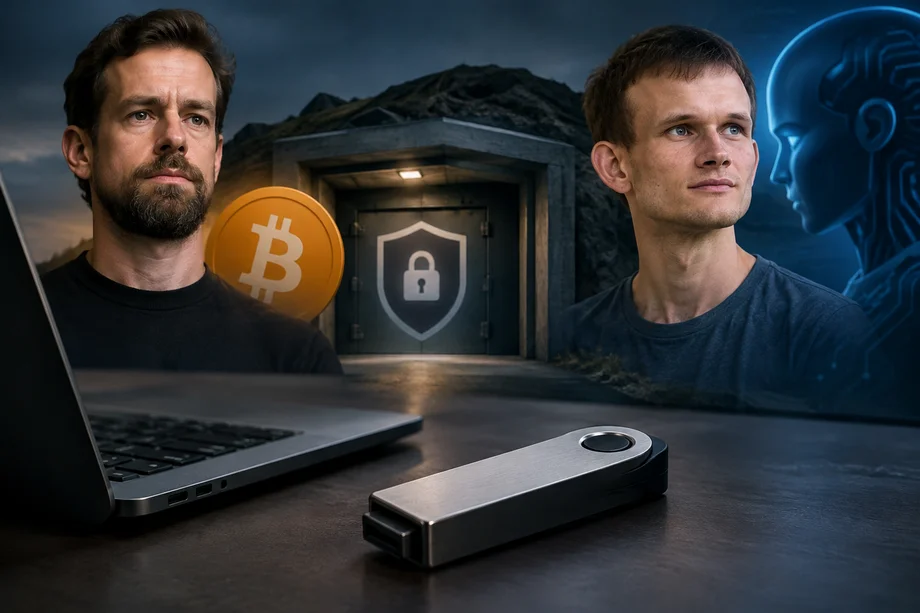
Ethereum researcher Justin Drake calls for industry-wide shift to fresh wallets as AI advances raise concerns over cryptographic security
Ethereum Foundation researcher Justin Drake issued a stark warning this week, urging the blockchain industry to prepare for "bunker mode" amid rapid advances in artificial intelligence that he believes could undermine the mathematical foundations of cryptocurrency security.
Drake pointed to a recent release by OpenAI of hundreds of AI-generated mathematical results. He described the development as evidence that mathematical superintelligence has arrived and could enable attackers to derive private keys from public keys far sooner than previously anticipated.
In Drake's view, AI now poses a more immediate risk than quantum computing to elliptic curve cryptography, including the Elliptic Curve Digital Signature Algorithm widely used in Bitcoin and other networks. He suggested that a breakthrough capable of breaking such systems could occur in months rather than years in a worst-case scenario.
How Bunker Mode Would Work
Drake recommended that holders move the bulk of their assets into new wallets that have never signed a transaction. These "bunker" addresses expose only a hash of the public key on the blockchain rather than the full public key itself.
An attacker seeking to compromise such a wallet would first need to reverse the hash before attempting to derive the private key. Drake argued this additional barrier could shield assets during an initial wave of attacks, as adversaries would likely prioritize wallets that have already revealed their full public keys through prior activity.
He advised that any necessary transaction from a bunker wallet should immediately transfer remaining funds into another unused address, ideally within the same block. Large custodians and high-profile operators should lead the migration, according to Drake, who specifically referenced entities including Binance, Robinhood, Bitbank, Bitfinex and Tether.
Drake acknowledged that safely exiting bunker mode would eventually require new cryptographic standards designed to withstand advanced AI capabilities, standards that do not yet exist in blockchain consensus protocols.
Cautious Response from Vitalik Buterin
Ethereum cofounder Vitalik Buterin struck a more measured tone in response. He advised against an immediate rush to transfer funds into new wallets while agreeing that the industry must address the potential risks AI poses to existing cryptographic methods.
Buterin stressed the need for more robust approaches to protecting private keys as AI accelerates progress in mathematics.
Skepticism and Broader Context
Not all researchers share Drake's urgency. German crypto entrepreneur Chris Seedor described the leap from surprising AI mathematical output to predictions of imminent cryptographic collapse as premature.
Drake has previously focused on quantum computing risks. He co-authored research earlier this year indicating that breaking elliptic curve systems might require fewer quantum resources than once thought. In mid-2026 he estimated a 10 percent chance of a quantum breakthrough by 2030 and a 50 percent chance by 2032. He now views AI as the nearer-term concern capable of overtaking quantum threats.
Cryptocurrency transactions rely on asymmetric cryptography in which public keys enable verification while private keys control access. Conventional computing would require immense time to reverse these protections. Drake contends that AI-driven mathematical advances could shorten that timeline dramatically.
The discussion has prompted renewed attention to longstanding privacy practices, such as avoiding address reuse, first outlined in Bitcoin's early design principles. Industry participants continue to debate the practical timeline and appropriate response to the emerging risks Drake has identified.
Disclaimer
This article was generated by AI using information from multiple industry sources. It has not been reviewed or verified by a human editor and may contain inaccuracies, omissions, or misinformation. Readers are encouraged to independently verify any information before making decisions based on its content.Tired of the noise?
Let the bots trade for you.
Trade 24/7, without emotion, with data-driven strategies.
Associated articles
Vitalik Buterin Urges Caution on Crypto Wallet Migrations Amid AI Cryptographic Threats
EU Financial Watchdogs Flag Quantum Computing Risk to Blockchain Cryptography

AmericanFortress Proposes Quantum-Safe Wallet Scheme Without Fund Migration
Europol Warns Quantum Computers Pose Risk to Crypto Wallet Keys, Urges Early Industry Preparations

Quantum Computing Threat Could Strike Crypto as Ordinary Key Thefts
Latest articles

YieldMax Option Income ETFs Declare Weekly Distributions for October 9
Stablecoins Expand as Core Tools for SaaS and Ecommerce Operations
Polkadot Launches DAO-Governed dotUSD Stablecoin as DOT Tests $1 Support

Cardano Foundation Spins Out Veridian, Tokenizes Shares on New Blockchain Standard