Newsroom
Ethereum Foundation Abandons Poseidon Hash in Post-Quantum Roadmap Shift
14 August, 2026 / News / AI / Tags: poseidon, drake, hash, snarks, snark
Researchers pivot to SHA and BLAKE after SNARK advances erase Poseidon’s edge, targeting leanVM readiness in 2027
The Ethereum Foundation is abandoning the Poseidon hash function for its layer-1 post-quantum architecture and will instead rely on long-established alternatives such as SHA and BLAKE. The change was announced by foundation researcher Justin Drake on August 13, 2026.
Poseidon had been under consideration for systems including leanVM, a planned virtual machine intended to verify large volumes of blockchain activity efficiently. Those systems remain undeployed on mainnet. Drake stated that recent progress in succinct non-interactive arguments of knowledge, or SNARKs, has removed the performance advantage once associated with Poseidon.
Why Traditional Hashes Now Suffice
Poseidon, introduced around 2019, was engineered specifically for zero-knowledge proof environments. Its design reduced the cost of hashing inside SNARKs compared with conventional binary-oriented functions. The Ethereum Foundation had invested in specialized hashes since 2018 as part of broader zero-knowledge research. Poseidon later saw adoption across many zk-rollups and zkVMs.
According to Drake, the decisive development is the maturation of binary-field SNARKs. These systems process the Boolean operations native to standard hash functions more efficiently than earlier prime-field designs. He reported that such proofs can now handle roughly one million traditional hash evaluations per second on a laptop, with overhead of about 100 times relative to native CPU execution. Research efforts including Binius and Flock contributed to the gains. An open project called SNARK.fast, which applies artificial intelligence to optimize proving code, reached 1.8 million BLAKE3 compressions per second in its strongest result.
Drake described the eight-year research effort as an “8-year, 8-figure rabbit hole” that has now reached a clear conclusion. Existing applications that already use Poseidon are unaffected; the decision applies to Ethereum’s future layer-1 roadmap.
Timeline and Collaboration
A production-ready version of leanVM is targeted for 2027. Broader deployment across Ethereum’s consensus, data and execution layers is provisionally scheduled for 2028. Both dates remain preliminary and subject to ongoing development.
Work with Eigen Labs and the zero-knowledge firm Succinct has increased proving speeds by a factor of 2.5. Sreeram Kannan, founder and chief executive of Eigen Labs, noted that mature hash-based constructions have undergone years of public scrutiny and therefore present fewer unexplored attack surfaces. He said this maturity can also shorten the path to deployment compared with newer designs.
Post-Quantum Security Context
The hash-function decision forms part of Ethereum’s wider preparation for quantum computers capable of breaking elliptic-curve cryptography. The network currently depends on such cryptography for accounts and portions of its consensus and data layers. Hash-based signatures are favored because they rest on relatively simple and thoroughly studied assumptions, even though individual signatures can be large. SNARK aggregation is expected to compress many such signatures into a single compact proof suitable for on-chain verification. The same technique can support multisignature and threshold schemes without placing every underlying signature on the chain.
Drake observed that recent advances in AI-assisted cryptanalysis have created difficulties for more complex post-quantum candidates, including certain lattice-based and isogeny-based designs. These setbacks reinforce the preference for hash-based approaches on blockchains. Wallet-level experiments using SPHINCS-based signatures have already demonstrated verification costs in the range of tens of thousands of gas units.
The foundation’s pivot prioritizes algorithms that already carry extensive academic and practical validation while still meeting the performance requirements of next-generation proof systems. Development continues toward the stated 2027 and 2028 milestones as the network builds quantum-resistant infrastructure.

Disclaimer
This article was generated by AI using information from multiple industry sources. It has not been reviewed or verified by a human editor and may contain inaccuracies, omissions, or misinformation. Readers are encouraged to independently verify any information before making decisions based on its content.Tired of the noise?
Let the bots trade for you.
Trade 24/7, without emotion, with data-driven strategies.
Associated articles

AmericanFortress Proposes Quantum-Safe Wallet Scheme Without Fund Migration
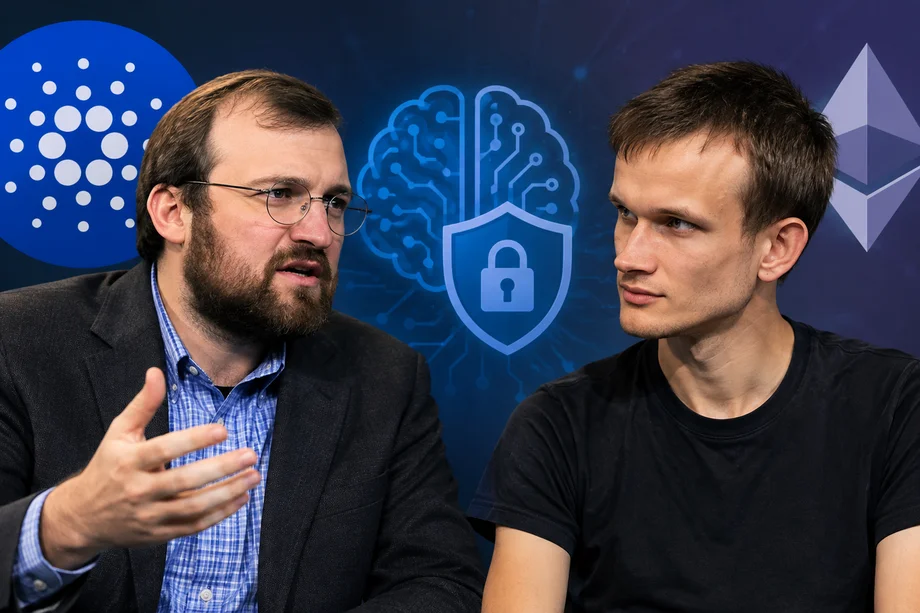
Cardano Founder Challenges Buterin on AI Risks to Lattice Cryptography

Blockstream Advances Quantum-Resistant Bitcoin Signatures With SHRINCS Proposal
QuFi Network Deploys Post-Quantum Verification Layer With Bitcoin Testnet Demo

Vitalik Buterin Outlines Lean Ethereum Roadmap for Quantum Security and Scaling
Latest articles

SpaceX and Tesla Set Up Committees to Explore Merger That Would Combine Holdings of Over 30,000 Bitcoins

UK Banks Face Thousands of Complaints Over Crypto Transfer Restrictions

Ripple Backs SEC Proposed Crypto Asset Rules After $150 Million Legal Battle

Blockchain.com Introduces Options Trading on Seven Major Crypto Assets