Newsroom
Vitalik Buterin Urges Caution on Crypto Wallet Migrations Amid AI Cryptographic Threats
8 October, 2026 / News / AI / Tags: buterin, mathematical, encryption, lattice, mathematics
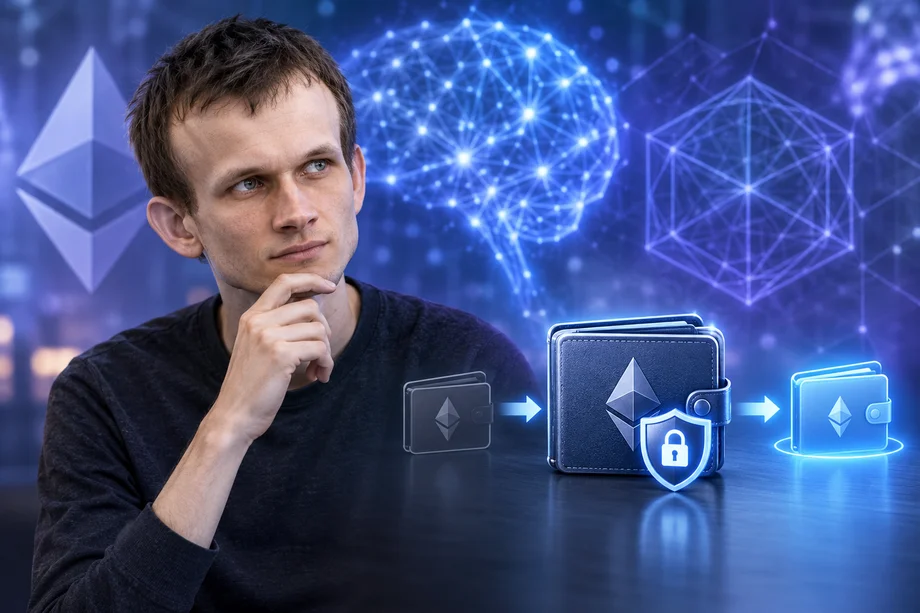
Vitalik Buterin has highlighted the potential for artificial intelligence to accelerate advances in mathematics that could undermine widely used cryptographic systems, while stressing that any wallet migrations should proceed with care to avoid costly errors
AI Advances Prompt Reassessment of Cryptographic Security
Vitalik Buterin, co-founder of Ethereum, has drawn attention to the growing possibility that artificial intelligence could discover mathematical shortcuts in areas once considered secure, potentially affecting the foundations of digital wallets and broader public-key encryption.
His comments follow recent releases from OpenAI that uncovered new findings from an unreleased internal model on open mathematical problems. These developments have sparked debate within the crypto community about the timeline for when such risks might materialize.
Buterin noted that planning has traditionally assumed elliptic curve digital signature algorithm systems could withstand AI-driven attacks for some time. He expanded on this by pointing out that lattice-based cryptography, which includes schemes like ML-DSA and fully homomorphic encryption, might also face challenges within the next two years due to further progress in the field.
AI progress in mathematics may reveal shortcuts that humans have overlooked in lattice cryptography, just as it has with other structured problems over decades.
Industry Push for Gradual Wallet Upgrades
Ethereum Foundation researcher Justin Drake recommended preparing for “bunker mode” in response to OpenAI’s mathematical results. He suggested large holders begin moving funds to new addresses that have never signed transactions, as this approach keeps public keys protected behind cryptographic hashes.
Drake described recent mathematical advances as evidence that “mathematical superintelligence is upon us,” urging a controlled and gradual process rather than any form of panic. The goal is to minimize exposure to both quantum and AI-related vulnerabilities while maintaining security.
Buterin Highlights Practical Risks of Hastened Changes
Buterin acknowledged the seriousness of the threat from AI-accelerated mathematics but cautioned against rushing wallet migrations. He pointed out that botched upgrades have cost him more than hacks combined, and he advised keeping funds in addresses that have never signed a transaction as a reasonable measure.
For privacy protocols, he suggested avoiding the placement of encrypted notes directly on-chain. Instead, he recommended sending them off-chain through third-party mechanisms to reduce on-chain exposure.
His recommendations also extend to broader cryptographic choices. Ethereum’s roadmap has leaned toward hash-based systems such as WOTS and SPHINCS+ because they avoid certain lattice-based approaches and offer viable alternatives where possible. Larger keys may eventually be needed for systems reliant on solving mathematical puzzles.
Broader Implications for Encryption Systems
The discussion is not limited to cryptocurrency wallets. Public-key encryption remains essential for websites, secure messaging, privacy networks, VPNs, and traditional financial systems. Any breakthroughs in mathematics could affect these areas as well, potentially requiring adjustments to key sizes or other parameters.
Buterin’s response to the warnings from Drake and others has been measured. He has not endorsed the most aggressive timelines but has encouraged the crypto community to reduce its reliance on vulnerable systems proactively while avoiding unnecessary disruption to holdings.
| Aspect | Details |
|---|---|
| Primary Cryptosystem | Elliptic curve digital signature algorithm (ECDSA) |
| AI Risk Timeline | Potentially within months rather than years |
| Recommended Migration Approach | Gradual moves to fresh addresses with never-signed transactions |
| Risk Beyond ECDSA | Lattice cryptography including ML-DSA and fully homomorphic encryption |
| Preferred Alternatives | Hash-based signatures such as WOTS and SPHINCS+ |
Buterin also addressed multisignature wallets specifically. He initially suggested gathering confirmations off-chain to keep signer keys hidden but later clarified that each signer should change keys after every operation.
The Ethereum co-founder emphasized that while the industry should prepare for these evolving threats, hasty actions could introduce new vulnerabilities that outweigh any perceived benefits. He noted that public-key encryption in general cannot simply be replaced by hashes and may require larger keys in the future for puzzle-solving systems.

Disclaimer
This article was generated by AI using information from multiple industry sources. It has not been reviewed or verified by a human editor and may contain inaccuracies, omissions, or misinformation. Readers are encouraged to independently verify any information before making decisions based on its content.Tired of the noise?
Let the bots trade for you.
Trade 24/7, without emotion, with data-driven strategies.
Associated articles

Ripple Maps Four-Stage Path to Shield XRP Ledger From Quantum Risks by 2028

G7 Urges Immediate Shift to Quantum-Resistant Encryption as Crypto Networks Face Upgrade Pressures

AmericanFortress Proposes Quantum-Safe Wallet Scheme Without Fund Migration
Vitalik Buterin Rejects Prediction of AI-Driven 50% Bitcoin Crash
Ethereum Foundation Abandons Poseidon Hash in Post-Quantum Roadmap Shift
Latest articles

Litecoin Marks 15 Years of Network Uptime as Grayscale Targets ETF Listing on NYSE Arca

Securitize Brings Major U.S. Stocks to Solana for Eligible Investors

Tikcoin Network Delays TIK Listing to December 12 After October Target Misses

Samsung Forecasts Record $80 Billion Quarterly Profit on AI Memory Demand