Newsroom
AMD Shares Drop Over 11% After Investigation Alleges China Ties to Blacklisted Server Maker
20 November, 2026 / News / AI / Tags: amd, hunterbrook, firmware, blacklisted, exports

Advanced Micro Devices shares plunged as an investigation revealed ongoing firmware updates to servers from a company blacklisted by the US, fueling concerns over export controls and revenue exposure
Hunterbrook Report Spotlights Firmware Distribution to Blacklisted Entity
The probe by Hunterbrook Media uncovered at least six BIOS updates containing newer AMD firmware sent to IEIT Systems, a Chinese server manufacturer placed on the US Entity List in March 2025. One update dated October 19, 2026, was among them. Similar files were identified from three other manufacturers, with the firmware versions matching within 99.94 percent of IEIT’s versions. AMD lists Aivres as a partner for servers powered by its Instinct MI300X and MI325X accelerators, adding to questions about the supply chain connections.
Hunterbrook Capital, the firm behind the report, disclosed its short position in the stock when the investigation was released. The findings have raised questions about how the firmware reached the blacklisted entity and whether any export licenses were in place, though no violations were established.
AMD’s financial filings also noted $4.28 billion in revenue billed to Singapore, yet customer billing locations do not confirm final destinations or prove restricted entities received the products.
Manufacturing Links with Chinese Joint Ventures
The report reviewed AMD’s agreements with two Chinese joint ventures controlled by Tongfu Microelectronics. It indicated that AMD procured approximately $2 billion in services from these partners, with most of the company’s chip assembly, testing, and packaging performed by them. This structure places additional scrutiny on potential compliance with US export regulations.
Stock Performance and Market Reaction
AMD shares fell sharply in early trading following the report’s publication. The price dropped 13 percent within the first 30 minutes, reaching a low of $487 before easing. One analysis cited an 11 percent decline in morning sessions, while another noted a 2.9 percent slide to a fresh intraday low during broader market declines.
The rapid sell-off reflected investor concerns over potential risks in AMD’s overseas business amid heightened congressional attention to semiconductor exports to China. AMD did not respond directly to questions regarding export licenses for the identified entities.
Broader Context of US Scrutiny on Semiconductor Exports
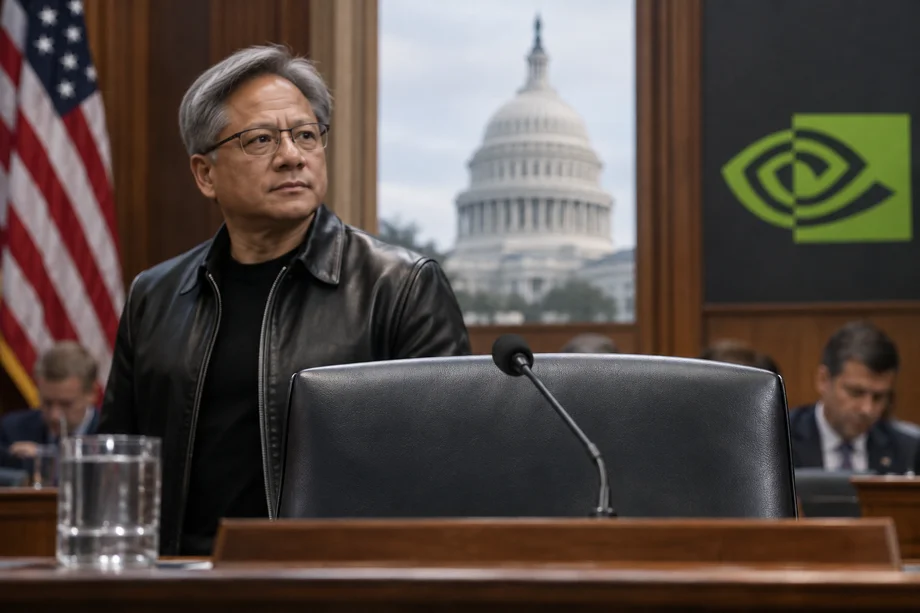
The developments occur as US officials prepare further testimony related to Nvidia and China chip exports, with Jensen Huang scheduled to appear before House committees on December 1. Former Nvidia CEO Jensen Huang has consented to appear at three House committees on December 1 regarding Nvidia’s AI chip exports to China.
AMD’s case adds to ongoing debates about balancing American technological leadership with restrictions on technology transfer to sanctioned Chinese entities. The investigation highlights complexities in global supply chains for advanced semiconductors.

Disclaimer
This article was generated by AI using information from multiple industry sources. It has not been reviewed or verified by a human editor and may contain inaccuracies, omissions, or misinformation. Readers are encouraged to independently verify any information before making decisions based on its content.Tired of the noise?
Let the bots trade for you.
Trade 24/7, without emotion, with data-driven strategies.
Associated articles
Jensen Huang Agrees to Closed-Door House Testimony Amid China Intel Scrutiny

Nvidia Stock plunged as Huang Scandal Erupts

Nvidia’s $92 Billion Earnings Test AI Infrastructure Boom Amid Rising Costs

AMD Shares Climb as Nvidia Leadership Change Fuels AI Chip Competition Shift

Nvidia Stops Licensed Hopper Chip Shipments to China After $2.4 Billion Sales
Latest articles

1inch Brings Hyperliquid Perpetual Futures to Web App and Android Wallet

SEC Charges Eight Crypto Firms in $37 Million Investment Fraud

US Launches Crypto Crime Disruption Center to Tackle Billions in Scam Losses

Trump Media Repurchases $100 Million in Convertible Notes to Address November 30 Debt Deadline