Newsroom
Jensen Huang Agrees to Closed-Door House Testimony Amid China Intel Scrutiny
16 November, 2026 / News / AI / Tags: huang, jensen, alice, china, trump
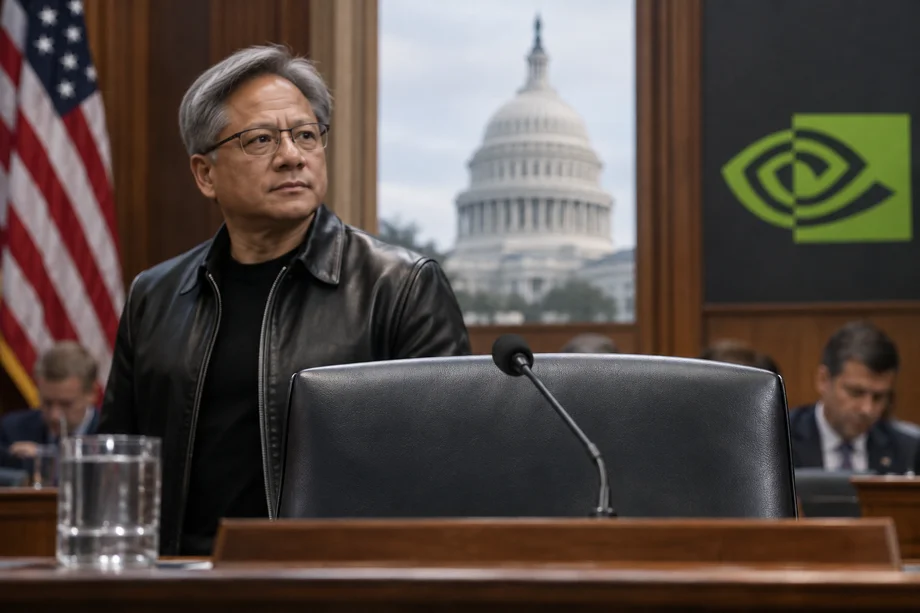
Former Nvidia CEO will appear before House China panel as lawmakers probe intelligence warnings, Trump administration contacts and chip export issues following his abrupt departure
Former Nvidia chief executive Jensen Huang has agreed to participate in a closed-door session with the House committee focused on China, according to the panel’s chairman. No date has been set for the appearance. The commitment comes as bipartisan lawmakers examine the Trump administration’s handling of intelligence assessments involving Alice Huang, who had been in a relationship with Jensen Huang, and related questions about national security and advanced semiconductor exports.
House China committee Chairman John Moolenaar confirmed the agreement on Sunday. He noted that three House committees had separately sought a closed-door briefing with Huang for Dec. 1, but that request does not establish a firm date for the new session. The arrangement follows earlier congressional efforts to obtain Huang’s testimony.
Timeline of Events and Intelligence Warnings
President Donald Trump spoke with Huang by phone on Nov. 10 and urged him to remain in his role. Trump later stated that he had spoken with Huang again the following day. On Nov. 12, Huang announced he was stepping down immediately as Nvidia’s chief executive, president and board member. Chief Financial Officer Colette Kress assumed the position of acting chief executive.
Trump had received at least two intelligence warnings, one in late 2025 and another in spring 2026. Those assessments indicated that Alice Huang had been recruited by China’s Ministry of State Security. On Nov. 9, Trump said he asked Jensen Huang whether he knew of the suspicions surrounding the woman. Huang replied that he did not, and Trump said he accepted the answer.
People familiar with the classified assessments have said U.S. officials suspected Alice Huang of passing information to Beijing while cultivating a close relationship with Jensen Huang. The findings themselves have not been made public. Nothing in the material establishes that Jensen Huang was aware of any alleged activity or that he shared sensitive information.
Attorney General Todd Blanche stated on Nov. 12 that the Justice Department had not determined Alice Huang was a Chinese spy. The FBI is investigating reports that she had worked for the Chinese government. Beijing has denied the claims. No public evidence has shown that Jensen Huang transferred sensitive information to China.
Singapore’s Ministry of Home Affairs said Alice Huang was barred from returning to the country after she left in February. The ministry described the matter as unrelated to espionage. She previously held an executive role at Singapore-based data center operator Megaspeed.
Congressional Scrutiny and Export Concerns
Three Republican House committee chairs had requested Huang’s closed-door testimony for Nov. 18. His team indicated it would cooperate. Moolenaar has said the success of U.S. artificial-intelligence companies serves the national interest while cautioning against the shipment of the most advanced chips to Chinese firms.
Senate Democratic Leader Chuck Schumer has asked whether Trump’s relationship with Huang influenced any decision to discourage an investigation. Schumer also questioned what the president knew when he invited Huang aboard Air Force One. Senate Majority Leader John Thune has described a congressional inquiry as reasonable on national-security grounds.
Democratic ranking members of the Senate Finance Committee and the House Ways and Means Committee are reviewing the administration’s arrangements governing Nvidia chip exports to Chinese companies. Separately, Sen. Elizabeth Warren has asked Commerce Secretary Howard Lutnick to explain remaining gaps in export controls.
Nvidia has characterized Jensen Huang’s interactions with Alice Huang as ordinary customer relations, stating that meeting customers forms part of a chief executive’s responsibilities.
The closed-door session with the House China committee is expected to address Huang’s contacts and the broader context of the intelligence warnings. Lawmakers continue to examine both the national-security implications and the administration’s approach to advanced semiconductor sales involving Chinese entities.

Disclaimer
This article was generated by AI using information from multiple industry sources. It has not been reviewed or verified by a human editor and may contain inaccuracies, omissions, or misinformation. Readers are encouraged to independently verify any information before making decisions based on its content.Tired of the noise?
Let the bots trade for you.
Trade 24/7, without emotion, with data-driven strategies.
Associated articles
Nvidia CEO Jensen Huang Resigns Amid Multiple Relationship Allegations, Stock Plunges
Nvidia Board Launches Probe Into CEO Jensen Huang Over Foreign Intelligence Reports
Trump and Tech Leaders Sign Voluntary Pact on Frontier AI Safety Controls

White House to Host Crypto and Prediction Market Leaders on August 19

Senate Democrats Demand Hearings on Trump Family Crypto Ties to UAE
Latest articles

Strategy Adds 485 Bitcoin While Spending $228 Million on Preferred Share Buybacks

Bitmine Nears 5% of Ethereum Supply With Fresh 7,653 ETH Purchase
Solana Retires Mainnet Beta Label After Six Years, Adopts Protocol Version 1.0

Morgan Stanley Declares Quarterly Dividends Across Multiple Preferred Stock Series