Newsroom
SEC Charges Eight Crypto Firms in $37 Million Investment Fraud
20 November, 2026 / News / AI / Tags: defendants, chats, victims, investors, fake
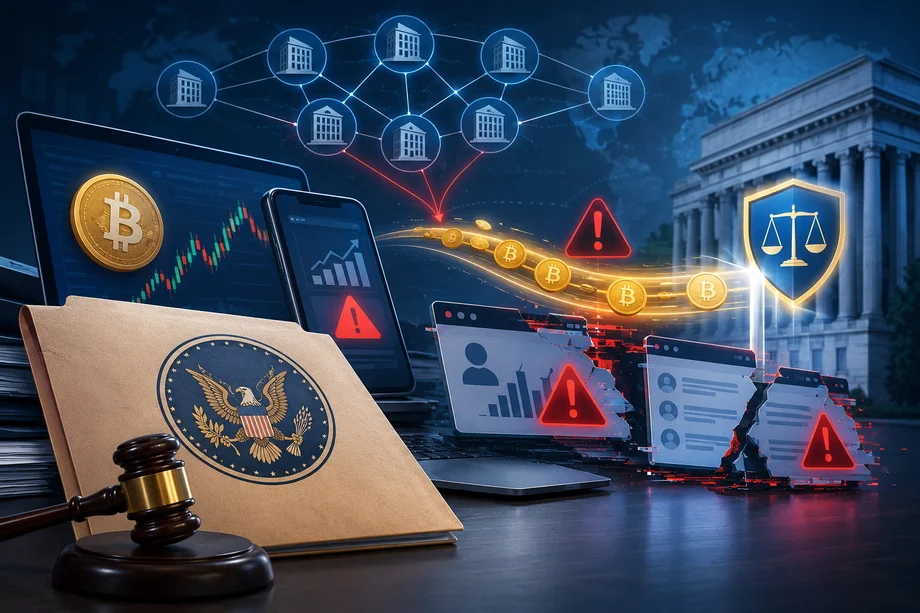
Regulators accuse Colorado-based entities of defrauding U.S. investors through fake trading platforms and advisers using social media tactics
Eight Entities Face SEC Action for Alleged Crypto Scam
The U.S. Securities and Exchange Commission has charged eight Colorado-based organizations in connection with a scheme that targeted retail investors through social media advertisements and messaging apps. The entities operated purported investment advisers and crypto asset trading platforms that collected more than $37 million from victims between August 2024 and May 2025.
According to federal authorities, the defendants used group and private chats to engage investors, initially advising them on stock trades before redirecting funds toward fake crypto platforms. The platforms promised trading in real assets but functioned as fronts to steal money, with perpetrators rotating operations among different pairs after several months to maintain legitimacy.
The companies, including entities named Advisor WeChat Capital and RealSimple Crypto Exchange Inc., employed tactics such as creating fake SEC certificates and directing victims to non-existent filings. They exploited popular online chats to build trust, claiming associations with investment advisers before convincing investors to send funds for supposed crypto asset purchases.
Scheme Targeted Retail Investors via Online Chats
Federal regulators detailed how the defendants attracted victims with social media ads that directed them to WhatsApp and similar group chats. There, individuals posing as financial professionals first provided stock trading guidance to establish credibility. They then transitioned victims to the alleged crypto platforms, where funds were deposited under false pretenses of buying assets.
The operations spanned four adviser-platform pairs, each active for a few months before being replaced. This pattern allowed the fraud to persist while avoiding detection longer than a single operation might have. In total, the effort affected more than 1,500 U.S. investors, according to the complaint filed in the U.S. District Court for the District of Colorado.
Defendants Used Fabricated Legitimacy Markers
To lend credibility, the defendants manufactured SEC documents, including fake certificates, and pointed victims toward alleged regulatory filings they had supposedly submitted. These efforts misled investors into believing the platforms and advisers held official status, even though no actual trading occurred and the Security Token Offerings claimed by the defendants did not exist.
When investors attempted to withdraw funds, the scheme escalated, with demands for advance fees to release money. The perpetrators then moved funds overseas through bank accounts and cryptocurrency wallets, resulting in the misappropriation of at least $37 million.
The SEC’s Office of Investor Education and Assistance has issued warnings about similar tactics involving group chats and claims of SEC registration. The agency urges investors to verify any investment offers through official resources like Investor.gov rather than relying solely on chat-based advice.
Regulatory Response and Investor Protections
Laura D’Allaird, chief of the SEC Enforcement Division’s Cyber and Emerging Technologies Unit, stated that the commission will continue pursuing such schemes. The agency seeks permanent injunctions and civil penalties against the defendants, along with disgorgement of funds where applicable.
The complaint alleges violations of the Securities Act of 1933 and the Securities Exchange Act of 1934. It highlights how the fraud targeted retail investors who responded to social media promotions promising high returns from crypto trading.
Authorities note that similar patterns have appeared in prior cases, where victims lost millions to fake platforms. The current action adds to ongoing efforts to combat crypto-related scams that exploit emerging technologies and online communication channels.
Disclaimer
This article was generated by AI using information from multiple industry sources. It has not been reviewed or verified by a human editor and may contain inaccuracies, omissions, or misinformation. Readers are encouraged to independently verify any information before making decisions based on its content.Tired of the noise?
Let the bots trade for you.
Trade 24/7, without emotion, with data-driven strategies.
Associated articles

SEC Charges Four Entities in $15M Crypto and AI Frauds as Scam Networks Expand

Hong Kong Records 25 Crypto Romance Scams With Nearly $9 Million in Losses

SEC Sues Florida Man and Mining Automatic Over Alleged $22 Million Crypto Mining Fraud

U.S. Authorities Seek Forfeiture of $25 Million in Crypto from Romance and Investment Scams

US Authorities Seize Over $25 Million in Crypto From Five Fraud Probes
Latest articles

AMD Shares Drop Over 11% After Investigation Alleges China Ties to Blacklisted Server Maker

1inch Brings Hyperliquid Perpetual Futures to Web App and Android Wallet

US Launches Crypto Crime Disruption Center to Tackle Billions in Scam Losses

Trump Media Repurchases $100 Million in Convertible Notes to Address November 30 Debt Deadline