Newsroom
Zcash Targets January for Quantum-Resistant Signatures on Transparent Payments
9 October, 2026 / News / AI / Tags: transparent, quantum, zcash, shielded, january
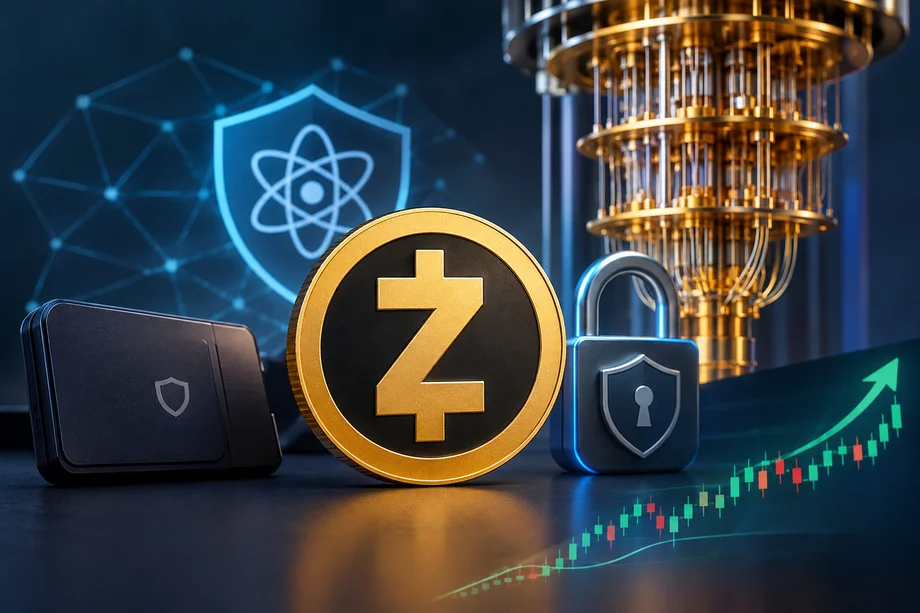
Developers plan hash-based signature support to protect public addresses holding most of the ZEC supply, while introducing a private balance query tool
Zcash developers are preparing to add post-quantum signature capabilities to the network, with a target of January for integrating the necessary software instructions. The effort centers on transparent transactions, which currently hold the majority of issued ZEC, and comes amid broader industry discussion of potential risks from advances in quantum computing and artificial intelligence.
January Development Target for Hash-Based Signatures
The Zakura team, which maintains a full-node implementation used to run the Zcash network and validate transactions, aims to introduce post-quantum signature opcodes by January. These instructions would enable the protocol to verify hash-based signatures for payments.
Hash-based methods rely on different mathematical foundations than the elliptic-curve cryptography currently used for transparent addresses. In the existing system, a transparent address initially shows only a hash of its public key. Spending from the address reveals the public key itself. If future computing advances allow private keys to be derived from public keys, funds at exposed addresses could become vulnerable. The new signatures are intended to provide an additional layer of protection for transaction approvals even if current keys face compromise.
No date has been set for activating the changes on the main network. The January timeline refers to the inclusion of the opcodes in software rather than a confirmed protocol upgrade or mandatory migration.
Focus on Transparent Pool Holding Most Coins
Zcash supports both transparent and shielded transactions. Transparent payments operate similarly to Bitcoin, with sender, recipient and amount visible on the blockchain. Shielded transactions conceal those details.
As of October 9, approximately 11.96 million ZEC of the 16.98 million coins issued resided in the transparent pool, equating to about 70.4 percent of the supply. The planned signature support targets this public portion of the network first. Shielded pools rely on distinct cryptographic mechanisms and will require separate development for comparable post-quantum safeguards. Developers have noted that historical encrypted records could face decryption risks if future breakthroughs occur, necessitating additional research.
| Address Type | ZEC Amount (millions) | Share of Issued Supply |
|---|---|---|
| Transparent | 11.96 | 70.4% |
| Shielded | Approximately 5 | About 30% |
Private Query Tool for Wallet Privacy
Alongside the signature work, Zakura has developed a private information retrieval system that allows wallets to check balances and transaction history without disclosing which addresses are being queried to a server. This approach helps prevent linkage of multiple addresses belonging to the same user.
An experimental version of the feature is available through the Private queries setting in the Vizor wallet. The method groups transaction data and enables local filtering before private requests, supporting balance checks, history recovery and wallet restoration while keeping the specific records hidden from the service provider. The tool does not alter the public visibility of transparent transactions on the blockchain itself.
Context of Industry Quantum Discussions
The announcement followed comments from Ethereum researcher Justin Drake, who warned of potential vulnerabilities to wallet cryptography under accelerated advances in artificial intelligence and quantum computing. Drake described a worst-case scenario in which risks could emerge in months rather than years and urged preparation for protective measures. No practical attacks on existing wallet keys have been reported.
Ethereum has set a target of December 2029 for its own transition to quantum-resistant cryptography. Zcash’s January objective remains a development milestone focused on transparent payments, with further steps required for full network coverage and activation.
ZEC traded near $1,185 to $1,240 on October 9, marking a weekly decline of roughly 11 to 12 percent amid broader market movements that coincided with the recent security discussions. Daily volume and market capitalization figures varied across reporting periods, with some rebound noted after earlier lows.
The next phase of work involves continued development toward the January software target. Network activation remains unannounced, and separate efforts will address post-quantum needs for the shielded components of the protocol.

Disclaimer
This article was generated by AI using information from multiple industry sources. It has not been reviewed or verified by a human editor and may contain inaccuracies, omissions, or misinformation. Readers are encouraged to independently verify any information before making decisions based on its content.Tired of the noise?
Let the bots trade for you.
Trade 24/7, without emotion, with data-driven strategies.
Associated articles
Zcash Private Transactions Speed Up to Under 200 Milliseconds

AmericanFortress Proposes Quantum-Safe Wallet Scheme Without Fund Migration
Crypto Experts Warn of AI Threat to Blockchain Encryption, Urge 'Bunker Mode'

Solana Advances Quantum-Resistant Security with Quantumglow Proposal
Zcash Activates Ironwood Upgrade, Sealing $1.7B Orchard Pool After Vulnerability
Latest articles
Blockchain.com Seeks CFTC Approval to Launch U.S. Event Contracts and Crypto Derivatives

New York Bans Celsius Founder Mashinsky for Life, Secures Up to 35 Million in Settlement

Bessent Warns of $1 Billion Iran Crypto Seizure as US Tightens Sanctions

MARA Holdings Transfers 996 Bitcoin Worth $81 Million to Galaxy Digital