Newsroom
Wells Fargo in Talks With Kraken Parent Payward for Crypto Trading Liquidity
8 October, 2026 / News / AI / Tags: payward, fargo, wells, kraken, nasdaq
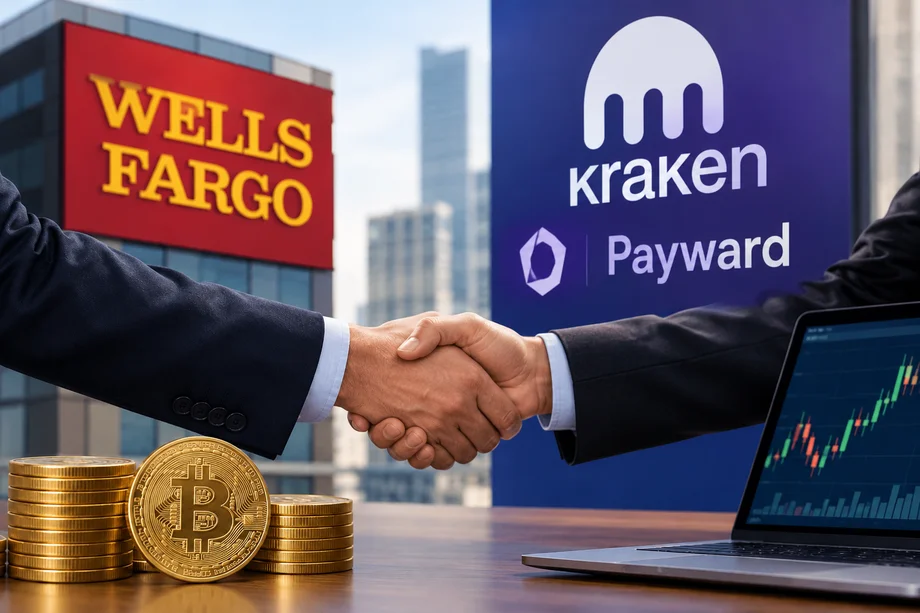
The $2.3 trillion U.S. bank is discussing an arrangement under which Payward would supply digital-asset liquidity and execution services, though no agreement has been reached
Wells Fargo is in ongoing discussions with Payward, the parent company of the cryptocurrency exchange Kraken, over a potential deal that would give the bank access to crypto trading liquidity. The talks, first reported on October 7, remain preliminary and may not result in a signed agreement. Both companies have declined to comment.
According to people familiar with the matter, the proposed arrangement would position Payward as an execution-layer liquidity provider. Through its institutional prime brokerage arm, Kraken Prime, Payward would handle the routing and pricing of digital-asset trades. Wells Fargo would retain its client relationships and brand, offering customers crypto trading capabilities without operating its own matching engine or exchange infrastructure.
Structure of the Potential Arrangement
The model under discussion is sometimes described as “rent the rails.” Banks and fintech firms keep their customer-facing platforms while Payward manages market access, execution, and related infrastructure behind the scenes. Payward already markets this type of service to financial institutions, stating that partners can typically reach first transactions within roughly 90 days of signing a contract. The company advertises execution across more than 600 assets along with segregated custody and compliance tools.
No details have been disclosed regarding which cryptocurrencies would be covered, which client segments would gain access, fee structures, technology integration, or a potential launch timeline. The arrangement would not involve Wells Fargo taking custody of client assets on its own balance sheet or making direct purchases of bitcoin or other tokens as part of the deal.
Wells Fargo’s Existing Digital-Asset Activity
Wells Fargo already maintains exposure to digital assets through other channels. Recent SEC filings showed the bank holding more than 6.5 million shares of the iShares Bitcoin Trust and nearly 726,000 shares of Strategy. The bank has also invested in compliance firm Elliptic and trading-technology provider Talos. It is part of a consortium of financial institutions working toward the launch of a U.S. dollar stablecoin, targeted for the first half of 2027, and has plans to introduce tokenized deposits for corporate and commercial clients, beginning with limited U.S. dollar-to-British-pound functionality before broader expansion in 2027.
In its 2026 proxy statement, the bank noted that management had advanced its digital-asset strategy alongside work on payments and liquidity services. Its investment business already produces research and educational materials on digital assets for clients.
Prior Connection Through Nasdaq Investment
The two companies share a recent commercial link. In September 2026, Nasdaq Ventures agreed to invest $100 million in Payward at a reported $21 billion valuation. The transaction expanded collaboration on tokenized equities, always-on market infrastructure, and surveillance technology. Wells Fargo served as Nasdaq’s exclusive capital-markets adviser on that deal. The parties are developing Nasdaq Equity Tokens, with a planned launch in the second quarter of 2027, and Payward is expected to apply Nasdaq surveillance technology across crypto, traditional equities, tokenized shares, futures, and options.
Payward’s Expanding Bank Partnerships
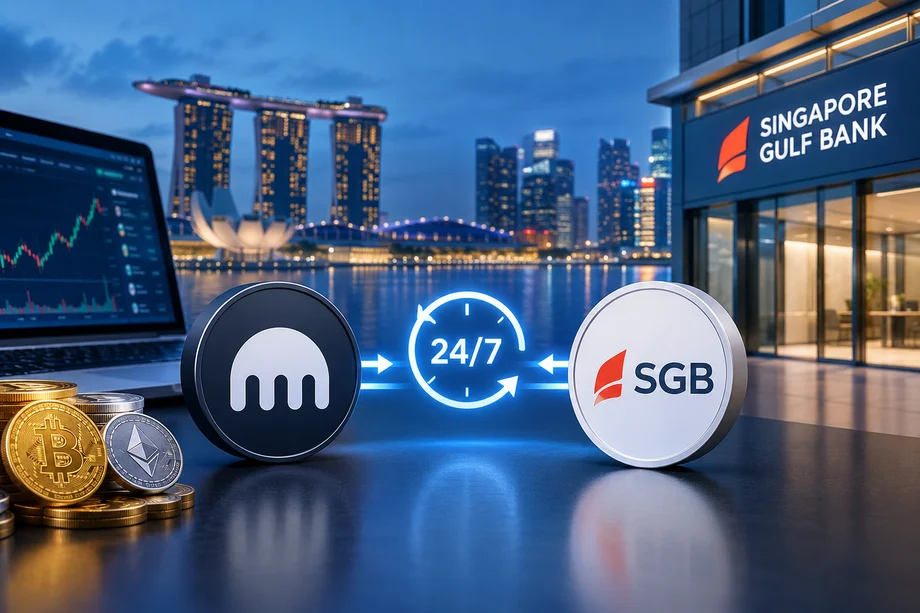
The Wells Fargo discussions form part of a broader push by Payward into institutional infrastructure. In early September, SoFi Technologies went live with a similar liquidity arrangement, routing customer crypto trades through Kraken Prime and joining Payward’s settlement network for 24-hour dollar movements. Earlier in October, Payward integrated Singapore Gulf Bank’s SGB Net real-time settlement network, enabling institutional clients on both platforms to settle digital-asset trades around the clock, starting with U.S. dollar transactions. Singapore Gulf Bank is also onboarding Kraken Prime as an additional liquidity source.
Separately, Payward is in talks with BNY covering a wider set of services that could include digital assets, custody, wealth management, trading, payments, and other infrastructure. Those discussions likewise remain unfinished, with no announced agreement or launch date.
Payward launched its enterprise infrastructure unit, Payward Services, in March 2026. The division is designed for banks, fintechs, and other financial firms seeking to add crypto trading, tokenized assets, stablecoin payments, staking, and funding tools without building separate systems. In May the company filed an application with the Office of the Comptroller of the Currency to establish Payward National Trust Company, focused on federally supervised digital-asset custody. It has also expanded regulated trading capabilities through the acquisition of Bitnomial, a CFTC-registered derivatives exchange, clearing organization, and futures commission merchant, and has announced plans to offer regulated on-chain perpetual futures to U.S. clients. On October 6 its xStocks platform brought more than 1,100 tokenized U.S. equities natively to the Monad blockchain.
Payward reported $508 million in adjusted revenue for the second quarter of 2026, with 6.6 million funded accounts holding approximately $40 billion in assets across its platforms. The company has indicated that an initial public listing is not expected before the second quarter of 2027 at the earliest.
Status of the Discussions
Scope, eligible clients, and specific asset classes remain undisclosed. No product launch, regulatory filing, or public confirmation has been issued. Any commercial relationship would take effect only after definitive agreements are executed and the parties choose to announce them. The talks continue without a stated timetable.
Disclaimer
This article was generated by AI using information from multiple industry sources. It has not been reviewed or verified by a human editor and may contain inaccuracies, omissions, or misinformation. Readers are encouraged to independently verify any information before making decisions based on its content.Tired of the noise?
Let the bots trade for you.
Trade 24/7, without emotion, with data-driven strategies.
Associated articles
BNY and Kraken Parent Payward Discuss Broad Crypto Infrastructure Partnership
Payward and Singapore Gulf Bank Launch 24/7 Settlement for Institutional Digital Asset Trades
SoFi and Kraken Parent Link Banking Rails With Crypto Trading Infrastructure
Payward Spends Billions to Transform Kraken Parent Into Broad Financial Infrastructure Platform
Israel’s Largest Bank Partners With Galaxy for Crypto Trading Launch in 2027
Latest articles
Ripple Prime Enters Leveraged ETF Financing, Targeting $3T Annual Clearing Volume

Standard Chartered Expands Digital Asset Custody to Singapore

Sui Achieves 40.6 Million TPS Record in AI Agent Stress Test

Samsung Wallet to Bring USDC Cross-Border Transfers to 82 Million Galaxy Devices