Newsroom
Standard Chartered Forecasts $3,500 AAVE Target by 2030 on DeFi and Tokenization Growth
25 June, 2026 / News / AI / Tags: aave, chartered, lending, protocol, kendrick
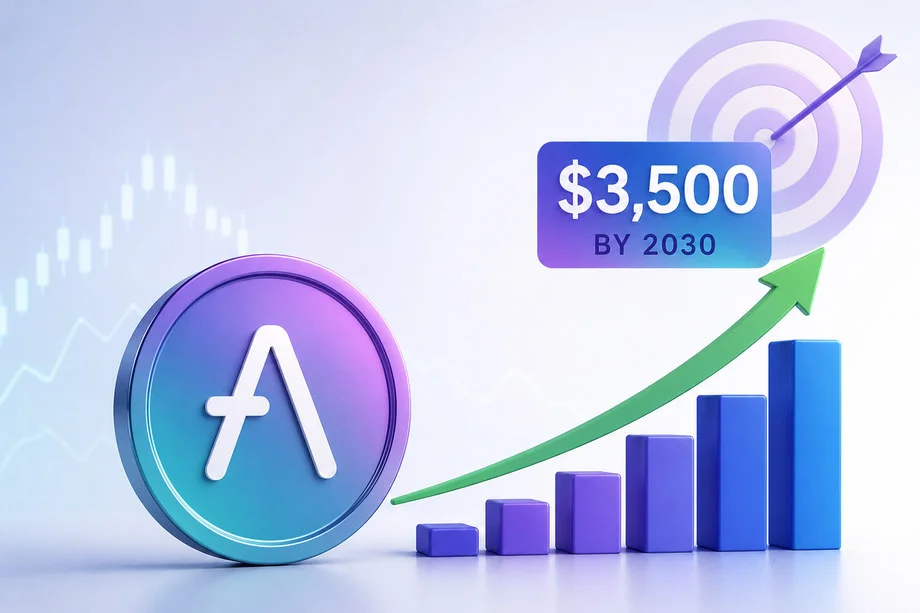
Standard Chartered has set a long-term price target of $3,500 for AAVE by the end of 2030, projecting substantial expansion tied to decentralized lending and tokenized real-world assets. The forecast comes as the protocol demonstrates recovery from earlier challenges
Standard Chartered's Bullish Outlook for Aave
Standard Chartered has initiated coverage on Aave, the prominent decentralized finance lending protocol, with an ambitious projection for its native token AAVE. The bank's digital assets research team, led by Geoff Kendrick, anticipates AAVE reaching $3,500 by December 2030. This target represents roughly a 50-fold increase from recent trading levels around $70-$80.
The analysis points to Aave's established position in on-chain lending as a key factor. Aave operates as a permissionless protocol where users can lend and borrow crypto assets through smart contracts, bypassing traditional intermediaries.
- $180 by end of 2026
- $600 by end of 2027
- $1,200 by end of 2028
- $2,200 by end of 2029
- $3,500 by end of 2030
Recovery Following Security Incident
Earlier in 2026, Aave faced pressure from a major incident involving approximately $292 million in exploited assets linked to a cross-chain bridge vulnerability. Attackers used stolen tokens as collateral on the platform, leading to temporary outflows and reduced activity. Aave responded by suspending affected pools, and the protocol has since shown signs of stabilization with assets beginning to return.
Geoff Kendrick noted that Aave has moved past the disruption and remains well-positioned in the DeFi lending space.
Tokenization of Real-World Assets as Primary Driver
Central to the optimistic forecast is the expected growth in tokenized real-world assets (RWAs). Standard Chartered estimates this sector could expand 37-fold to reach $2.7 trillion by 2030. As tokenized assets increase, demand for lending and borrowing infrastructure like Aave is projected to rise significantly.
Aave Horizon, the protocol's permissioned offering for institutional participants, allows verified entities to lend against tokenized collateral. As of late May 2026, outstanding loans on Horizon reached $163 million, within a broader tokenized ecosystem valued at around $30 billion.
The protocol's native stablecoin GHO, launched in 2023, also contributes to revenue retention, with its supply growing to approximately $600 million.
Market Response and Recent Performance
The report triggered immediate market reaction, with AAVE posting gains of up to 16% in a single session, outperforming many other assets. Trading volume and derivatives activity increased notably, reflecting renewed interest in DeFi plays.
Technically, the token broke above a multi-month descending channel, with analysts watching resistance levels near $85-$90 for potential continuation toward higher targets in the near term.
- Dominant position in decentralized lending markets
- Revenue tied directly to lending volume and deposits
- Institutional-focused initiatives like Aave Horizon
- Potential resumption of token buyback mechanisms
Broader Context in DeFi Sector
Aave's potential growth aligns with expectations of increasing integration between traditional finance and blockchain-based systems. As more institutions explore on-chain opportunities, established protocols with proven track records are positioned to benefit. Other research firms, such as Grayscale, have also highlighted AAVE's valuation, suggesting it may be trading below intrinsic levels with room for appreciation under favorable regulatory and adoption conditions.
At peak activity in late 2025, Aave held deposits that would have placed it among major traditional banks by asset size. The protocol continues to support multiple blockchain networks, enhancing its reach and utility.
- Standard Chartered: $3,500 by 2030
- Grayscale Research: Potential fair value near $175 in 12 months

Disclaimer
This article was generated by AI using information from multiple industry sources. It has not been reviewed or verified by a human editor and may contain inaccuracies, omissions, or misinformation. Readers are encouraged to independently verify any information before making decisions based on its content.Tired of the noise?
Let the bots trade for you.
Trade 24/7, without emotion, with data-driven strategies.
Associated articles
Citi Research Positions Aave as Key Player in Tokenized Collateral Markets

Aave V4 Launches on Avalanche to Support Tokenized Asset Lending
Tokenized Real-World Assets Climb to $7.4 Billion as DeFi Deposits Fall 15%

Uniswap Surges Double Digits as Standard Chartered Targets $100 UNI by 2030
Standard Chartered Sets $10 Arbitrum Target by 2030 as ARB Rallies Against Market Drop
Latest articles

SpaceX and Tesla Set Up Committees to Explore Merger That Would Combine Holdings of Over 30,000 Bitcoins

UK Banks Face Thousands of Complaints Over Crypto Transfer Restrictions

Ripple Backs SEC Proposed Crypto Asset Rules After $150 Million Legal Battle

Blockchain.com Introduces Options Trading on Seven Major Crypto Assets