Newsroom
Standard Chartered Becomes First Bank Distributor of Hong Kong Dollar Stablecoin HKDAP
25 August, 2026 / News / AI / Tags: kong, hong, hkdap, chartered, anchorpoint
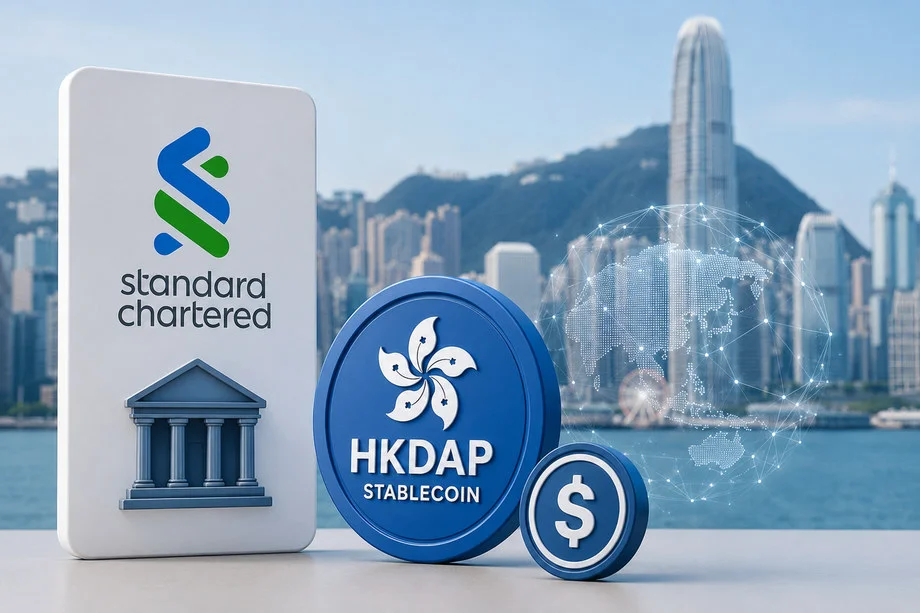
Standard Chartered Bank (Hong Kong) will offer the regulated HKD-backed token to institutional clients, with tokenized fund settlement planned for the fourth quarter
Standard Chartered Bank (Hong Kong) Limited announced on August 24, 2026, that it has become the first commercial bank authorized to distribute HKDAP, the regulated Hong Kong dollar stablecoin issued by Anchorpoint Financial Limited. The move gives eligible institutional and corporate clients a direct banking channel to access the token, which previously reached users mainly through licensed digital asset platforms.
HKDAP, short for HKD At Par, is designed to maintain a one-to-one value with the Hong Kong dollar and is redeemable at par. It operates on the Ethereum mainnet under a controlled beta program limited to institutions, corporate customers and professional investors.
Issuer Structure and Regulatory Background
Anchorpoint Financial Limited received one of the first two stablecoin issuer licences from the Hong Kong Monetary Authority in April 2026 under the Stablecoins Ordinance. The second licence went to HSBC, which has not yet brought its own Hong Kong dollar stablecoin to market. Anchorpoint was formed in February 2025 as a joint venture involving Standard Chartered Bank (Hong Kong),HKT and Animoca Brands, with the bank as the largest shareholder. Standard Chartered’s trustee also holds the reserve assets that back the token.
The Hong Kong Monetary Authority awarded the licences after reviewing dozens of applications and has indicated it will remain selective in future approvals. Anchorpoint follows a business-to-business-to-consumer distribution model, working through authorised partners rather than serving end users directly.
Current Distribution Network and Scale
Before the bank’s entry, HashKey Exchange and OSL Group served as authorised distributors and began offering beta access earlier in August. HashKey completed an initial minting and redemption transaction for approved clients. Standard Chartered now joins that network, enabling eligible clients to convert between Hong Kong dollars and HKDAP through conventional banking channels.
As of August 19, 2026, Anchorpoint reported 522,000 HKDAP tokens in circulation and transaction volume of 658,160 during the beta period. The limited figures reflect the project’s phased, institution-focused rollout rather than broad market activity. The issuer has indicated that wider access, potentially including retail users, could become available by the end of 2026 subject to market conditions and regulatory requirements.
Planned Commercial Applications
Standard Chartered intends to introduce subscription and settlement services for tokenized money market funds in the fourth quarter of 2026. The bank plans to work with both international and Hong Kong-based asset managers. By providing the cash leg of a tokenized fund transaction on the same blockchain that records the fund units, the stablecoin aims to reduce the traditional timing gap between investment transfer and payment settlement.
Additional use cases under exploration include intragroup treasury transfers across the bank’s global network, cross-border payments and transfers outside conventional banking hours. These applications remain in the pilot or planning stage. The bank has not disclosed specific partner names or projected transaction volumes for the coming quarter.
The initiative builds on Standard Chartered’s earlier work in tokenization, including infrastructure support for a tokenized money market fund with China Asset Management Hong Kong and participation in previous e-HKD and Project Ensemble pilots run by the Hong Kong Monetary Authority.
Market Context and Next Steps
Hong Kong’s regulated stablecoin framework positions HKDAP as one of the first licensed non-dollar local-currency tokens available through a major international bank. HSBC holds the second issuer licence and is preparing its own product for the second half of 2026, with possible distribution through its PayMe platform that serves millions of users. For now, HKDAP remains the only live regulated Hong Kong dollar stablecoin in active institutional use.
Key developments to watch include named asset-manager partnerships for the fourth-quarter fund settlement services, actual transaction volumes once those services begin, and any updates on reserve transparency or expanded access. Users have been advised to verify contract addresses and obtain the token only through authorised channels, following earlier warnings about unrelated tokens circulating under similar names.

Disclaimer
This article was generated by AI using information from multiple industry sources. It has not been reviewed or verified by a human editor and may contain inaccuracies, omissions, or misinformation. Readers are encouraged to independently verify any information before making decisions based on its content.Tired of the noise?
Let the bots trade for you.
Trade 24/7, without emotion, with data-driven strategies.
Associated articles

Standard Chartered Venture Starts Limited Rollout of Hong Kong Dollar Stablecoin

Hong Kong’s First Regulated HKD Stablecoin Enters Institutional Phase Amid Payment Tests and Contract Concerns
HSBC Names Hong Kong Dollar Stablecoin RedCoin for H2 2026 Retail Launch
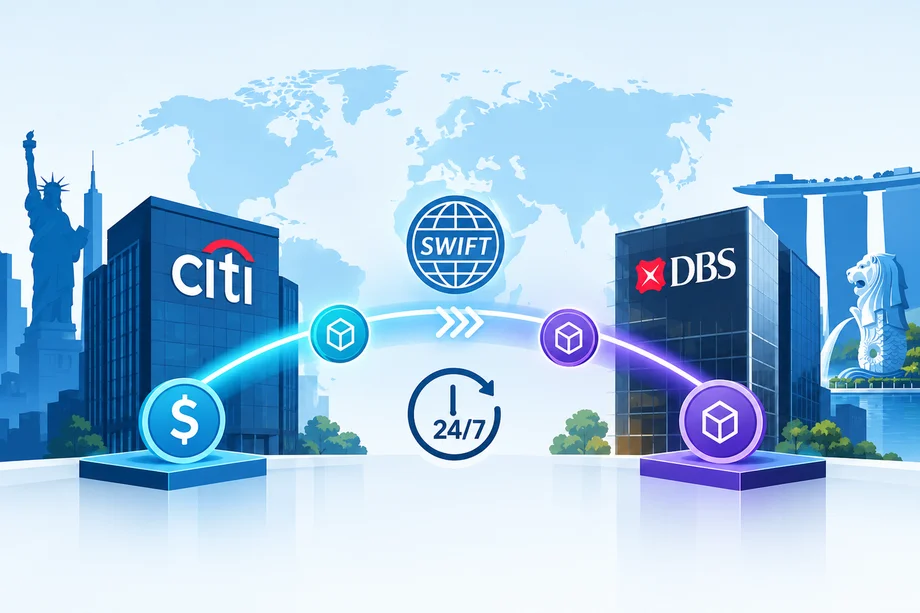
Citi and DBS Complete First Weekend Tokenized USD Payment via Swift Ledger

Anchorage Digital Expands Custody to Etherlink Assets Including Tokenized Uranium
Latest articles

SpaceX and Tesla Set Up Committees to Explore Merger That Would Combine Holdings of Over 30,000 Bitcoins
UK Banks Face Thousands of Complaints Over Crypto Transfer Restrictions

Ripple Backs SEC Proposed Crypto Asset Rules After $150 Million Legal Battle
Blockchain.com Introduces Options Trading on Seven Major Crypto Assets