Newsroom
Senate Faces Critical Vote on Crypto Market Clarity Act Amid Intense Lobbying
10 September, 2026 / News / AI / Tags: senators, senate, vote, clarity, legislation

Lawmakers prepare for a September 15 procedural vote on the CLARITY Act as Treasury officials, industry groups and banks ramp up pressure over digital asset rules
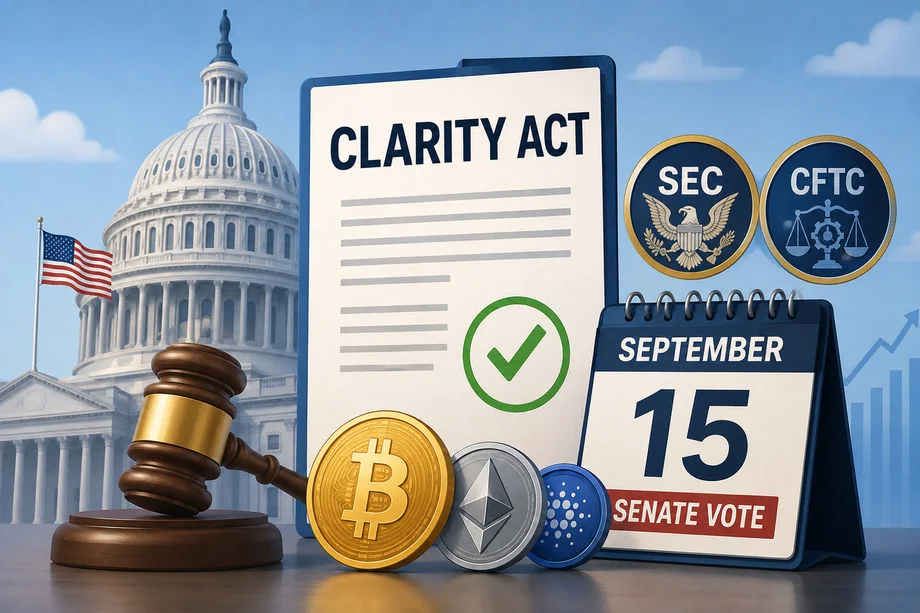
The U.S. Senate is set to hold a key procedural vote on September 15 on the Digital Asset Market Clarity Act, commonly known as the CLARITY Act. The cloture motion requires 60 votes to advance the bill for full floor debate and amendments. Failure at this stage would likely stall comprehensive market structure legislation for the remainder of the current congressional session.
Republicans hold 53 seats in the Senate, meaning the bill needs support from at least seven Democrats to clear the threshold. The legislation has already passed the House by a 294-134 margin and cleared the Senate Banking Committee 15-9, marking further progress than earlier efforts such as the FIT21 bill.
What the Legislation Would Establish
The CLARITY Act seeks to resolve long-standing uncertainty over which federal regulator oversees different types of digital assets. It would create a statutory test to determine when a blockchain network and its associated token qualify as a digital commodity, based on factors including network control and maturity. Assets meeting that threshold would fall under Commodity Futures Trading Commission oversight, while those structured as investment contracts would remain subject to Securities and Exchange Commission rules.
The bill would also impose registration, disclosure, customer protection and anti-money-laundering requirements on exchanges and intermediaries serving U.S. customers. Digital asset platforms would be classified as financial institutions under the Bank Secrecy Act, making compliance programs a legal obligation rather than a voluntary practice.
Proponents say the framework would give companies clear answers on asset classification, regulatory jurisdiction and applicable rules, reducing the patchwork of guidance that has left firms operating without consistent federal direction.
Treasury Secretary Presses for Action
Treasury Secretary Scott Bessent has publicly urged senators to advance the bill. In remarks tied to the upcoming vote, he described the legislation as essential for creating clear standards for digital assets while equipping the government with tools to prevent misuse. Bessent first called for Senate action in July and renewed the appeal as lawmakers returned from recess, linking passage to national security and the protection of U.S. market integrity.
He warned that failure to act could signal to allies and adversaries that the United States is unwilling to lead on digital finance and could weaken its ability to counter illicit activity involving cryptocurrencies.
Senator Cynthia Lummis of Wyoming, a leading supporter of the bill, has similarly argued that delay risks allowing other nations, including China, to set global standards for digital assets. She has pointed to consumer protection measures in the legislation, including requirements that intermediaries segregate customer assets.
Industry and Banking Groups Intensify Lobbying
Both crypto advocates and community banks have taken their campaigns into senators’ home states during the August recess. Stand With Crypto, a group backed by Coinbase, reported that its supporters contacted members of Congress nearly 50,000 times in August through calls and emails. The organization also organized events in states including Iowa, Michigan and Georgia and placed opinion pieces in local newspapers.
The Blockchain Association launched a separate effort to help individuals and companies contact senators in support of the bill. Crypto-linked groups have already spent substantial sums ahead of the November midterm elections.
Community banks, represented by the Independent Community Bankers of America, have focused their opposition on provisions related to stablecoin rewards. Bank groups argue that allowing crypto platforms to offer yields or rewards on stablecoins could draw deposits away from traditional institutions and reduce lending capacity in local communities. The trade group has organized meetings between local bankers and senators and run television advertisements calling for stronger restrictions.
Coinbase Chief Executive Brian Armstrong has expressed confidence that the industry will benefit regardless of the vote’s outcome. He noted that if the bill fails, the SEC and CFTC have committed to issuing their own regulatory frameworks. Armstrong cited bipartisan support from law enforcement, established financial institutions and crypto firms, and said previous concerns raised by Coinbase have been addressed in the current text.
Ethics Rules Remain a Sticking Point
Negotiations continue over ethics provisions governing crypto holdings by senior government officials. Democratic senators have pressed for stricter measures, including requirements that could affect holdings linked to the current administration. Some Republican senators, including Thom Tillis of North Carolina and Mike Rounds, have expressed concern that disagreement on these issues could prevent the bill from reaching 60 votes.
The White House has submitted its own ethics framework, while Democrats have sought more robust restrictions. Lawmakers on both sides have indicated that compromise on this language remains central to any path forward.
Consequences of a Failed Vote
If the cloture motion fails, comprehensive market structure legislation would likely be deferred to the next Congress. The Senate’s remaining calendar before the 2027 session is limited, and midterm elections in November could alter party control of one or both chambers. Senator Lummis has cautioned that the next realistic opportunity for passage could be delayed significantly if agreement is not reached in the near term.
In the interim, the SEC has proposed Regulation Crypto Assets, which would create offering exemptions for token issuers and address certain state-level conflicts. Industry analysts note that agency rulemaking can provide temporary relief on fundraising but cannot create a statutory classification test or permanently reallocate jurisdiction between the SEC and CFTC. Any rules issued through this process would also remain subject to future reversal or legal challenge.
Stablecoin-related provisions that have drawn near-consensus could potentially reappear in narrower standalone measures even if the broader bill stalls.
The September 15 vote will determine whether the CLARITY Act advances to open debate in the current session or faces further delays amid shifting political dynamics and competing industry priorities.
Disclaimer
This article was generated by AI using information from multiple industry sources. It has not been reviewed or verified by a human editor and may contain inaccuracies, omissions, or misinformation. Readers are encouraged to independently verify any information before making decisions based on its content.Tired of the noise?
Let the bots trade for you.
Trade 24/7, without emotion, with data-driven strategies.
Associated articles

Senate Schedules September 15 Vote on Crypto Market Structure Bill

Treasury Secretary Presses Senate for Immediate CLARITY Act Vote Ahead of August Recess
Senate Faces Critical September 15 Vote on Crypto Market Structure Bill

Senate Races Clock on CLARITY Act Ahead of August Recess

Senate Delays Clarity Act Vote Amid Schedule Crunch and Bipartisan Disputes
Latest articles

SpaceX and Tesla Set Up Committees to Explore Merger That Would Combine Holdings of Over 30,000 Bitcoins

UK Banks Face Thousands of Complaints Over Crypto Transfer Restrictions

Ripple Backs SEC Proposed Crypto Asset Rules After $150 Million Legal Battle

Blockchain.com Introduces Options Trading on Seven Major Crypto Assets