Newsroom
Senate Faces Critical September 15 Vote on Crypto Market Structure Bill
2 September, 2026 / News / AI / Tags: senate, procedural, vote, would, cloture
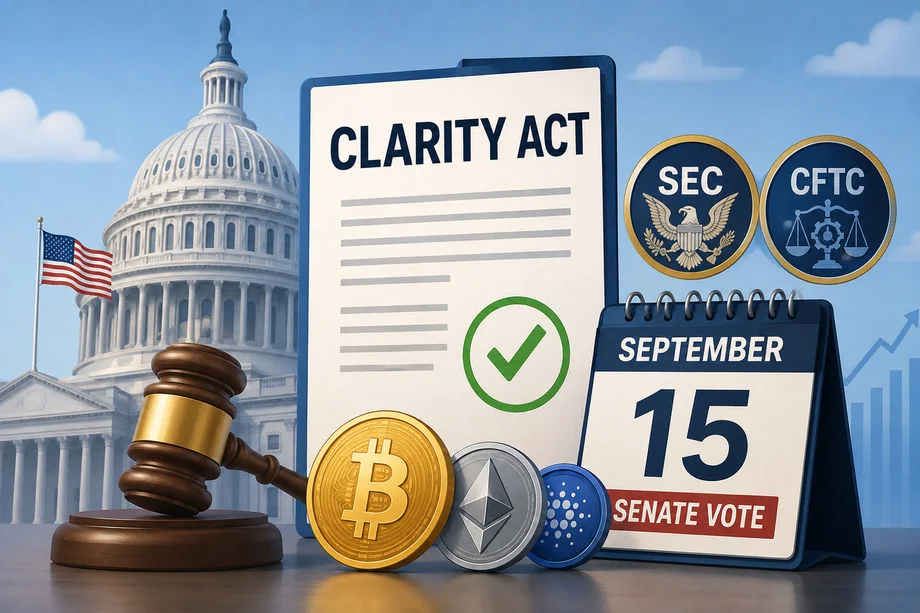
The CLARITY Act heads to a procedural cloture test requiring 60 votes as regulators advance parallel rules and industry support remains mixed ahead of midterms
Lawmakers return to Washington this week with a narrow window to advance the Digital Asset Market Clarity Act, known as the CLARITY Act. Senate Majority Leader John Thune scheduled a cloture vote for September 15 at 2:15 p.m. ET on the motion to proceed, a procedural step that demands 60 votes before formal floor debate can begin.
Republicans hold 53 seats in the chamber. At least seven Democratic votes would be required for cloture under normal conditions, though potential defections among some Republicans could raise that number. The Senate reconvenes on September 14 after the August recess, leaving limited working days before midterm campaigning intensifies and further legislative progress becomes more difficult.
What the Legislation Seeks to Achieve
The bill aims to establish clearer lines of authority between the Securities and Exchange Commission and the Commodity Futures Trading Commission over digital assets. It would define when a token is treated as a security or a commodity, create registration requirements for crypto businesses, and incorporate anti-money laundering standards.
Supporters argue the framework would reduce long-standing uncertainty that has left firms unsure which agency’s rules apply. The House passed an earlier version 294 to 134 in July 2025, with 78 Democrats joining Republicans. The Senate Banking Committee advanced it 15 to 9 in May 2026. An earlier attempt to bring the measure to the full Senate floor was delayed.
Key Obstacles to Bipartisan Support
Several unresolved issues continue to divide lawmakers. One centers on ethics language addressing potential conflicts of interest for public officials with digital asset holdings. Another involves whether stablecoins should be allowed to pay interest or yield, a point of tension between crypto firms and banking interests concerned about deposit competition. A third concerns liability protections for non-custodial software developers under provisions related to decentralized finance.
A group of Democratic senators has indicated the current draft falls short on ethics, consumer protection, and illicit finance measures. Their positions remain conditional. Some Republicans have also raised objections on grounds ranging from government overreach to competition concerns.
SEC Chair Paul Atkins has expressed hope that the Senate will advance the bill this month and eventually send it to the president. He noted the agency is preparing its own regulatory approach to work alongside the legislation, including exemptions for fundraising and other activities. Atkins said the SEC could proceed under existing securities laws if Congress does not act, but argued that legislation would provide a more durable foundation less vulnerable to future changes in agency leadership.
Industry Positions and Bank Support
Coinbase Chief Executive Brian Armstrong has stated that most major banks support the measure. He named institutions including Goldman Sachs, Citi, BNY Mellon, Fidelity, and BlackRock as backers, saying clearer rules would give banks tools to expand services using blockchain technology and could encourage more crypto businesses to operate in the United States rather than offshore.
Armstrong acknowledged that a smaller group of banks opposes the bill, attributing their stance to concerns about competition from crypto firms rather than broader systemic risks. He expressed confidence that the Senate would not allow protectionist arguments to block the legislation.
Other industry voices have voiced caution. Some executives have described themselves as skeptical of passage this year given the approaching midterm elections and the political calendar.
Prediction Markets Signal Low Odds
Market-based forecasts have grown more pessimistic. One prediction platform recently priced the chance of the CLARITY Act becoming law in 2026 near 14 percent, down sharply from higher levels earlier in the year. Other platforms have shown mixed readings, with some estimates closer to even odds in prior assessments.
A successful cloture vote would open the door to amendments and further debate but would not enact the bill. Additional procedural steps and a final passage vote would still be required. A failed vote would likely leave the measure stalled for the remainder of the current Congress.
Regulators Move Forward Independently
While the legislative process remains uncertain, the SEC and Commodity Futures Trading Commission have continued advancing their own initiatives. The SEC has proposed updates to transfer-agent rules that would recognize blockchain-based recordkeeping for securities ownership. It has also floated a $75 million exemption path for certain crypto offerings and is reviewing custody rules.
The agency has scheduled a September 17 roundtable on moving U.S. equity markets toward around-the-clock trading, with participation expected from major exchanges and financial firms. The CFTC has explored options related to onshoring perpetual futures markets.
These steps indicate that federal agencies are preparing frameworks for digital assets regardless of the outcome of the September 15 procedural vote. Industry participants note that agency rules can provide interim guidance but lack the permanence of congressional legislation.
The coming days will test whether enough bipartisan support exists to move the CLARITY Act past its first major Senate hurdle this year. The procedural vote on September 15 stands as the immediate decision point that will determine whether further debate and potential amendments remain possible before the midterm election cycle fully takes hold.
Disclaimer
This article was generated by AI using information from multiple industry sources. It has not been reviewed or verified by a human editor and may contain inaccuracies, omissions, or misinformation. Readers are encouraged to independently verify any information before making decisions based on its content.Tired of the noise?
Let the bots trade for you.
Trade 24/7, without emotion, with data-driven strategies.
Associated articles

Galaxy Digital Slashes CLARITY Act Passage Odds to 10% Amid Tight Senate Calendar

Senate Races Clock on CLARITY Act Ahead of August Recess
Senate Blocks Crypto Market Clarity Act Over Ethics Disputes

Senate Faces Critical Vote on Crypto Market Clarity Act Amid Intense Lobbying

Senate Schedules September 15 Vote on Crypto Market Structure Bill
Latest articles

Samsung and SK Hynix Upgrade China NAND Factories Amid AI Demand and Local Rivalry

China Prosecutors Move to Confiscate $5.1 Billion Bitcoin Haul Seized in UK Fraud Case

Bank of Korea Holds Rate at 3% After Consecutive Hikes, Eyes Data for Next Move

Starknet Community Approves Research Into Independent Post-Quantum Layer 1