Newsroom
Saylor Warns Bitcoin's Greatest Threat Is Internal Rule Changes Amid BIP-110 Debate
29 July, 2026 / News / AI / Tags: saylor, bitcoin, rules, michael, scarcity
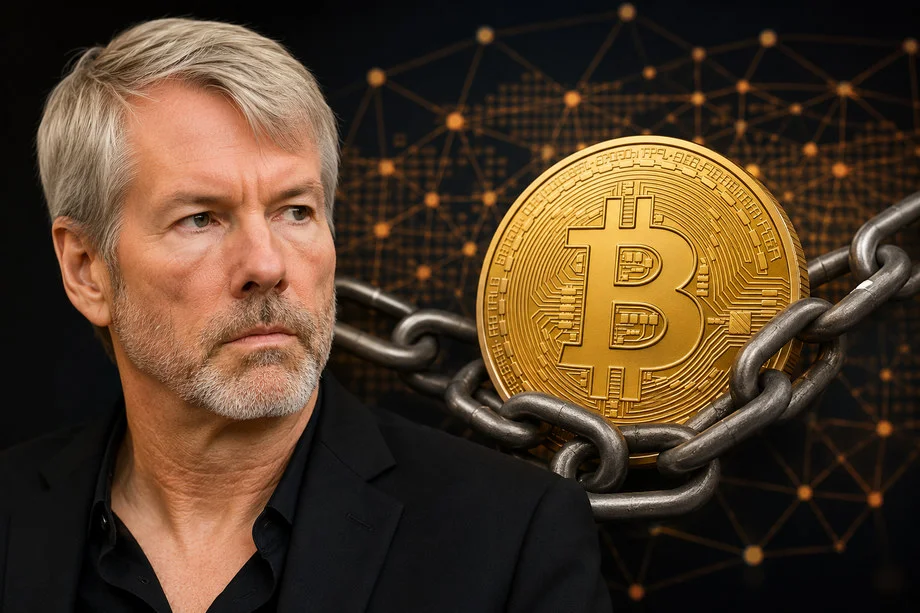
Strategy executive chairman Michael Saylor argues protocol upgrades must stay rare and neutral, criticizing a soft-fork proposal to limit on-chain data as it nears a key activation window
Consensus Rules Framed as Bitcoin's Constitution
Michael Saylor, executive chairman of Strategy, has cautioned that alterations to Bitcoin's core consensus rules represent a more serious long-term danger than external competitors, governments, or rival digital assets. In a series of public posts, he described those rules as the network's constitution, the framework that defines ownership recognition, scarcity, settlement finality, and the limits of what participants may alter.
Saylor stated that Bitcoin has already achieved broad market recognition and must now protect that position. He identified the primary risk as internal: groups inventing justifications to rewrite rules and capture economic rights. Such moves, he argued, would convert freedom into permission and turn settled law into something subject to ongoing redistribution.
Any change driven by the convenience of one faction, he continued, would impose costs and risks on miners, developers, holders, companies, custodians, and future users. Once the precedent is set, competing groups could pursue further revisions through the same process, creating permanent governance disputes that deter capital, slow progress, and erode security.
Opposition to BIP-110 Soft Fork
Saylor's comments build on his earlier rejection of Bitcoin Improvement Proposal 110, a temporary soft fork designed to restrict certain forms of arbitrary data in transactions. Supporters contend the measure would ease storage and verification demands on node operators and keep the network focused on monetary transfers rather than inscriptions or other non-monetary uses.
Saylor accepts that some on-chain data may hold little economic value or relate to undesirable activity. He maintains, however, that the protocol cannot reliably judge the intent behind valid, fee-paying transactions and should not employ consensus rules to filter them. Restricting such activity, in his view, would dampen competition for block space, weaken the fee market that will grow more important as the block subsidy declines, and undermine the scarcity of that space.
He has extended the critique to other suggested changes, including those that would introduce covenant features or expand block capacity. Larger blocks, he said, would raise the resource costs of running a full node while diluting scarcity. More complex rules would create additional surfaces for attack. His preferred path is to preserve a simple, neutral, scarce, and secure base layer, leaving innovation to voluntary second-layer systems where failures remain contained.
Saylor has also told backers of the proposal not to attempt repairs on a system that is functioning as designed.
Community Divisions and Activation Timeline
The debate has drawn supporting voices as well. Samson Mow, chief executive of JAN3, has warned that blocking certain fee-paying data transactions would establish an irreversible precedent and risk transforming Bitcoin into something closer to a discretionary fiat system.
Opposition has been vocal. Veteran trader Fred Krueger has backed the proposal and dismissed Saylor's objections. Developer Paul Sztorc labeled Saylor a hypocrite, noting the executive's relatively recent entry into Bitcoin advocacy. Miner signaling in favor of BIP-110 has risen to roughly 2.3 percent, still far below the 55 percent threshold required for activation ahead of an early-August 2026 deadline.
If support remains low, the network faces the possibility of a temporary split that could prompt exchanges to pause Bitcoin transfers while systems adjust. Some market participants have linked recent price softness near the $64,000 level to uncertainty surrounding the proposal.
Security Funding and Long-Term Stance
Saylor's position coincides with Strategy's participation in a broader security initiative. The company joined Anchorage Digital, ARK Invest, BlackRock, Block, Blockstream, Coinbase, Fidelity Digital Assets, and Galaxy in forming a consortium that has committed a combined $15 million over three years. The funds will support independent research and development focused on Bitcoin security, including preparations for potential quantum-computing challenges. The group has stated it will neither direct protocol development nor take formal positions on individual upgrade proposals.
Saylor continues to advocate that any base-layer upgrades remain infrequent, conservative, and justified only by clear necessity. He has framed protocol restraint, corporate participation, and sustained security investment as complementary elements of Bitcoin's next phase of growth toward serving global capital markets.


Disclaimer
This article was generated by AI using information from multiple industry sources. It has not been reviewed or verified by a human editor and may contain inaccuracies, omissions, or misinformation. Readers are encouraged to independently verify any information before making decisions based on its content.Tired of the noise?
Let the bots trade for you.
Trade 24/7, without emotion, with data-driven strategies.
Associated articles

Bitcoin Leaders Oppose BIP-110 Soft Fork Over Neutrality and Split Risks

Michael Saylor Declares BIP-110 Voluntary Support Threshold Unreachable

Bitcoin BIP-110 Mandatory Signaling Starts With Under 3% Miner Backing and Early Chain Split
Shielded Bitcoin Proposal Aims to Bring Zcash-Style Privacy to Transactions Without Soft Fork

Bitcoin BIP-110 Minority Chain Stalls After Two Blocks Amid Minimal Miner Support
Latest articles

SpaceX and Tesla Set Up Committees to Explore Merger That Would Combine Holdings of Over 30,000 Bitcoins
UK Banks Face Thousands of Complaints Over Crypto Transfer Restrictions
Ripple Backs SEC Proposed Crypto Asset Rules After $150 Million Legal Battle

Blockchain.com Introduces Options Trading on Seven Major Crypto Assets