Newsroom
Samsung Weighs Over 100 Trillion Won Shareholder Return on AI Memory Gains
21 August, 2026 / News / AI / Tags: samsung, memory, won, cash, shareholder
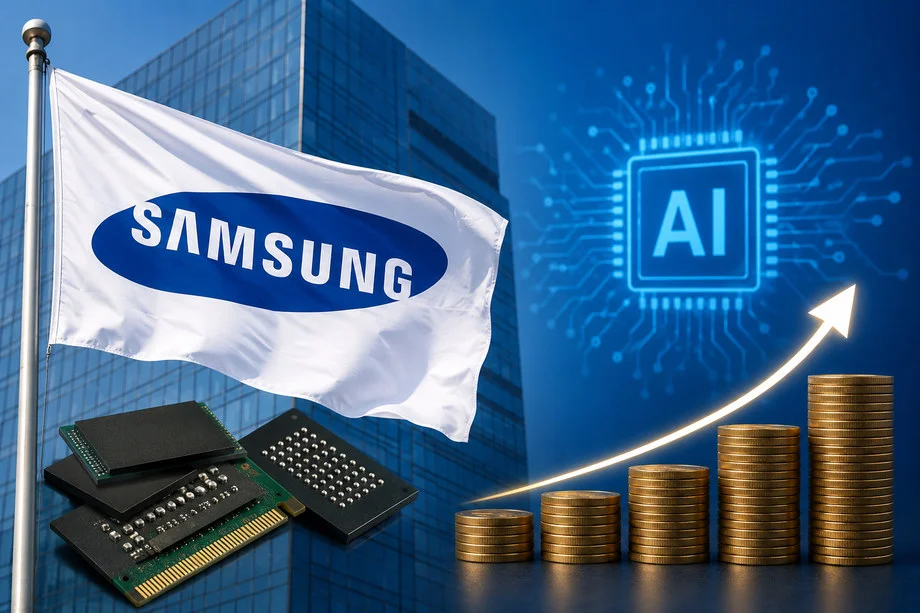
Samsung Electronics is reviewing a shareholder payout exceeding 100 trillion won, or about $72 billion, after a record quarter driven by AI-related memory demand, with a board decision expected by the end of August
Samsung Electronics is considering a major expansion of shareholder returns that could exceed 100 trillion won, roughly $71.75 billion to $72 billion, following its strongest quarterly performance to date. The potential package, which remains subject to board approval at a meeting scheduled for the end of August, may combine a special dividend with share buybacks and cancellations. The company has not finalized the total amount or precise mix of mechanisms.
Record Quarterly Results Powered by AI Memory Demand
The discussions follow Samsung’s second-quarter 2026 results, which showed revenue of 171.5 trillion won and operating profit of 89.5 trillion won. Nearly all of the operating profit, 89.2 trillion won, came from the semiconductor division. The company linked the memory unit’s performance to strong demand for AI servers, higher memory prices, and increased sales of higher-value products including high-bandwidth memory.
Demand for high-bandwidth memory, server DRAM, and enterprise solid-state drives drove the gains, while the mobile business recorded a small operating loss in the same period. Samsung’s Device Solutions unit, which includes memory production, accounted for almost the entire group operating profit.
Details of the Proposed Shareholder Return
Under its existing FY2024–2026 policy, Samsung commits to returning 50 percent of cumulative free cash flow to shareholders and maintains a regular annual dividend of 9.8 trillion won. The framework allows additional returns if surplus cash remains. Reports indicate the company is weighing a special dividend that could draw on roughly half of available cash, alongside possible buybacks and share cancellations.
Chief Financial Officer Park Soon-cheol stated on the July 30 earnings call that the board and management were discussing implementation of the shareholder-return policy, including a special dividend, and that shareholders would receive an update soon. Samsung has declined to comment on the specific figures circulating in media reports. Until the board approves a formal plan, the reported scale remains under internal review rather than a confirmed distribution.
Investor Pressure and Peer Actions
Investors have pressed both Samsung and SK Hynix to return more cash after years of accumulating large reserves. The two companies are projected to hold a combined approximately $263 billion in cash by the end of 2026, more than double Nvidia’s estimated $102 billion. Some investors have argued that retaining such large cash balances could suggest caution about the durability of the current AI-driven cycle.
SK Hynix moved first, announcing a 40 trillion won, or about $28.67 billion, share buyback and cancellation program. The company described the plan as the largest shareholder return ever announced by a publicly listed South Korean firm and said it would return more than half of free cash flow generated between 2025 and 2027. Micron, by contrast, has committed to returning 100 percent of its free cash flow.
Samsung has adhered to its 50 percent free-cash-flow target, yet the absolute size of potential returns has risen sharply because of record profits. The reported Samsung package, if approved, would rank among the largest single shareholder distributions considered by a South Korean company.
Memory Market Tightness and Broader Implications
Industry data point to continued pressure on memory supply. TrendForce projects DRAM contract prices rising 58 percent to 63 percent and NAND flash prices climbing 70 percent to 75 percent in the third quarter. The research firm expects structural tightness to persist through 2027 as producers prioritize higher-value AI components over standard consumer memory.
That prioritization could eventually affect pricing for personal computers and smartphones, as those products compete with AI hardware for limited manufacturing capacity. Samsung’s ability to fund a large potential payout rests directly on the current AI memory cycle that has concentrated profits among a small group of suppliers.
The board’s decision at the end of August will determine whether the reported figures advance from consideration into official company policy and clarify how the distribution sits alongside Samsung’s established free-cash-flow framework.

Disclaimer
This article was generated by AI using information from multiple industry sources. It has not been reviewed or verified by a human editor and may contain inaccuracies, omissions, or misinformation. Readers are encouraged to independently verify any information before making decisions based on its content.Tired of the noise?
Let the bots trade for you.
Trade 24/7, without emotion, with data-driven strategies.
Associated articles
SK Hynix Shares Surge After Record $29 Billion Buyback as Bond Yields Ease
Samsung Forecasts Record $80 Billion Quarterly Profit on AI Memory Demand
South Korean Crypto Exchanges See Operating Profits Plunge 78% in First Half of 2026
Amazon Posts $62.6 Billion Profit, AWS Growth Hits Fastest Pace in Years on AI Demand
Nvidia Expands Buyback to $235 Billion as It Rolls Out AI Safety Platform
Latest articles
CoinDCX Confirms Losses After Suspicious $16M Transfers From 2025 Hack Wallets
Robinhood Secures Dubai License for Crypto and Stock Trading, Middle East Launch Delayed to 2027
CZ Warns Crypto Users Over Two Critical PHP Vulnerabilities
Bybit Fintech FZE Receives VARA Licence for Dubai Spot Trading