Newsroom
Russia Places Foreign Stablecoin Freeze Risks on Crypto Investors
24 September, 2026 / News / AI / Tags: depositories, russia, chebeskov, russian, deputy
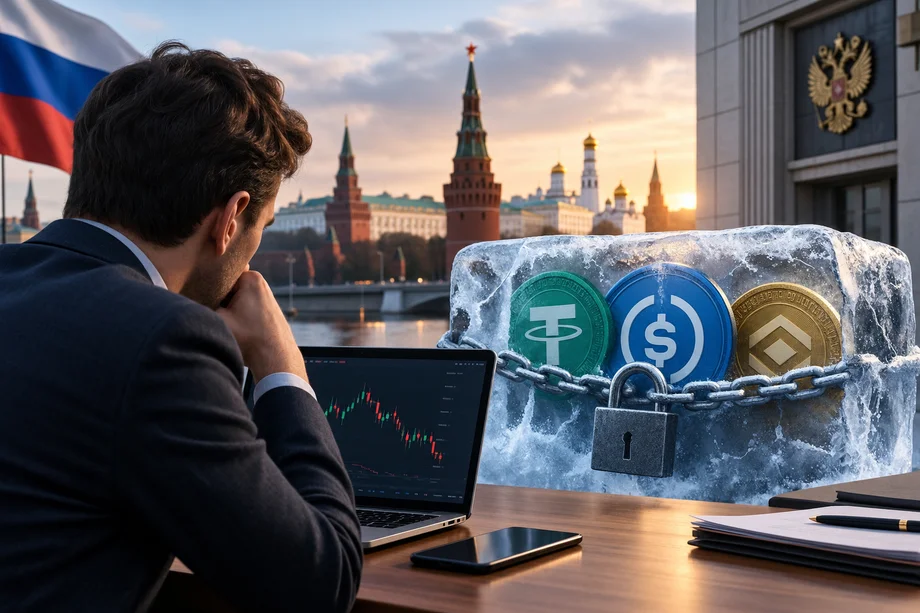
Deputy Finance Minister Ivan Chebeskov says investors, not local depositories, will absorb losses if overseas issuers block assets such as USDT or USDC, as the country advances its regulated digital asset framework covering an estimated $44 billion market
Russian authorities have clarified that cryptocurrency investors will absorb losses if foreign stablecoin issuers freeze assets for reasons beyond the control of domestic digital depositories. The position was outlined by Deputy Finance Minister Ivan Chebeskov as the government implements and expands rules for a regulated crypto market.
Officials estimate that roughly 20 million people in Russia hold cryptocurrencies and related products valued at about $44 billion. Daily transaction volume is put at approximately $595 million. Much of this activity still occurs outside formal oversight, prompting moves toward greater transparency and clearer allocation of responsibilities.
Investor Liability for Foreign Issuer Actions
Under the framework, Russian digital depositories remain accountable for record-keeping, storage, transfers, and preventing unauthorized disposal of client assets within their control. They are not required to compensate investors when a foreign issuer restricts tokens under the laws of its home jurisdiction.
The distinction applies particularly to dollar-pegged stablecoins such as USDT and USDC. Issuers of these assets can block specific addresses. An earlier action by Tether that froze $28 million linked to the sanctioned exchange Garantex illustrated the exposure. Authorities view such controls as a potential risk to both individual holdings and the wider financial system.
Participants using assets subject to possible blocking face additional requirements. Qualified investors must complete testing to confirm they understand the risks. Non-qualified investors are also subject to testing and face an annual purchase limit of roughly $3,600 per intermediary for eligible instruments.
Expanded Reporting and Market Access Rules
Russian tax residents must declare cryptocurrency transactions conducted outside the regulated domestic system, including those involving addresses not controlled by licensed Russian depositories. Disclosures are due within 180 days after the Federal Tax Service finalizes the relevant procedures. The reporting obligation is expected to apply from 2027.
Minimum capital requirements for independent crypto exchanges were reduced during negotiations from about $360,000 to roughly $180,000. The change aims to keep smaller platforms viable alongside larger participants. Operating an unlicensed exchange could become a distinct criminal offense beginning July 1, 2027. Officials stressed the measure targets organized unlicensed activity rather than ordinary individual transactions.
The regulatory approach has developed over more than a decade, moving from earlier prohibitions toward limited regulation, experimental regimes, and now more comprehensive oversight. A new cryptocurrency law establishing licensed exchanges, brokers, and digital depositories took effect on September 1. Secondary rules continue to be prepared.
Domestic Stablecoins and Related Market Developments
Russia has not yet established a dedicated framework for domestically issued stablecoins. The Finance Ministry and Bank of Russia are examining possible models and associated risks, with no specific design or legislation finalized.
In parallel steps, the Moscow Exchange launched perpetual futures linked to Bitcoin, Ether, Solana, XRP, and TRON indexes on September 22. The contracts are cash-settled in rubles, quoted in U.S. dollars, and available only to qualified investors. First-day volume in the Bitcoin contract was reported at about $1.3 million.
The Bank of Russia is drafting additional rules on banks’ cryptocurrency exposure. First Deputy Governor Vladimir Chistyukhin indicated that new licensed market participants could appear before the end of 2026. Regulators are working through 27 subordinate acts, with a target of adopting necessary second-tier rules by the end of October.
Authorities expect the expanding rules to generate more precise data on the scale and structure of crypto activity in Russia. Investors using foreign-issued assets that remain subject to external controls will need to assess those exposures independently of protections provided by domestic depositories.
Disclaimer
This article was generated by AI using information from multiple industry sources. It has not been reviewed or verified by a human editor and may contain inaccuracies, omissions, or misinformation. Readers are encouraged to independently verify any information before making decisions based on its content.Tired of the noise?
Let the bots trade for you.
Trade 24/7, without emotion, with data-driven strategies.
Associated articles
Putin Signs Russia’s First Comprehensive Crypto Law, Opens Regulated Trading

Sberbank Targets December 1 Launch for Crypto Trading and Digital Depository

Sberbank Prepares Crypto-Backed Corporate Loans as Russia’s New Rules Near
Singapore Proposes Full Reserves and Interest Ban for Stablecoin Issuers

Russia’s New Crypto Framework Takes Effect, Opening Regulated Trading in Bitcoin, Ethereum and USDT
Latest articles

Google Rolls Out Gemini 4 Argon AI Model With Cybersecurity Focus and Competitive Pricing

France Weighs 31.4% Tax on Crypto Swaps Into Regulated Stablecoins From 2027

Polymarket CEO Teases On-Chain Asset at TOKEN2049, Sparking Token and Airdrop Talk

US September CPI Climbs to 3.7% as Core Inflation Exceeds Forecasts