Newsroom
ASML Posts Record Q3 Sales of $13.05 Billion as AI Demand Fuels Stronger Outlook
14 October, 2026 / News / AI / Tags: asml, billion, sales, quarter, ultraviolet
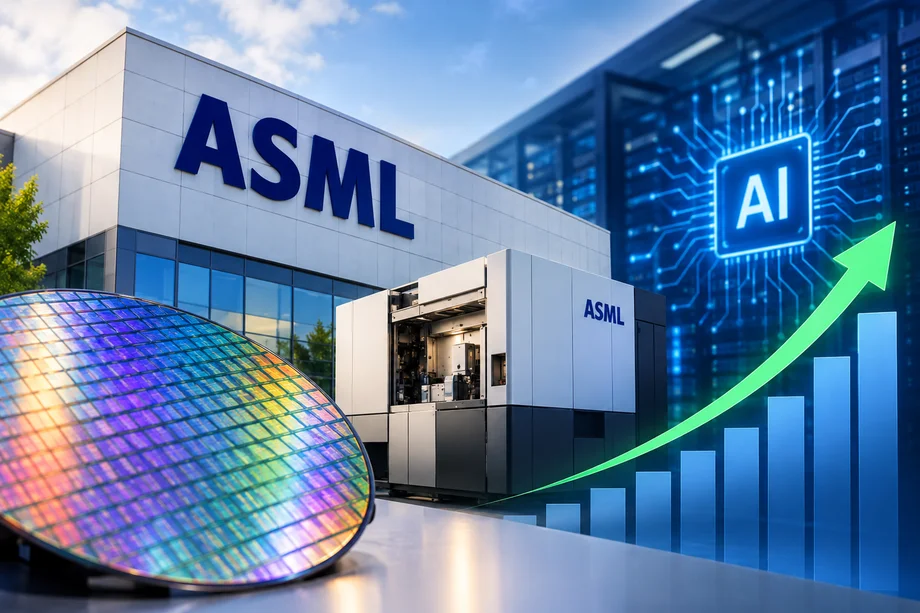
The Dutch chip equipment maker reported €11.66 billion in third-quarter net sales and €4.96 billion in net profit, raised its 2026 forecast, and noted customer interest in orders through 2030
ASML Holding NV delivered record third-quarter results driven by robust demand for semiconductor manufacturing equipment tied to artificial intelligence investments. The company posted total net sales of €11.66 billion, or approximately $13.05 billion, for the period ended September 27, 2026, marking a 25 percent increase from €9.33 billion in the prior quarter and a substantial rise from €7.52 billion a year earlier.
Net income reached €4.96 billion, or roughly $5.55 billion, well above the consensus estimate of €4.1 billion and more than double the €2.13 billion recorded in the same quarter of 2025. Basic earnings per share stood at €12.95. Gross margin expanded to 57.5 percent, exceeding the company’s previous guidance range of 55 percent to 57 percent.
Strong Execution and Installed-Base Growth
The results reflected solid operational execution amid elevated customer demand. ASML sold 113 new lithography systems in the third quarter, up from 86 in the second quarter, along with eight used systems. Installed Base Management sales, which cover services and field options, climbed to €3.29 billion from €2.76 billion in the previous quarter and surpassed internal expectations.
Gross profit totaled €6.70 billion. Cash and cash equivalents plus short-term investments rose to €12.74 billion at quarter-end. During the period, ASML repurchased approximately €4.1 billion of its shares under its ongoing 2026–2028 buyback program and declared an interim dividend of €1.88 per ordinary share, payable on November 4, 2026.
Raised Full-Year Guidance and Fourth-Quarter Outlook
ASML raised and narrowed its full-year 2026 net sales forecast to a range of €44 billion to €45 billion, lifting the lower end from the prior €43 billion to €45 billion outlook. The company now anticipates a full-year gross margin of about 56 percent. This marks the third upward revision of the 2026 outlook during the year and points to roughly 36 percent growth compared with 2025 sales.
For the fourth quarter, ASML expects total net sales between €14.2 billion and €15.2 billion, with a gross margin of approximately 57 percent. Research and development costs are projected at around €1.2 billion and selling, general and administrative expenses at about €0.4 billion. Installed-base sales are forecast near €3.7 billion for the quarter.
By segment, the company anticipates EUV-related sales growth of more than 45 percent for the full year, non-EUV business growth of about 20 percent, and installed-base revenue growth of roughly 50 percent. China is expected to represent about 20 percent of total sales, consistent with prior guidance. Export restrictions continue to limit sales of extreme ultraviolet systems and certain deep ultraviolet tools to Chinese customers.
AI Investments Extend Demand Visibility
Customer demand forecasts for both the short and medium term have increased, driven primarily by expectations around the scale and duration of AI-related spending. Some customers have expressed interest in placing equipment orders for 2029 and even 2030, extending visibility further than previously indicated.
ASML stated that its currently planned supply for 2027 and 2028 will not fully meet anticipated customer demand. The company is examining options to raise 2028 capacity beyond the 30 percent increase previously communicated. It continues to support additional wafer capacity through productivity upgrades on existing systems.
ASML expects to ship about 65 systems in 2026, an increase of more than 50 percent from the prior year. Deep ultraviolet immersion shipments are projected to remain roughly in line with 2025 levels. The company is also advancing High-NA EUV technology, with Samsung planning high-volume manufacturing in 2028 and TSMC targeting around 2030. Intel continues to expand its use of High-NA systems in production.
New productivity improvements include the NXE:3800F system, expected to lift throughput from 230 to 260 wafers per hour, with limited introductions in 2027 and broader impact from 2028. Immersion tools shipping in 2027 are targeted to reach 330 wafers per hour. ASML also introduced its next-generation YieldStar 550 overlay metrology system, designed for advanced logic and DRAM nodes with improved accuracy and a 60 percent productivity gain.
Market Context and Positioning
Prior to the results, options markets had priced an implied move of roughly 5.5 percent, or about $94 per share, around the release. Shares had declined in the sessions leading into the report. ASML remains the sole supplier of extreme ultraviolet lithography systems critical to producing the most advanced logic and memory chips supporting AI infrastructure.
Discussions with customers on higher value-based pricing for parts and maintenance have been completed, though meaningful financial effects are not expected until 2027 and beyond. The company continues to prioritize capacity expansion and technology development to align with the multi-year demand outlook tied to AI chip production.

Disclaimer
This article was generated by AI using information from multiple industry sources. It has not been reviewed or verified by a human editor and may contain inaccuracies, omissions, or misinformation. Readers are encouraged to independently verify any information before making decisions based on its content.Tired of the noise?
Let the bots trade for you.
Trade 24/7, without emotion, with data-driven strategies.
Associated articles
Palantir Beats Earnings Estimates, Raises Guidance as Shares Surge After Hours

Nvidia’s $92 Billion Earnings Test AI Infrastructure Boom Amid Rising Costs

Samsung Forecasts Record $80 Billion Quarterly Profit on AI Memory Demand

Robinhood Posts Record $1.31 Billion Q2 Revenue as Prediction Markets Surge, Crypto Cools

Amazon Posts $62.6 Billion Profit, AWS Growth Hits Fastest Pace in Years on AI Demand
Latest articles

Google Rolls Out Gemini 4 Argon AI Model With Cybersecurity Focus and Competitive Pricing

France Weighs 31.4% Tax on Crypto Swaps Into Regulated Stablecoins From 2027

Polymarket CEO Teases On-Chain Asset at TOKEN2049, Sparking Token and Airdrop Talk

US September CPI Climbs to 3.7% as Core Inflation Exceeds Forecasts