Newsroom
Pantera Capital CEO Dan Morehead Says Ripple Targets SWIFT Network
25 September, 2026 / News / AI / Tags: morehead, ripple, swift, xrp, ledger
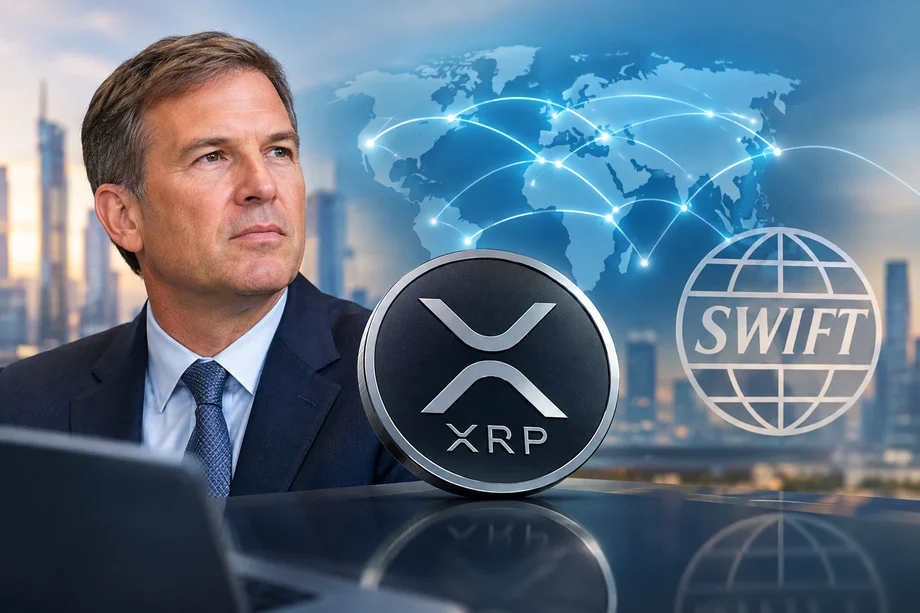
Dan Morehead told CNBC that Ripple is pursuing the global payments space dominated by SWIFT, framing it as a core blockchain application alongside other networks
CNBC Remarks on Blockchain Applications
Dan Morehead, founder and CEO of Pantera Capital, discussed specialized roles for different blockchain networks during a recent appearance on CNBC’s Squawk Box. He pointed to Solana’s capacity to process as many as 9 billion transactions daily, a volume he said exceeds activity across all capital markets combined. Morehead described Bitcoin as digital gold and then turned to payments infrastructure.
In that context he stated that other use cases exist beyond high-throughput networks. He specifically named Ripple’s efforts directed at SWIFT, the long-standing interbank messaging system used by banks worldwide for cross-border payment instructions.
SWIFT, established in 1973 as the Society for Worldwide Interbank Financial Telecommunication, provides a standardized messaging platform that enables secure international transfers among thousands of financial institutions. Morehead presented Ripple’s focus on this domain as an example of how blockchain platforms develop targeted functions within the financial sector.
Community Response and Historical Context
The comments circulated quickly among XRP supporters. Crypto commentator Amelie shared segments from the broadcast and viewed the mainstream recognition of Ripple’s payments ambitions as consistent with her longer-term outlook for the asset. Another account known as $XRPARMY recalled coverage between 2017 and 2020 that portrayed Ripple as a potential alternative to existing interbank systems.
That earlier momentum faced interruption after the U.S. Securities and Exchange Commission filed a lawsuit against Ripple. The litigation placed sustained pressure on XRP and the broader narrative around the project. Community participants noted that Ripple continued expanding its payments infrastructure throughout the legal proceedings. With the case now concluded, some described the current period as a renewed phase of development for the company’s cross-border solutions.
On-Chain Activity and Governance Updates
Separate data from the XRP Ledger showed elevated activity in September. The network activated 11,432 new accounts during the month, more than four times the recent 30-day average of roughly 2,700. The figure remains below earlier peaks recorded in 2026 yet ranks among the larger monthly increases of the past year. Analysts noted that exchange infrastructure, wallet migrations, application onboarding or speculative interest could all contribute to such spikes, and the raw numbers alone do not identify a single cause.
At the same time, validators continued voting on the PermissionDelegationV1_1 amendment. The proposal would allow an account to assign specific operations, such as signing payments or approving token holdings for verified customers, to another account without transferring full control. Support stood at 28 of 35 trusted validators, or 80 percent, as of September 24. Under the ledger’s rules, an amendment requires sustained backing above 80 percent for two consecutive weeks before activation. The feature is designed so a master key can remain offline while a delegated account manages routine tasks.
Regulatory Developments on Tokenized Assets
On September 17 the SEC issued an order granting temporary conditional exemptive relief to certain venues trading tokenized National Market System stocks through permissioned automated market makers and liquidity pools. The five-year relief is technology-neutral and does not reference XRP, Ripple or the XRP Ledger. Conditions include permissioned systems, investor-protection standards, equivalent rights for tokenized shares such as dividends and voting, and trading halts aligned with the underlying stocks.
The XRP Ledger’s native automated market maker, activated in March 2024, operates as part of the ledger’s decentralized exchange and supports liquidity pools that can route trades alongside the order book. Market participants noted the structural relevance of the SEC framework for platforms that already maintain on-ledger trading capabilities, while stressing that the order itself remains neutral across technologies.
Morehead’s remarks do not claim that Ripple has displaced SWIFT. They position the company’s payments strategy as one concrete application of blockchain technology within the established global financial messaging environment. Discussions continue to separate Ripple’s enterprise activities from the independent market role of XRP, with attention focused on infrastructure progress across both commercial and on-chain fronts.

Disclaimer
This article was generated by AI using information from multiple industry sources. It has not been reviewed or verified by a human editor and may contain inaccuracies, omissions, or misinformation. Readers are encouraged to independently verify any information before making decisions based on its content.Tired of the noise?
Let the bots trade for you.
Trade 24/7, without emotion, with data-driven strategies.
Associated articles

Ripple Rises to No. 16 on CNBC Disruptor 50 List for 2026

Mastercard Completes $1.8 Billion BVNK Acquisition to Link Crypto and Traditional Payments

Ripple Joins x402 Foundation to Advance AI Agent Payments on XRP Ledger

CZ Calls for Tokenizing Assets Worldwide to Draw Foreign Investment

Ripple Invests in Flutterwave Series E at $3.2 Billion Valuation
Latest articles

Babylon Labs Advances Proposal for Native Bitcoin Lending on Aave V4

TSMC Posts Record Q3 Profit Surge on AI Chip Demand, Lifts Full-Year Outlook
ASIC Opens Consultation on Capital and Custody Rules for Digital Asset Platforms

GTA 6 Leaker Cyberleek Drops Full Build Plan After Memecoin Collapse, Activates Dead Man’s Switch Threat