Newsroom
Nvidia Settles Crypto Mining Disclosure Lawsuit for $290 Million
26 November, 2026 / News / AI / Tags: nvidia, plaintiffs, court, mining, gaming
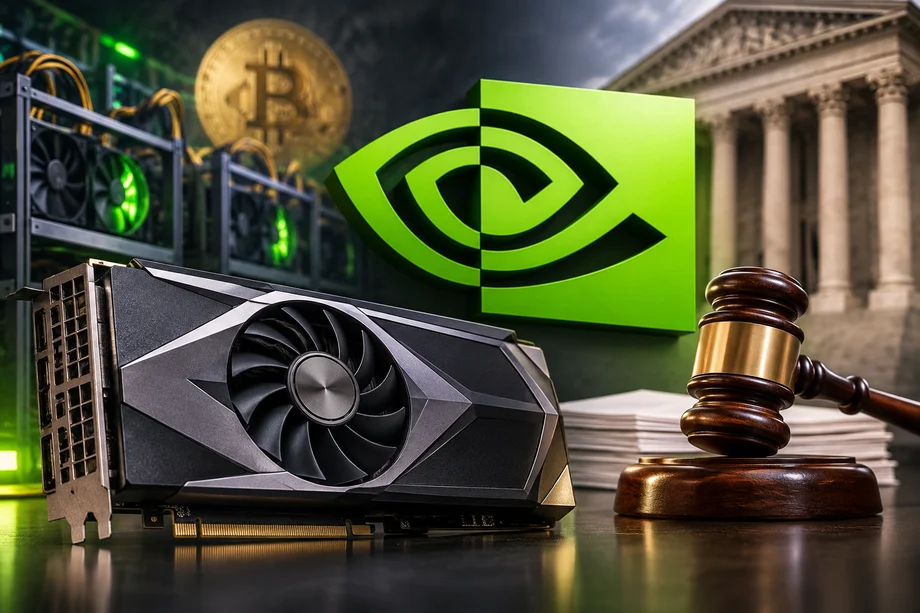
Chipmaker reaches proposed cash deal to end long-running shareholder claims over 2017-2018 gaming GPU revenue tied to cryptocurrency demand
Nvidia Corp. has agreed to pay $290 million to resolve a securities class-action lawsuit alleging the company misled investors about the contribution of cryptocurrency mining to its gaming graphics processing unit sales during the 2017-2018 boom. The proposed settlement, which still requires court approval, closes nearly a decade of litigation stemming from the period when miners drove heavy demand for Nvidia's GeForce chips.
The case centers on claims that Nvidia understated the role of mining in its reported gaming revenue and failed to adequately warn of the risks tied to that volatile demand. Plaintiffs argued that when mining activity collapsed in late 2018, the company cut its revenue outlook and shares declined sharply, leaving investors exposed.
Details of the Allegations and Class Period
Shareholders who purchased Nvidia common stock between August 10, 2017, and November 15, 2018, form the certified class. According to an analysis prepared for the plaintiffs, Nvidia understated crypto-related GPU sales by roughly $1.1 billion over a key stretch of that period. The company booked many of those sales in its gaming segment even as miners accounted for a substantial share of demand for GeForce cards.
In November 2018, Nvidia reduced its quarterly revenue guidance as mining demand faded. The stock dropped 28.5 percent across the following two trading sessions. Plaintiffs contended that earlier public statements had characterized crypto-related revenue as limited or confined largely to other segments, leaving the market unprepared for the scale of the pullback.
Nvidia has consistently denied any wrongdoing. The company has maintained that it could not reliably isolate or quantify the portion of gaming revenue attributable to mining activity and is not admitting liability under the settlement terms.
Lengthy Path Through the Courts
The lawsuit was first filed in 2018 in the U.S. District Court for the Northern District of California. A district judge dismissed the action in March 2021, finding that the plaintiffs had not adequately alleged that executives knew they were misleading investors. A federal appeals court partially revived the claims in 2023, allowing the case to proceed against Nvidia and Chief Executive Officer Jensen Huang while dismissing claims against certain other executives.
Nvidia sought review at the U.S. Supreme Court. After briefing and oral argument, the high court dismissed the appeal as improvidently granted in December 2024, returning the matter to the trial court. In March 2026, U.S. District Judge Haywood S. Gilliam Jr. certified the class, enabling the litigation to move forward on behalf of the broader group of affected investors.
Mediation conducted by former federal judge Layn Phillips produced a recommendation of $290 million in September 2026. Both sides accepted the figure, and the formal stipulation of settlement was filed on November 24, 2026. Plaintiffs' counsel plan to seek up to 21.4 percent of the fund, or about $62 million, in attorneys' fees, a request they note falls below the Ninth Circuit's typical 25 percent benchmark.
Next Steps and Broader Context
A hearing on preliminary approval of the settlement is scheduled for February 4, 2027. If granted, notice will be sent to class members, followed by a final fairness hearing roughly 130 days later. Nvidia's insurers are expected to fund the majority of the payment.
The agreement is separate from an earlier $5.5 million settlement Nvidia reached with the Securities and Exchange Commission over related disclosure issues. The current deal addresses private shareholder claims arising from the same 2017-2018 period of elevated mining demand for consumer GPUs.
The resolution brings to a close one of the more protracted legal matters tied to the last major cryptocurrency mining cycle, during which demand for Nvidia's graphics cards surged and then abruptly contracted.

Disclaimer
This article was generated by AI using information from multiple industry sources. It has not been reviewed or verified by a human editor and may contain inaccuracies, omissions, or misinformation. Readers are encouraged to independently verify any information before making decisions based on its content.Tired of the noise?
Let the bots trade for you.
Trade 24/7, without emotion, with data-driven strategies.
Associated articles
Intel Faces Class Action After $140 Billion Stock Drop on PC Demand Concerns

Justin Sun Secures Partial Court Victory Keeping Claims Against World Liberty Public
DOJ and CFTC Sue Arkansas to Halt Enforcement Against Kalshi Prediction Markets

SEC Sues Florida Man and Mining Automatic Over Alleged $22 Million Crypto Mining Fraud

Bybit Files US Lawsuit Against North Korea Over $1.5 Billion Crypto Theft
Latest articles

CZ Advises 1Password Users to Reset All Passwords After Customer Data Exposure

Injective Activates Veyra Upgrade to Strengthen Institutional RWA Trading

Pump.fun to Launch Block0 Fees on December 4 Against Memecoin Sniping

House Bill to Lock Federal Bitcoin Holdings for 20 Years Advances to Full Chamber