Newsroom
Justin Sun Secures Partial Court Victory Keeping Claims Against World Liberty Public
21 August, 2026 / News / AI / Tags: sun, liberty, arbitration, claims, court
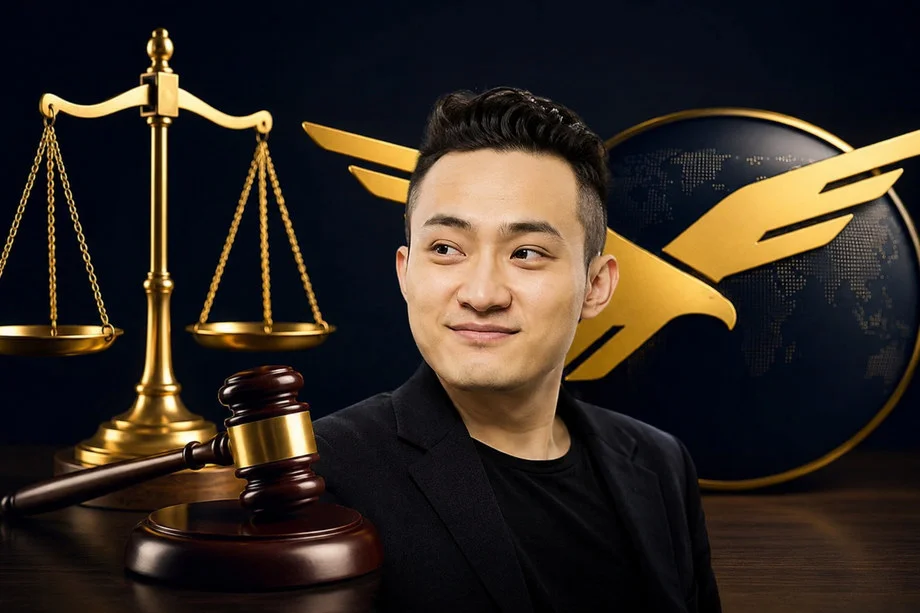
A California federal judge ruled that the Tron founder’s individual claims against the Trump-backed project remain in open court rather than private arbitration
Tron founder Justin Sun obtained a key procedural win on August 20 in his federal lawsuit against World Liberty Financial. A California judge determined that Sun’s personal claims will proceed in public court, rejecting the project’s bid to shift the entire dispute into confidential arbitration.
The decision leaves the core of the case visible while directing both parties to sort out which claims brought by Sun-controlled companies belong in court and which may move to arbitration. The ruling does not resolve the underlying allegations of token freezes, contract controls or financial stability questions that have defined the high-stakes conflict.
Court Rejects Full Arbitration Push
World Liberty had sought to compel arbitration for all claims and to keep related documents sealed. U.S. District Judge James Donato declined that request for Sun’s individual claims. The judge instead ordered the sides to negotiate the status of claims involving companies linked to Sun, including Blue Anthem Ltd. and Black Anthem Ltd., which joined as plaintiffs when the suit was filed in April.
Sun described the outcome immediately afterward.
In a longer statement he said his counsel had argued forcefully that the case belongs in open court and that the judge rejected efforts to force the dispute into secret proceedings. Court records confirm World Liberty filed its arbitration motion in June. No written order from the August 20 hearing had appeared on the public docket at the time of the latest reports.
The procedural result keeps Sun’s personal claims alive in the Northern District of California. It does not decide whether World Liberty acted improperly, award damages or prevent future dismissal motions.
Origins of the Dispute
Sun invested $45 million in World Liberty’s early WLFI token sale, an amount he says helped push the total raise past $550 million. He became one of the project’s largest early backers. The relationship later deteriorated after World Liberty froze WLFI tokens linked to him, holdings valued at roughly $9 million at the time of the freeze.
Sun’s complaint alleges the project embedded undisclosed administrative functions in the WLFI smart contract that allow it to freeze, restrict or burn any holder’s tokens without notice. He claims those powers were used against his own holdings and that similar controls exist in the project’s USD1 stablecoin. Sun obtained a court order barring World Liberty from destroying or reallocating his tokens while the litigation continues. He is seeking hundreds of millions of dollars in damages.
World Liberty denies the allegations. Company executives have called the suit a distraction from what they describe as Sun’s own misconduct and say the token sale documents authorized restrictions under certain conditions. The project has accused Sun-linked entities of improper token transfers and activity intended to pressure the WLFI price. It separately filed a defamation action against Sun in Florida state court, asserting he made false public statements that damaged the company and the token.
Sun has called the Florida case a meritless public-relations effort. Neither court has ruled on the truth of the competing claims.
Financial Questions Raised by Sun
Beyond the token controls, Sun has questioned whether World Liberty holds sufficient independent capital to satisfy a judgment. He notes that USD1’s reported $4 billion market capitalization represents user collateral rather than company assets available for payment. Public reports cited in the dispute state that World Liberty posted approximately five billion WLFI tokens—about half its treasury—as collateral on the Dolomite lending platform and borrowed at least $75 million against that position, including in its own USD1.
Dolomite was co-founded by an individual identified in Sun’s complaint as World Liberty’s chief technology officer; other accounts describe the same person as an adviser. Analysts following the arrangement have drawn comparisons to circular leverage structures seen before the collapse of FTX. Sun has also pointed to an unresolved investor lawsuit against World Liberty co-founder Chase Herro stemming from his earlier involvement with Dough Finance, in which an investor alleges diversion of roughly $2.5 million.
These financial and leadership points form part of the broader context Sun has presented but are not the subject of the August 20 procedural ruling.
Next Steps in the Litigation
The parties must now identify which company-related claims remain in federal court and which may proceed to arbitration. Any agreement will likely be submitted for the judge’s approval. If they cannot reach consensus, the court may resolve the remaining disputes. Briefing on World Liberty’s separate motion to dismiss had been paused pending direction on the arbitration question; a new schedule is expected once that issue is settled.
Keeping individual claims in federal court means most filings and hearings remain publicly accessible, although either side may still request sealing of specific commercially sensitive material. No trial date has been set and no determination has been made on the merits of the fraud, contract or defamation allegations. The next concrete developments are expected through a written order, a joint filing or further submissions addressing the unresolved company claims.
WLFI has remained volatile throughout the legal fight, having lost nearly 80 percent of its value since launch according to market data referenced in coverage of the case.


Disclaimer
This article was generated by AI using information from multiple industry sources. It has not been reviewed or verified by a human editor and may contain inaccuracies, omissions, or misinformation. Readers are encouraged to independently verify any information before making decisions based on its content.Tired of the noise?
Let the bots trade for you.
Trade 24/7, without emotion, with data-driven strategies.
Associated articles

Thai Businessmen Sue Tether Over $42.4 Million USDT Freeze Before Warrant
BitGo Sued for $141 Million by DWF Labs Firms Over Alleged Early Token Sales
Trump-Backed World Liberty Financial Readies App and USD1 Payments for Online Merchants
Ondo Finance Faces Delaware Control Battle as Founder’s Mother Seeks CEO Removal

Bybit Files US Lawsuit Against North Korea Over $1.5 Billion Crypto Theft
Latest articles

SkyAI Exits Solana Holdings Completely, Launches $201 Million Share Buyback

Strategy Buys 267 Bitcoin and Raises Preferred Share Buyback Cap to $3 Billion

Dormant 2013 Bitcoin Wallets Shift Over $67 Million After More Than a Decade

Binance Rolls Out AI Pro Tool for Chat-Based Automated Trading Strategies