Newsroom
House Bill to Lock Federal Bitcoin Holdings for 20 Years Advances to Full Chamber
26 November, 2026 / News / AI / Tags: bitcoin, reserve, enactment, strategic, government
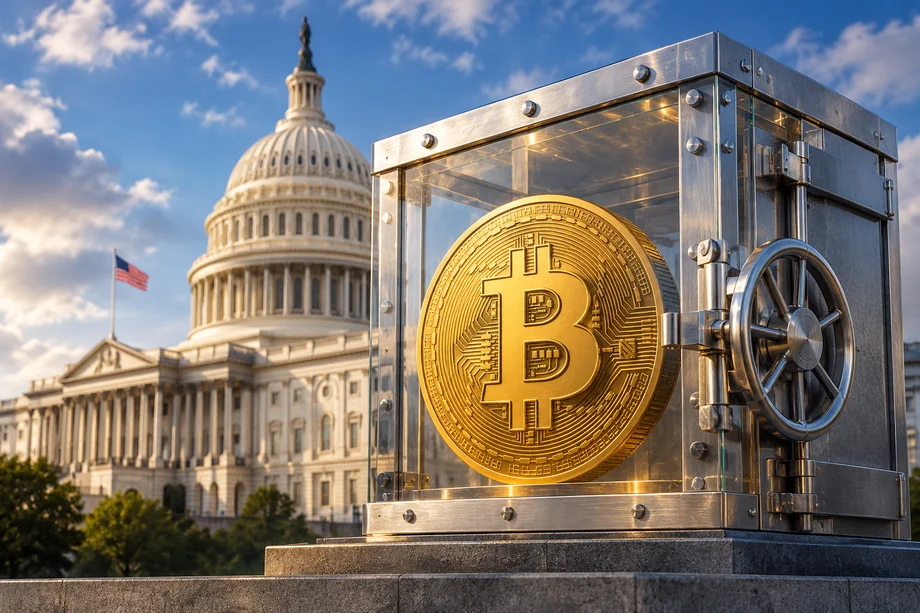
Legislation codifying a Strategic Bitcoin Reserve reaches the Union Calendar after committee approval, imposing a multi-decade hold on government-owned coins
A bipartisan-sponsored measure that would write the U.S. Strategic Bitcoin Reserve into permanent statute and prohibit the sale or disposal of its holdings for two decades has cleared the House Financial Services Committee and been placed on the Union Calendar, making it eligible for a floor vote.
The American Reserve Modernization Act of 2026, designated H.R. 8957, was formally reported by the committee on November 24 and listed as Calendar No. 789. The panel had approved an amended version of the bill on September 16 by a 28-21 vote that split along party lines, with every Republican supporting it and every Democrat opposing it.
Key Provisions of the Measure
Introduced on May 21 by Representative Nick Begich, a Republican from Alaska, with Democratic Representative Jared Golden of Maine as a cosponsor, the bill directs the Treasury secretary to establish a Strategic Bitcoin Reserve and a separate Digital Asset Stockpile within 180 days of enactment. Qualifying bitcoin held by the federal government would transfer into the reserve, while other digital assets would move to the stockpile.
Section 5 of the reported text requires the secretary to hold all bitcoin acquired by the United States and deposited in the Strategic Bitcoin Reserve for not less than 20 years from the date of enactment, regardless of when individual coins enter the reserve. During that minimum holding period, no bitcoin in the reserve may be sold, swapped, auctioned, encumbered, or otherwise disposed of for any purpose.
Two years before the holding period ends, Treasury would submit recommendations to Congress on whether to continue holding the assets or permit a controlled release. After the 20-year mark, any sales would be limited to no more than 10 percent of the reserve in any two-year period, subject to further congressional review.
Transparency and Oversight Requirements
The legislation mandates annual proof-of-reserve reports, independent third-party audits, and ongoing oversight by the Government Accountability Office. Federal agencies would have 60 days after enactment to report all bitcoin and other digital assets they hold, seize, or control, with annual updates thereafter.
The bill builds on an executive order issued by President Donald Trump on March 6, 2025, that created the Strategic Bitcoin Reserve and directed the government to retain forfeited bitcoin rather than sell it. Codifying the policy in statute would require a subsequent act of Congress to reverse, unlike an executive order that a future administration could rescind.
Addresses linked to the U.S. government currently hold approximately 306,795 bitcoin, valued at more than 18 billion dollars according to tracking data.
Path Forward and Timing Constraints
With the 119th Congress scheduled to end on January 3, 2027, lawmakers have a limited window for the House to schedule a floor vote, the Senate to consider companion legislation, and the president to sign any final measure. No floor vote has been scheduled as of late November.
The reported version of the bill focuses on consolidating existing government-held bitcoin obtained primarily through forfeitures and lawful proceedings rather than authorizing new open-market purchases. It also requires a study of budget-neutral acquisition methods if additional holdings are contemplated in the future.
House passage remains pending, and the measure would still need Senate approval before it could become law.

Disclaimer
This article was generated by AI using information from multiple industry sources. It has not been reviewed or verified by a human editor and may contain inaccuracies, omissions, or misinformation. Readers are encouraged to independently verify any information before making decisions based on its content.Tired of the noise?
Let the bots trade for you.
Trade 24/7, without emotion, with data-driven strategies.
Associated articles
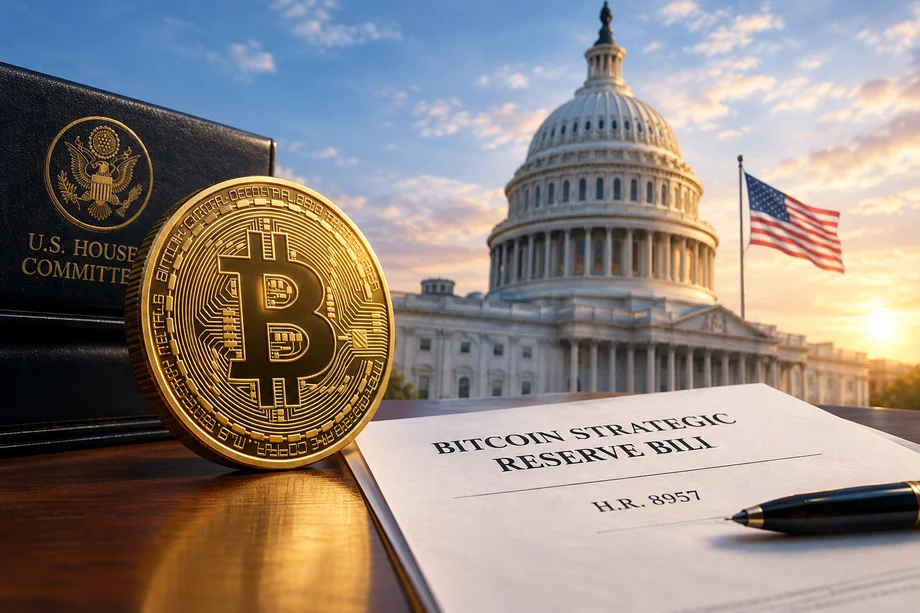
House Committee Set to Advance Strategic Bitcoin Reserve Legislation on Wednesday
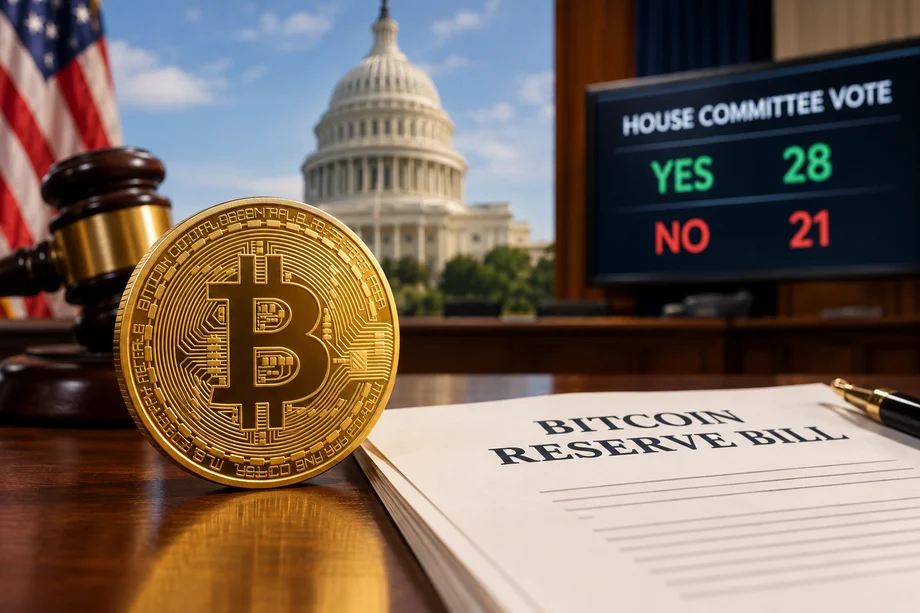
House Panel Advances Bill to Codify Strategic Bitcoin Reserve in 28-21 Vote

Housing Bill with CBDC Ban Becomes Law Without Trump Signature

CLARITY Act Nears Senate Action as US Crypto Rules Face Final Hurdles

Senate Races Clock on CLARITY Act Ahead of August Recess
Latest articles

CZ Advises 1Password Users to Reset All Passwords After Customer Data Exposure

Injective Activates Veyra Upgrade to Strengthen Institutional RWA Trading

Pump.fun to Launch Block0 Fees on December 4 Against Memecoin Sniping

Czech Central Bank Chief Defends Bitcoin Allocation in Reserves at Las Vegas Conference