Newsroom
Lummis Warns CLARITY Act Failure Could Delay U.S. Crypto Rules Until 2030
7 September, 2026 / News / AI / Tags: lummis, senate, would, jobs, september

Senator Cynthia Lummis says missing the current congressional window on market-structure legislation risks pushing the next realistic chance for federal digital-asset rules to 2030, with a key Senate procedural vote set for September 15
U.S. Senator Cynthia Lummis issued a pointed warning on September 6 that failure to enact the CLARITY Act in the current Congress would likely leave comprehensive crypto market-structure legislation stalled until 2030. The Wyoming Republican framed the upcoming Senate action as a critical opportunity to secure jobs, investment and tax revenue tied to the digital-asset sector.
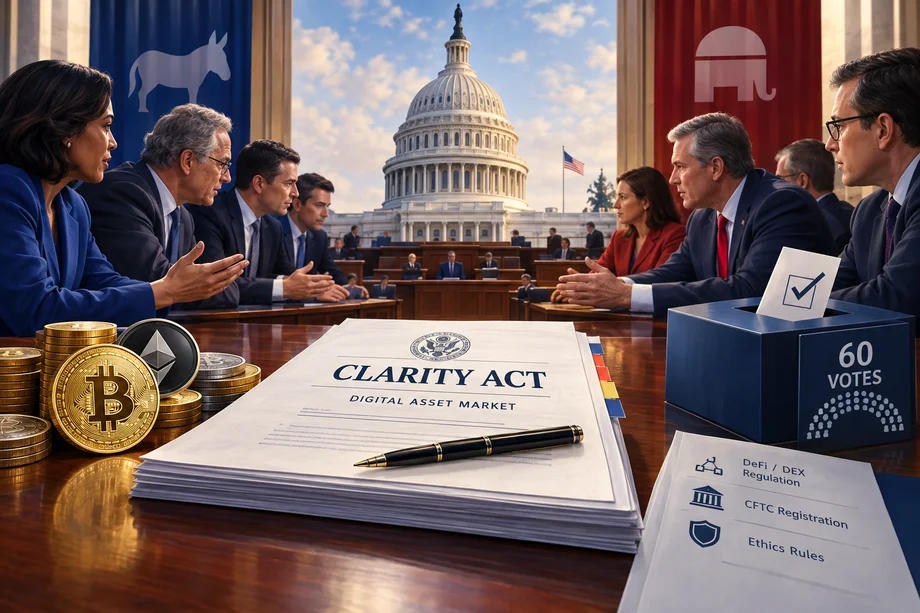
The Senate is scheduled to hold a cloture vote on September 15 that requires 60 votes to open floor debate on the measure. Cloture would not enact the bill; it would only advance the process to further discussion and potential amendments. Republicans hold 53 seats, so Democratic and independent support remains essential to clear the threshold.
Legislative Path and Timeline Pressures
The CLARITY Act, formally the Digital Asset Market Clarity Act, has already cleared significant hurdles. The House of Representatives passed its version by a 294-134 vote in July 2025. The Senate Banking Committee advanced its text by a 15-9 margin in May 2026. Lummis has promoted a framework modeled in part on Wyoming’s digital-asset approach as a foundation for national rules.
Even if the September 15 procedural vote succeeds, the path to final enactment remains tight. House scheduling constraints, including cancelled late-September sessions, leave limited floor time if the Senate alters the text. Midterm elections later in 2026 further compress the calendar, raising the possibility that unfinished work would die with the current Congress and require a full restart in a new session.
Core Provisions and Remaining Disputes
The legislation seeks to clarify the division of authority between the Securities and Exchange Commission and the Commodity Futures Trading Commission over digital assets. It also aims to establish clearer rules for intermediaries, custody arrangements and customer protections, including the use of qualified custodians and segregation of client funds.
Several issues continue to divide lawmakers. Disputes persist around stablecoin yield provisions, treatment of decentralized finance protocols and ethics rules. These unresolved points have kept some Democratic support conditional, even as industry figures and certain lawmakers urge progress.
One earlier obstacle has eased. The National Sheriffs’ Association shifted from opposition to a neutral stance, removing a notable law-enforcement objection without constituting an endorsement. Representatives such as French Hill have called for approval ahead of the midterms, while industry leaders including Ripple Chief Executive Brad Garlinghouse and Coinbase Chief Executive Brian Armstrong have publicly backed clearer rules.
Economic Stakes of Delay
Lummis has repeatedly linked passage of the bill to broader economic outcomes. She has argued that prolonged regulatory uncertainty leaves software developers without clear legal protections, consumers exposed in the event of intermediary failures, and enforcement agencies without stronger tools. In earlier statements she noted that without dedicated customer-protection provisions, clients of a failed digital-asset exchange would join general creditors rather than recover assets more readily.
If the current window closes without enactment, firms would continue operating under a patchwork of federal and state requirements. Supporters contend that other jurisdictions moving faster on digital-asset frameworks could attract investment, jobs and related tax revenue that might otherwise remain in the United States.
The September 15 cloture vote will test whether enough bipartisan support exists to keep the legislation alive for further negotiation. Success would reduce immediate uncertainty but would still leave substantial work before any final version could reach the president’s desk. Failure would reinforce the timeline Lummis outlined, potentially deferring comprehensive market-structure rules for several years.
Disclaimer
This article was generated by AI using information from multiple industry sources. It has not been reviewed or verified by a human editor and may contain inaccuracies, omissions, or misinformation. Readers are encouraged to independently verify any information before making decisions based on its content.Tired of the noise?
Let the bots trade for you.
Trade 24/7, without emotion, with data-driven strategies.
Associated articles

Saylor Says Bitcoin Needs No Clarity Act as Senate Delays Crypto Bill Vote
Senate Republicans Release Final Clarity Act Draft With Trump-Backed Ethics Rules Ahead of Tuesday Vote

Senate Schedules September 15 Vote on Crypto Market Structure Bill

Senate Races Clock on CLARITY Act Ahead of August Recess

Treasury Secretary Presses Senate for Immediate CLARITY Act Vote Ahead of August Recess
Latest articles

SpaceX and Tesla Set Up Committees to Explore Merger That Would Combine Holdings of Over 30,000 Bitcoins

UK Banks Face Thousands of Complaints Over Crypto Transfer Restrictions

Ripple Backs SEC Proposed Crypto Asset Rules After $150 Million Legal Battle

Blockchain.com Introduces Options Trading on Seven Major Crypto Assets