Newsroom
Kalshi Issues First Lifetime Ban to George Santos Over State of the Union Market Trades
31 August, 2026 / News / AI / Tags: santos, kalshi, attendance, contracts, disciplinary
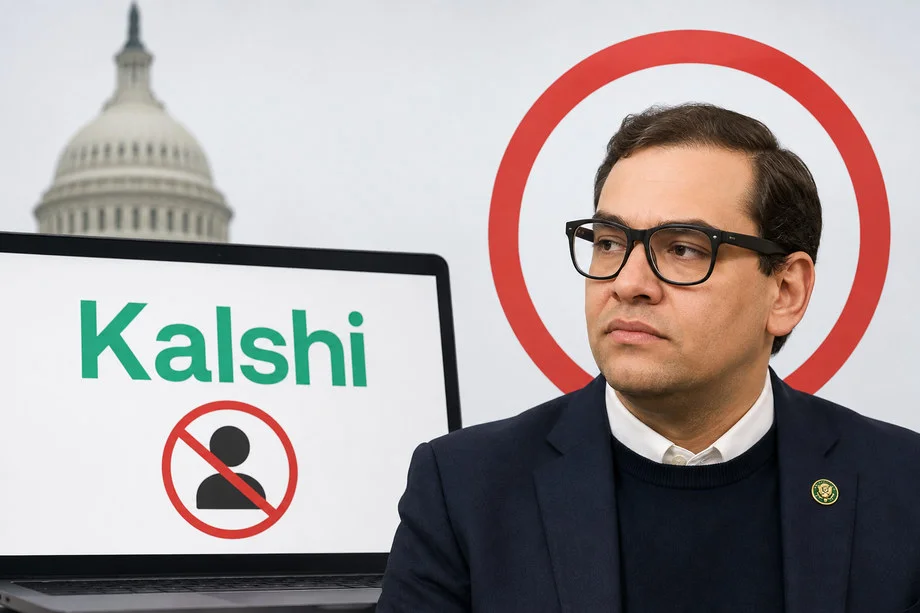
Prediction market platform permanently bars former congressman and levies $71,356 penalty after finding he manipulated contracts tied to his own attendance, netting nearly $18,000
Kalshi has handed down its first permanent trading ban, targeting former U.S. Representative George Santos for allegedly manipulating event contracts linked to his presence at President Donald Trump’s 2026 State of the Union address. The exchange determined that Santos generated $17,839.57 in profits through a series of trades and public statements that moved market prices in his favor.
In a disciplinary notice dated August 28, Kalshi permanently suspended Santos from any direct or indirect access to its platform and assessed a $71,356 financial penalty, equal to four times the reported profit. The action marks the first lifetime ban the company has issued against a former member of Congress.
Trading Activity and Alleged Manipulation
According to the exchange’s compliance findings, Santos placed large trades between February 2 and February 25 on contracts whose payout depended solely on whether he attended the address. Rules prohibit members from trading markets when they can influence the underlying outcome. Santos bought and sold both “Yes” contracts, which paid if he appeared, and “No” contracts, which paid if he did not.
While holding positions, he issued public statements about his travel plans and attendance intentions. Kalshi found that some of these statements were false or misleading and were timed to shift contract prices before he adjusted his holdings. The statements produced the intended market moves, allowing him to lock in gains.
A separate Commodity Futures Trading Commission order from July provided a detailed timeline. Santos opened a Kalshi account on February 11 and deposited roughly $7,000. He first accumulated more than 30,000 “Yes” contracts. After posting on social media about his potential attire for the event, the price of those contracts rose sharply. He then sold the position for a profit of more than $3,400.
Later, after flight and train cancellations disrupted his travel, Santos posted comments suggesting difficulty attending or implying the address might not proceed. Contract prices moved accordingly. He subsequently built a large “No” position and later closed it for a profit exceeding $14,000 after further statements. Combined, the trades produced the $17,839.57 figure cited by Kalshi.
Penalties and Cooperation Issues
Kalshi cited multiple rule violations, including market manipulation, trading while able to affect the outcome, use of deceptive schemes, and failure to cooperate fully and promptly with its internal investigation. Because of the lack of cooperation, the exchange imposed the permanent ban rather than a temporary suspension.
The Kalshi sanction stands apart from the earlier CFTC settlement. In that matter, Santos agreed to disgorge approximately $17,570, pay a $17,500 civil monetary penalty, and accept a three-year ban from trading on any CFTC-registered platform. He consented to the order without admitting or denying the findings. Federal authorities had previously examined the activity after Kalshi froze the account and referred the matter.
Santos did not immediately respond to requests for comment on the Kalshi action. He had been expelled from Congress in 2023 amid criminal investigations and later served prison time for fraud before receiving a commutation of his sentence.
Broader Industry Scrutiny
The Santos case forms part of a wider set of enforcement steps across prediction markets. Kalshi reported five new disciplinary matters, with the other four resulting in temporary bans after the individuals cooperated. The CFTC also recently ordered a former White House teleprompter operator, Gabriel Perez, to pay more than $170,000 and accept a three-year trading ban for placing bets on word-mention contracts involving presidential remarks; his penalties were reduced for cooperation.
Rival platforms have likewise tightened surveillance. Polymarket has described using machine learning, blockchain analytics, and open-source research to flag suspicious activity ahead of the midterm elections and has referred more than 100 cases to authorities. Kalshi itself has expanded tools such as employer disclosure requirements, a whistleblower channel, and partnerships for monitoring employee trading.
Prediction market operators function under CFTC oversight as designated contract markets. Event contracts settle based on real-world outcomes ranging from political events to economic data. As trading volumes have grown, cases involving privileged information or the ability to influence outcomes have drawn increased regulatory and platform attention.
Kalshi stated that in the first quarter of 2026 it conducted more than 150 investigations, blocked over 100 suspected insider attempts, and referred 20 matters to law enforcement. The permanent ban on Santos is the strongest individual sanction the platform has recorded to date.
Disclaimer
This article was generated by AI using information from multiple industry sources. It has not been reviewed or verified by a human editor and may contain inaccuracies, omissions, or misinformation. Readers are encouraged to independently verify any information before making decisions based on its content.Tired of the noise?
Let the bots trade for you.
Trade 24/7, without emotion, with data-driven strategies.
Associated articles
CFTC Orders Ex-White House Teleprompter Operator to Pay $172,000 Over Kalshi Speech Trades
Trump Jr. Firm Leads $1 Billion Polymarket Funding at $21 Billion Valuation

Kalshi Defends Crypto Perpetual Volumes Amid Wash Trading Allegations
Binance.US Plans August CFTC Bid to Enter Prediction Markets
CFTC Warns Prediction Markets Against American-Style Gambling Odds
Latest articles
SkyAI Exits Solana Holdings Completely, Launches $201 Million Share Buyback
Strategy Buys 267 Bitcoin and Raises Preferred Share Buyback Cap to $3 Billion

Dormant 2013 Bitcoin Wallets Shift Over $67 Million After More Than a Decade

Binance Rolls Out AI Pro Tool for Chat-Based Automated Trading Strategies