Newsroom
CFTC Warns Prediction Markets Against American-Style Gambling Odds
8 August, 2026 / News / AI / Tags: gambling, cftc, odds, kalshi, sports
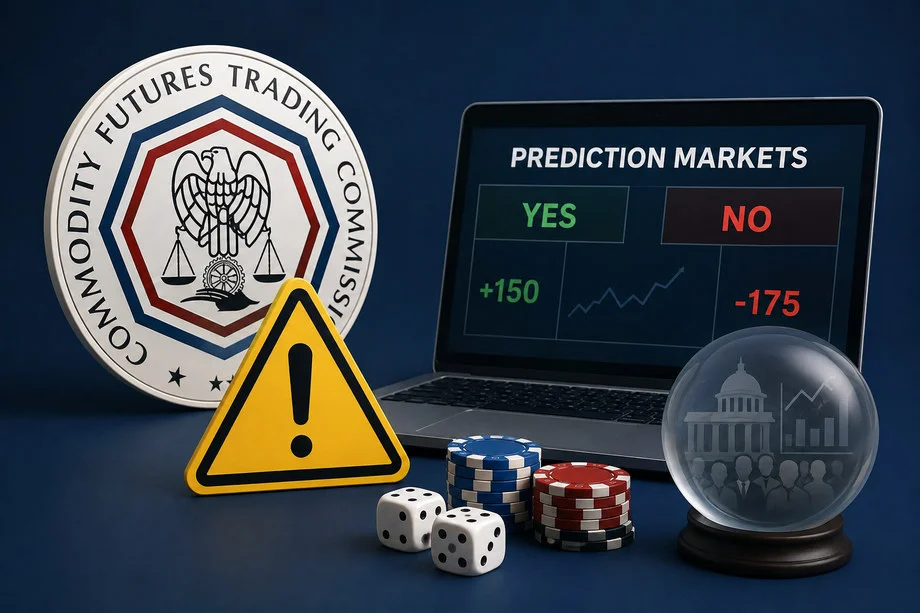
Federal regulator tells platforms to drop moneyline formatting amid intensifying state challenges over sports event contracts
The Commodity Futures Trading Commission has instructed regulated prediction market platforms to stop displaying contracts with American-style gambling odds, citing concerns over potential deception and the need to maintain clear distinctions from traditional sportsbooks.
In letters dated around August 7, 2026, the agency’s Division of Market Oversight and Market Participants Division directed designated contract markets and related entities to review their pricing displays, marketing materials, and information used by partners or affiliates. The guidance requires confirmation of receipt by August 31, 2026.
Concerns Over Odds Displays and Market Integrity
American-style odds, often called moneyline odds, present potential returns with positive or negative numbers such as +150 or -200, a format standard in sportsbooks. Prediction markets, by contrast, typically price event contracts between zero and one dollar to indicate implied probability, allowing traders to see market depth and pricing impact more directly.
The CFTC stated that using the sportsbook format is likely to mislead participants about the nature of the transaction. It may also limit users’ access to indicators of trading depth. The agency referenced research showing that American-style odds encourage greater risk-taking compared with probability-based pricing.
Officials reminded platforms that event contracts remain subject to U.S. derivatives laws under the Commodity Exchange Act. They must avoid deceptive practices in listing, advertising, or soliciting trades. Designated contract markets are required to protect participants from abusive, noncompetitive, or unfair actions.
Broader Jurisdictional Battles Intensify
The warning arrives as the CFTC continues to assert exclusive federal authority over prediction markets while multiple states pursue enforcement actions treating sports-related contracts as unlicensed gambling.
New York Attorney General Letitia James filed suit against Kalshi on July 31, seeking at least $36 billion in damages and penalties. The complaint claims the platform operates an unlicensed gambling business by allowing residents to trade on sports and other events. Kalshi maintains that its status as a CFTC-regulated exchange places it outside state gambling oversight.
A Utah federal court recently ruled that the state could enforce its anti-gambling laws against prediction markets. Kalshi responded by filing an emergency motion for an injunction pending appeal, seeking expedited relief over concerns that Utah Attorney General Derek Brown could pursue civil or criminal charges while the appeal proceeds. The company plans to take the matter to the U.S. Court of Appeals for the Tenth Circuit.
Other developments include a Wisconsin federal court rejecting a CFTC request to block state gambling laws, a preliminary injunction secured by Washington against Kalshi, and attorneys general from 44 states urging the CFTC to withdraw and rewrite proposed prediction market rules. States argue they have traditionally regulated sports betting and should retain authority over related contracts.
Platform Responses and Ongoing Compliance Pressure
Kalshi confirmed it will comply with the CFTC letter by the stated deadline, describing itself as a federally regulated exchange that follows agency guidance. Other platforms had not issued public comments at the time of the reports.
The guidance underscores that federal registration does not permit platforms to market products in ways that make them appear identical to conventional sportsbooks. It coincides with the CFTC’s efforts to defend its jurisdiction while also addressing misconduct on regulated platforms, including a recent settlement involving former U.S. Representative George Santos over trading activity.
Platforms face the immediate task of adjusting how they present contract prices and promote sports-related products. Pending appeals and state actions will continue to shape whether federal registration provides protection from local gambling laws.
Disclaimer
This article was generated by AI using information from multiple industry sources. It has not been reviewed or verified by a human editor and may contain inaccuracies, omissions, or misinformation. Readers are encouraged to independently verify any information before making decisions based on its content.Tired of the noise?
Let the bots trade for you.
Trade 24/7, without emotion, with data-driven strategies.
Associated articles

Judge Denies Kalshi Bid to Block New York Gambling Law Enforcement

Federal Judge Blocks Minnesota Prediction Market Ban Ahead of August Deadline
Binance.US Plans August CFTC Bid to Enter Prediction Markets

New York Sues Kalshi Seeking $36 Billion Over Alleged Illegal Gambling

CFTC Blocks Michigan Court Order, Forces Kalshi to Honor Trades
Latest articles

SpaceX and Tesla Set Up Committees to Explore Merger That Would Combine Holdings of Over 30,000 Bitcoins

UK Banks Face Thousands of Complaints Over Crypto Transfer Restrictions

Ripple Backs SEC Proposed Crypto Asset Rules After $150 Million Legal Battle

Blockchain.com Introduces Options Trading on Seven Major Crypto Assets