Newsroom
Elizabeth Warren Set to Chair Senate Banking Panel After Midterm Gains
6 November, 2026 / News / AI / Tags: warren, committee, elizabeth, senate, democratic
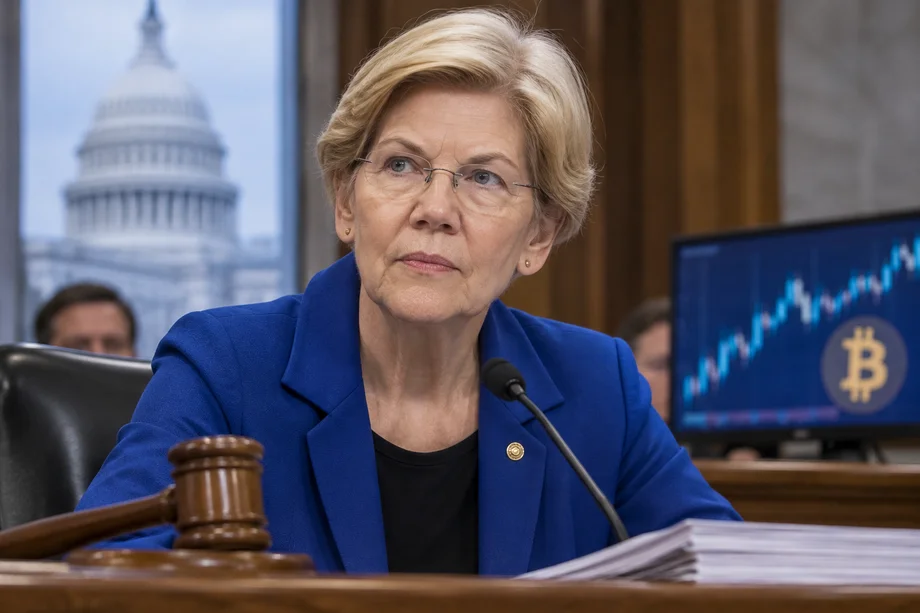
Democratic control of Congress positions the Massachusetts senator to oversee financial markets and digital assets starting in 2027, with heightened focus expected on industry practices
Senator Elizabeth Warren is expected to assume the chairmanship of the Senate Banking Committee when the new Congress convenes in January 2027, following Democratic victories in the November 2026 midterm elections that delivered the party control of both chambers.
The Wall Street Journal reported the development, noting that Warren would gain expansive authority over the financial industry in her new role. She currently serves as the committee’s ranking member, while Republican Senator Tim Scott holds the chair under the outgoing majority. The committee oversees the Federal Reserve, banking institutions, securities markets, housing policy and digital assets.
Shift in Oversight Authority
As chair, Warren would control the committee’s agenda, schedule hearings and pursue investigations. The position includes access to subpoena procedures that can compel documents and testimony. Industry participants anticipate closer examination of cryptocurrency firms, stablecoin issuers, exchanges and related intermediaries.
Every major digital asset measure that has advanced in the Senate in recent years has required clearance through the Banking Committee. The change in leadership is expected to alter the path for market structure proposals and related legislation.
| Current Chair | Expected Chair (2027) |
|---|---|
| Tim Scott | Elizabeth Warren |
Long-Standing Critique of Digital Assets
Warren has been one of the most consistent critics of the cryptocurrency sector in Congress. She has linked the industry to money laundering, ransomware attacks and sanctions evasion while arguing that it lacks adequate consumer protections and regulatory oversight.
In 2023 her reelection campaign launched an “anti-crypto army” initiative. She has repeatedly challenged industry leaders on compliance issues and opposed Republican-backed proposals she views as insufficient. In September 2026 she delivered a Senate speech reiterating calls for stricter rules and warning against legislation that would weaken safeguards.
Warren has also scrutinized cryptocurrency ventures connected to President Donald Trump and his family, including World Liberty Financial. Earlier this year she requested that banking regulators pause review of a related bank charter application pending further examination of potential conflicts. She later pressed for stronger ethics restrictions on senior officials’ digital asset holdings during negotiations over market structure legislation.
Priorities and Parallel House Activity
Potential areas of focus under Warren’s leadership include consumer protections in cryptocurrency markets, alleged insider trading in prediction markets and financial relationships involving the Trump family. In March she joined more than 40 lawmakers in asking the Commodity Futures Trading Commission and Office of Government Ethics to clarify rules on the use of nonpublic information in prediction-market trading.
On the House side, Representative Maxine Waters is expected to lead the Financial Services Committee. Democratic staffers have been drafting a market structure bill that would expand Securities and Exchange Commission oversight, limit the Commodity Futures Trading Commission’s role relative to earlier Republican proposals, require monthly proof-of-reserves attestations, tighten custody standards and impose ethics provisions targeting official crypto activity.
Incoming House Oversight leadership has also signaled interest in examining Trump family business dealings, with inquiries potentially beginning as early as February 2027. Analysts note that while Democrats can block industry-favored legislation, the presidential veto remains a constraint on passing new measures of their own. Oversight and investigations are therefore expected to serve as primary tools.
Market Response
Cryptocurrency prices declined as investors assessed the election outcome alongside broader equity market weakness. Bitcoin traded near $75,500 to $75,900, down roughly 6 percent over 24 hours at points during the selloff. Ethereum, XRP and Solana recorded larger percentage losses. Derivatives liquidations exceeded $1 billion, with long positions accounting for the majority of the forced closures.
Committee assignments will be formalized after the new Congress convenes. Until then, the current majority retains control during the lame-duck session. Warren’s elevation would place a longtime industry critic in charge of the Senate panel that shapes digital asset policy at a moment when both chambers are under Democratic control.
Disclaimer
This article was generated by AI using information from multiple industry sources. It has not been reviewed or verified by a human editor and may contain inaccuracies, omissions, or misinformation. Readers are encouraged to independently verify any information before making decisions based on its content.Tired of the noise?
Let the bots trade for you.
Trade 24/7, without emotion, with data-driven strategies.
Associated articles

House Democrats Advance Plans for Crypto Bill Expanding SEC Authority
Democrats Seize Congress Control, Resetting Path for Crypto Rules and Oversight

Democratic Senators Demand Hearings on Trump Crypto Holdings and Security Concerns

Democrats Plan Probes of Trump Family Crypto Ventures After Midterm Wins

Trump Backs Ethics Rules, Clearing Path for Senate Vote on CLARITY Crypto Bill
Latest articles

Peter Schiff Mocks Strategy’s Bitcoin Strategy as Holdings Near $75,500 Cost Basis

Microsoft Phases Out Oracle AI Capacity Rental Over Older Nvidia Hardware

Suspicious Bets Precede NYT/Siena Poll Releases on Prediction Markets

Nubank and Mercado Pago Halt Crypto Transfers After Provider Outage