Newsroom
OpenAI Countersues Apple in Escalating Trade Secrets and Hiring Dispute
27 November, 2026 / News / AI / Tags: apple, openai, counterclaims, hardware, confidential
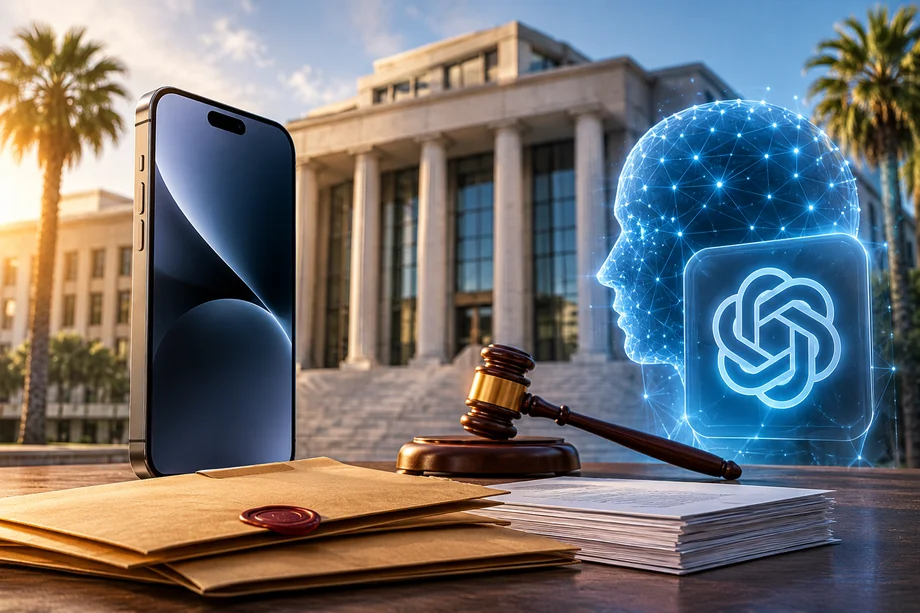
OpenAI filed counterclaims against Apple in California federal court, accusing the company of trade secret theft, supplier pressure and restrictive employment practices in a battle over AI hardware development
OpenAI has filed counterclaims against Apple in federal court in San Jose, California, intensifying a legal conflict that began when Apple sued the artificial intelligence company earlier this year. The new filing, submitted on November 27, 2026, accuses Apple of stealing OpenAI trade secrets, pressuring shared hardware suppliers and using employment practices that hinder workers from joining competitors.
The dispute centers on competition for talent and the race to develop consumer devices powered by artificial intelligence. Apple initiated the litigation on July 10, 2026, naming OpenAI along with two former Apple employees who later joined the AI firm. Apple alleged that confidential product designs, technical information and supplier details were improperly obtained to support OpenAI’s hardware efforts.
Origins of the Legal Battle
Apple’s original complaint focused on the movement of personnel and the handling of proprietary information. One of the named individuals, Tang Tan, spent more than two decades at Apple in product design roles for devices including the iPhone and Apple Watch before becoming OpenAI’s chief hardware officer. Another former Apple engineer was also named. Apple claimed these individuals and others carried confidential materials that could aid OpenAI in building competing consumer electronics.
More than 400 former Apple employees now work at OpenAI. The companies had previously cooperated on integrating ChatGPT with Siri during 2024 and 2025. That collaboration later ended as both pursued independent strategies in consumer technology.
OpenAI has denied taking Apple’s confidential information and has characterized the original lawsuit as an effort to restrain hiring. The company previously stated it has no interest in other firms’ trade secrets and remains focused on its own product development.
OpenAI’s Counterclaims
In its November filing, OpenAI reversed the direction of the accusations. The company alleged that Apple obtained OpenAI confidential information through a former employee who returned to Apple after a period at the AI firm. According to the counterclaims, that individual gained access to details about a new device and OpenAI’s hardware product roadmap during a six-month tenure.
OpenAI further claimed that Apple pressured hardware suppliers that serve both companies. The filing states that Apple sought to identify personnel assigned to OpenAI projects and urged at least one vendor to cease work related to OpenAI’s consumer devices. These actions, OpenAI argued, were intended to limit its access to manufacturing partners needed for AI-enabled personal electronics.
The counterclaims also address Apple’s employment practices. OpenAI alleged that Apple encourages staff to store work-related files on personal accounts and devices. When employees announce a departure for a competitor, they are required to leave the same day, limiting opportunities to separate personal and company information. OpenAI described these practices as creating conditions that facilitate later accusations of trade secret misappropriation against departing workers.
Additional claims include interference with contracts and unfair competition under California law, alongside federal trade secret allegations.
Context of Employee Movement and Hardware Ambitions
The broader conflict involves OpenAI’s push into consumer hardware. The company has been developing AI-enabled personal electronic devices that would operate independently of existing smartphone platforms. Apple views such products as potential competition in a core market.
OpenAI has referenced an earlier allegation from October involving the transfer of more than 100 confidential files related to unreleased products to personal accounts. That claim forms part of the wider dispute over the handling of sensitive technical information by individuals moving between the two organizations.
Apple has previously stated that its investigation found no evidence supporting claims of OpenAI trade secret theft. The company has said it maintains strict policies requiring new hires not to bring confidential materials from prior employers and would address any OpenAI information found on its systems.
The case remains pending in the Northern District of California. Proceedings continue as both companies prepare for further litigation steps in a matter that combines questions of intellectual property, talent mobility and access to the supply chain for next-generation devices.

Disclaimer
This article was generated by AI using information from multiple industry sources. It has not been reviewed or verified by a human editor and may contain inaccuracies, omissions, or misinformation. Readers are encouraged to independently verify any information before making decisions based on its content.Tired of the noise?
Let the bots trade for you.
Trade 24/7, without emotion, with data-driven strategies.
Associated articles

CZ Advises 1Password Users to Reset All Passwords After Customer Data Exposure
Justin Sun Secures Partial Court Victory Keeping Claims Against World Liberty Public

Trezor Confirms ShipMonk Breach Exposed Data of 13,689 Hardware Wallet Customers

North Korea Deploys Third-Country IT Workers to Infiltrate U.S. Firms
Keystone Confirms Website Breach Exposing Customer Shipping Details
Latest articles

Cardano Targets Q1 2027 for Dijkstra Hard Fork and LayerZero Integration

Arthur Hayes Warns of Potential Crypto Sell-Off Over Weekend as Fed Blackout Begins

Bluefin Ends Perpetual Futures Trading on Sui, Shifts Focus to Spot and Tokenization

Google Play to Publish Individual Developers' Home Addresses Worldwide From March 2027