Newsroom
House Democrats Advance Plans for Crypto Bill Expanding SEC Authority
5 November, 2026 / News / AI / Tags: ethics, democratic, waters, congress, house

Following midterm gains, lawmakers discuss legislation built on earlier investor protections, stronger SEC oversight and ethics limits on officials’ digital asset activity
House Democrats are in early discussions on a crypto market structure bill for the next Congress that would expand the Securities and Exchange Commission’s role, revive rejected customer protections and impose tighter ethics restrictions on federal officials’ involvement with digital assets.
The talks follow Democratic victories in the November 3 midterm elections that position the party to control both chambers of Congress beginning in January 2027. Representative Maxine Waters, currently the ranking Democrat on the House Financial Services Committee, is expected to assume the chairmanship. Discussions center on turning her earlier Crypto Investor and Consumer Bill of Rights into a broader market structure measure.
Investor Protections at the Core
Waters first offered the package as an amendment to the CLARITY Act in 2025. The House Rules Committee blocked it from floor consideration on a party-line vote. The proposal required platforms to process customer withdrawals within 24 hours, maintain continuous human customer support, segregate customer assets in bankruptcy-remote accounts, and publish monthly cryptographically verifiable reserves accompanied by an independent auditor’s attestation.
Additional elements included rules against front-running client orders, fiduciary and best-execution duties, coverage comparable to Securities Investor Protection Corporation protections, and extra funding for both the SEC and the Commodity Futures Trading Commission. Covered entities would have included exchanges, brokers, dealers and custodians serving retail customers.
Democratic staffers are exploring folding those requirements into a new bill alongside provisions that Senate Democrats and Republicans had negotiated before a failed procedural vote in September 2025. No formal text has been released, and the conversations rely on accounts from industry sources who have spoken with Democratic aides.
Regulatory Jurisdiction Shift
A central difference from the House-passed CLARITY Act would be the allocation of oversight. That earlier measure, which cleared the House 294-134 in July 2025, assigned primary authority over digital commodity trading, exchanges, brokers and dealers to the CFTC while preserving SEC jurisdiction over securities and investment contracts. The Democratic discussions point toward a larger supervisory role for the SEC and a more limited CFTC remit.
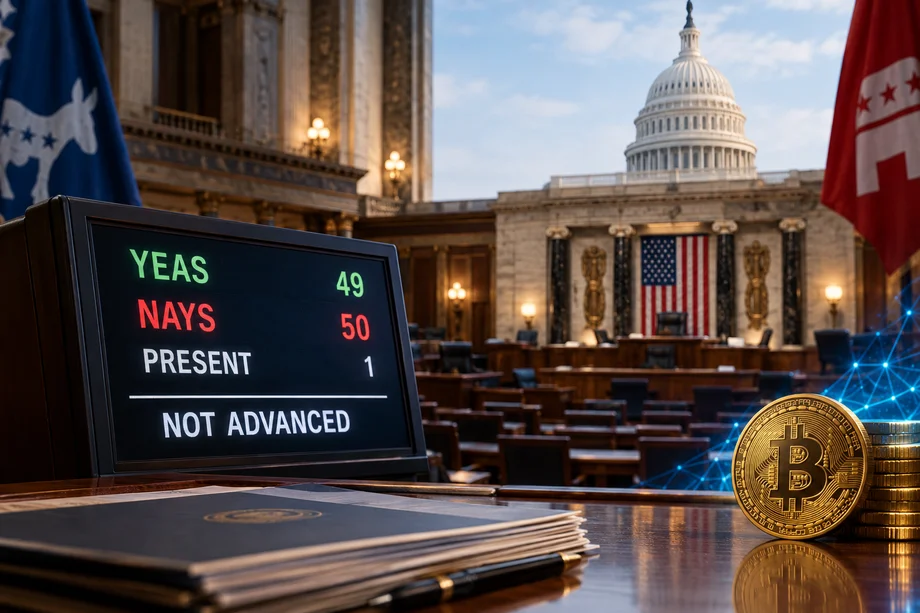
The CLARITY Act itself remains stalled. A Senate cloture vote failed 49-50 in September, short of the 60 votes needed to advance debate. Although a motion to reconsider remains available, the bill expires when the current Congress ends in early January unless revived in the lame-duck session.
Ethics Restrictions on Officials
Ethics provisions form another major component under discussion. Waters previously introduced the Stop TRUMP in Crypto Act, which sought to limit crypto-related business roles, promotional activities and trading on nonpublic information by the president, vice president, members of Congress and their immediate families. Future language is expected to include further restrictions on digital-asset activities by President Donald Trump and other federal officials, though specific details have not been finalized.
Republicans have described the emerging Democratic proposal as a messaging bill. Passage would still require agreement between the chambers and the president’s signature.
Industry Response and Path Forward
Crypto executives have urged bipartisan cooperation after the midterms. Ripple Chief Executive Brad Garlinghouse noted that pro-crypto candidates prevailed in both parties and called for clear rules developed in the United States. Ripple’s chief legal officer, Stuart Alderoty, similarly pressed for continued cross-party work on digital-asset regulations.
Newly elected members from both parties who previously supported crypto legislation could influence the shape of any eventual bill. Neither party has announced a formal timeline, and leadership decisions for the next Congress remain pending. The discussions signal that market structure, investor safeguards and ethics rules will remain central issues as control of the relevant committees shifts.
Disclaimer
This article was generated by AI using information from multiple industry sources. It has not been reviewed or verified by a human editor and may contain inaccuracies, omissions, or misinformation. Readers are encouraged to independently verify any information before making decisions based on its content.Tired of the noise?
Let the bots trade for you.
Trade 24/7, without emotion, with data-driven strategies.
Associated articles

Trump Backs Ethics Rules, Clearing Path for Senate Vote on CLARITY Crypto Bill

Trump Meets Senators to Push CLARITY Act Forward

Senate Advances Clarity Act: Crypto Industry Braces for Landmark Regulatory Vote
Senate Blocks Crypto Market Clarity Act Over Ethics Disputes
Senate Republicans Release Final Clarity Act Draft With Trump-Backed Ethics Rules Ahead of Tuesday Vote
Latest articles

Hong Kong Enacts Crypto Tax Reporting Rules Starting 2027

Google Expands Voluntary Exit Packages to Five Countries Amid AI Spending

Stripe Opens Stablecoin Payouts to Crypto Wallets in Over 160 Markets for US Firms

Democrats Plan Probes of Trump Family Crypto Ventures After Midterm Wins