Newsroom
California Lawmakers Pass Bill Banning Public Officials from Issuing Meme Coins
28 August, 2026 / News / AI / Tags: california, meme, officials, public, issuing
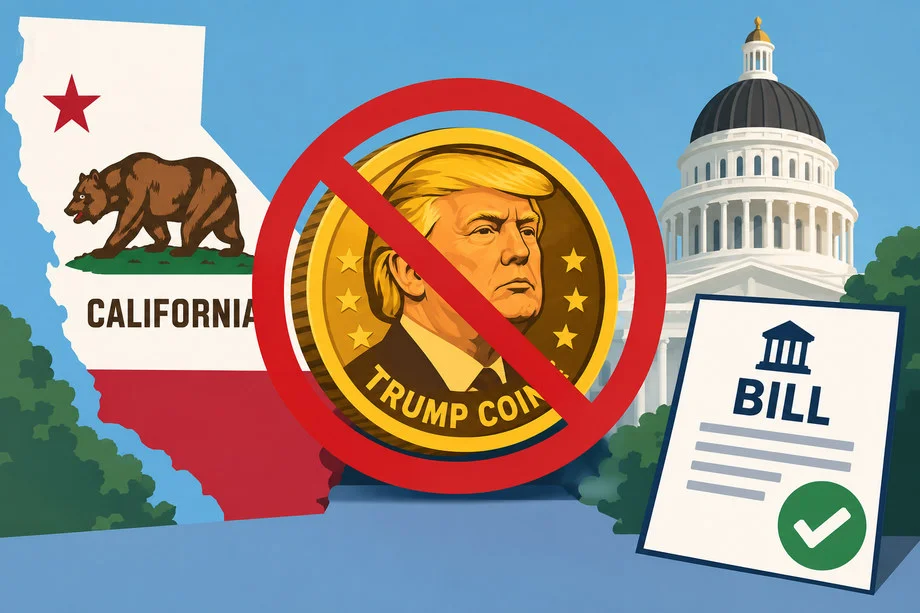
Assembly Bill 2409 clears both chambers unanimously and heads to Governor Newsom, targeting conflicts of interest in digital assets
California's legislature has approved Assembly Bill 2409, a measure that would prohibit state and local public officials from issuing meme coins and restrict digital asset platforms from offering certain official-linked tokens to state residents. The bill now awaits action from Governor Gavin Newsom.
The Senate passed the legislation 40 to 0 on August 26, and the Assembly concurred with Senate amendments in a 78 to 0 vote the same day. The measure has entered the enrolled stage. If signed, California would become the first state to enact such restrictions into law.
Scope of the Prohibitions
AB 2409, introduced by Assemblymember Avelino Valencia, bars public officers and certain public employees from issuing meme coins. Public officers include state and local elected or appointed officials, members of the Legislature, and members of government boards, commissions, committees and advisory bodies. The employee provision covers those with decision-making authority over bids and contracts for their government entity.
Issuing is defined as making a token available for public purchase, donation or exchange for anything of value, whether or not it is promoted. The bill adds these rules to a new chapter of the California Government Code on prohibited digital financial transactions.
Legislative findings state that public officials should not use government authority for private financial gain. Officials who issue or promote financial instruments can create conflicts of interest and opportunities for pay-to-play arrangements, while raising risks of exploitation and foreign influence.
Valencia has noted that digital asset platforms have made meme coins easier to create and can allow individuals to bypass existing financial disclosure and conflict-of-interest rules that predate cryptocurrency.
Restrictions on Digital Asset Platforms
A separate provision applies to companies serving California residents. Beginning January 1, 2027, a digital asset service provider would be prohibited from listing for sale, or for purchase by a California resident, a meme coin issued on or after that date when the token is offered by or in partnership with a federal public official or a state or local public officer.
The restriction is not a broad ban on meme coin trading. It applies only to the specified category of newly issued official-linked tokens. An earlier version of the language focused on tokens containing the likeness or image of officials. The final text instead centers on tokens offered by or in partnership with covered officials.
Federal public officials under the bill include elected and appointed federal officers as well as members of federal government boards, commissions, committees and advisory bodies.
Enforcement and Background
Enforcement would occur through civil actions rather than new criminal penalties. The Attorney General could seek an injunction and disgorgement of funds. District attorneys, city attorneys and county counsel could enforce the prohibition on officials issuing meme coins and seek the same remedies.
Committee analysis listed California Common Cause and the Consumer Federation of California as supporters, with no registered opposition.
The measure draws from concerns raised by the Official TRUMP meme coin, launched shortly before the president returned to office in January 2025. The token's price rose sharply in the period after launch. The president later hosted an event at Mar-a-Lago for leading holders. Financial disclosures reported hundreds of millions of dollars in related income. Blockchain analysis cited in legislative materials estimated large collective losses among token holders. Melania Trump's separate token has faced a fraud lawsuit described in committee materials as involving pump-and-dump allegations.
The core issuance ban applies only to California state and local officials and does not reach federal officials. The listing restriction for California residents, however, covers tokens offered by or in partnership with federal officials when newly issued after the effective date.
Federal proposals addressing similar issues, including ethics language in market structure legislation and separate bills from members of Congress, have not yet become law.
The bill now sits with the governor for signature or veto.

Disclaimer
This article was generated by AI using information from multiple industry sources. It has not been reviewed or verified by a human editor and may contain inaccuracies, omissions, or misinformation. Readers are encouraged to independently verify any information before making decisions based on its content.Tired of the noise?
Let the bots trade for you.
Trade 24/7, without emotion, with data-driven strategies.
Associated articles
California Bans Public Officials From Issuing Meme Coins in New Anti-Corruption Measure

Housing Bill with CBDC Ban Becomes Law Without Trump Signature

Monaco Moves to Overhaul Crypto Rules with New Bill Aligned to EU MiCA Standards

Republican Lawmaker Introduces Bill to Curb Congressional Betting on Prediction Markets
State Attorneys General Urge Senate to Reject Crypto Market Clarity Act Over Fraud Enforcement Concerns
Latest articles

SpaceX and Tesla Set Up Committees to Explore Merger That Would Combine Holdings of Over 30,000 Bitcoins
UK Banks Face Thousands of Complaints Over Crypto Transfer Restrictions
Ripple Backs SEC Proposed Crypto Asset Rules After $150 Million Legal Battle

Blockchain.com Introduces Options Trading on Seven Major Crypto Assets