Newsroom
ByteDance Secures $29.6 Billion Loan to Fuel AI Data Center Expansion
4 September, 2026 / News / AI / Tags: bytedance, loan, chinese, facility, tiktok
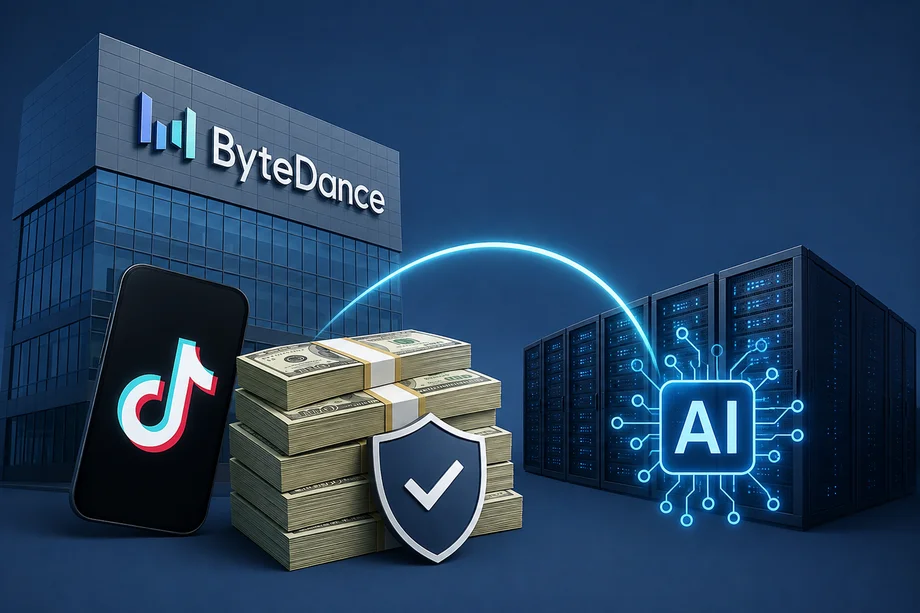
TikTok parent raises Asia’s second-largest dollar facility of 2026 after strong bank demand, targeting overseas AI infrastructure and compute capacity
ByteDance, the privately held Chinese technology company behind TikTok and Douyin, has arranged a $29.6 billion syndicated loan from nearly 30 banks. The facility ranks as Asia’s second-largest dollar-denominated borrowing of 2026, trailing only SoftBank’s $40 billion bridge loan completed in March.
Strong lender interest allowed the company to expand the deal well beyond its original $20 billion target. Orders exceeded $30 billion before the commitment deadline, enabling the upsizing. Citigroup and JPMorgan coordinated the transaction. Chinese banks accounted for more than 60 percent of the total, with additional participation from institutions in the United States, Europe and Singapore.
Loan Structure and Terms
The three-year facility includes an option to extend for two additional years. It is unsecured, meaning ByteDance pledged neither assets nor shares as collateral. One person familiar with the matter described such a large unsecured loan as unusual, noting that banks are relying primarily on the company’s credit standing and cash generation from its core social media businesses.
The deal has not yet been fully signed, as banks continue confirming final allocations. Proceeds are designated for general corporate purposes. People with knowledge of the transaction said the funds will primarily support artificial intelligence initiatives, including data center capacity outside China, particularly in Southeast Asia.
AI Spending Ambitions
ByteDance is weighing capital expenditure of as much as $70 billion in a single year on AI infrastructure. That scale would place its outlays in the same range as major U.S. technology companies. Earlier internal figures had pointed to a lower 2026 budget of about 160 billion yuan, or roughly $22.7 billion, though accounts differ on whether the higher figure represents a firm commitment or a scenario under review.
The company faces higher costs for equivalent computing power because of U.S. export controls that restrict access to leading Nvidia chips. Expansion therefore depends more heavily on custom silicon based on Arm and RISC-V architectures, Qualcomm components for inference workloads, and domestic Chinese suppliers. ByteDance also continues to spend more than $1 billion annually to access OpenAI models via Microsoft Azure while developing its own hardware and models, including work on a system with as many as 10 trillion parameters and enlarged data center clusters in locations such as Inner Mongolia.
Comparison with Prior Financing
The new facility more than doubles ByteDance’s previous large dollar loan of roughly $10.8 billion raised in 2024 from about 20 lenders. That earlier transaction was at the time the largest dollar corporate loan in Asia outside Japan. The latest pricing opens at a tighter margin than the prior deal, reflecting continued bank confidence in the company’s ability to service debt from operating cash flow.
Unlike SoftBank’s bridge facility, which was structured against an equity position and intended for later refinancing, ByteDance’s borrowing is supported by an established business generating substantial revenue. Lenders view the cash flows from TikTok and Douyin as the effective underpinning of the credit.
Broader Context of AI Debt
Large technology firms have collectively raised more than $350 billion in AI-related debt to finance data centers and compute rather than relying solely on retained earnings. ByteDance’s transaction moves a substantial portion of that financing activity outside the United States. As a private company, ByteDance does not publish detailed financial statements, so the banks participating in the loan possess more granular information on its revenues, leverage and debt-service capacity than is available to the public, regulators or users.
The financing arrives amid intensifying competition in generative AI, tighter Chinese oversight of advanced model features, and ongoing efforts by Chinese developers to reduce costs relative to leading American systems. ByteDance has previously adjusted product features in response to regulatory guidance and continues to balance domestic development with overseas infrastructure needs.
Disclaimer
This article was generated by AI using information from multiple industry sources. It has not been reviewed or verified by a human editor and may contain inaccuracies, omissions, or misinformation. Readers are encouraged to independently verify any information before making decisions based on its content.Tired of the noise?
Let the bots trade for you.
Trade 24/7, without emotion, with data-driven strategies.
Associated articles
CleanSpark Closes $2.276 Billion Senior Secured Notes to Fund Georgia Data Center Expansion
Nvidia-Backed Firmus Scraps $5 Billion Australian IPO Amid AI Data Center Valuation Scrutiny

Alibaba Seeks $10.2 Billion in Hong Kong Share Placement to Fund Full-Stack AI Push

Tencent-Backed Enflame Shares Surge Nearly 180% in Shanghai STAR Market Debut
Nscale Secures $3.36 Billion Pre-IPO Financing Amid Push Toward NYSE Listing
Latest articles

CoinDCX Confirms Losses After Suspicious $16M Transfers From 2025 Hack Wallets

Robinhood Secures Dubai License for Crypto and Stock Trading, Middle East Launch Delayed to 2027
CZ Warns Crypto Users Over Two Critical PHP Vulnerabilities

Bybit Fintech FZE Receives VARA Licence for Dubai Spot Trading