Newsroom
Alibaba Seeks $10.2 Billion in Hong Kong Share Placement to Fund Full-Stack AI Push
23 August, 2026 / News / AI / Tags: alibaba, placement, billion, cloud, chips
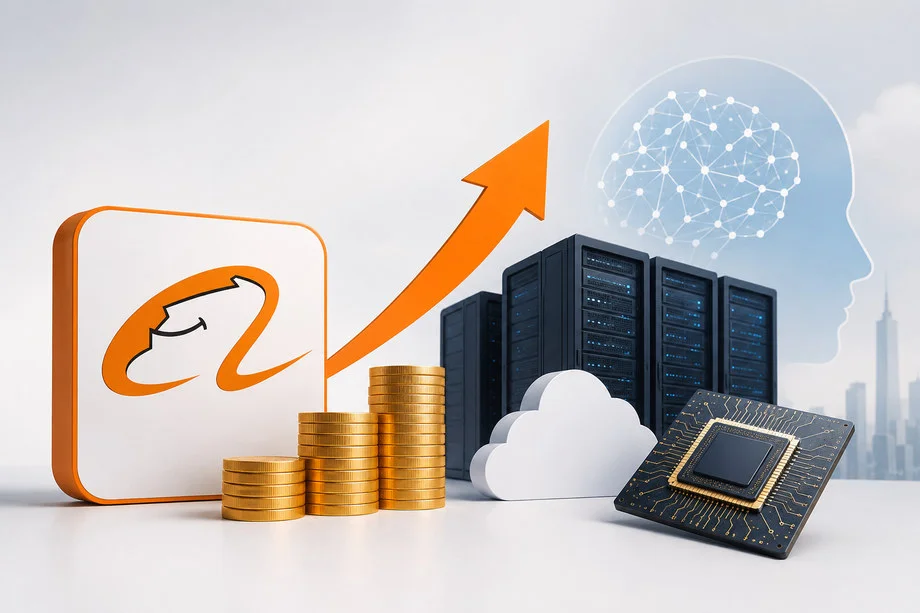
Chinese tech giant plans record Hong Kong equity raise as capital spending on artificial intelligence accelerates and recent profits decline
Alibaba Group Holding is seeking to raise approximately HK$80 billion, or $10.2 billion, through a primary share placement in Hong Kong. The company intends to direct every dollar of net proceeds toward expanding its full-stack artificial intelligence capabilities, spanning chips, computing infrastructure, and the development and deployment of AI models.
The placement involves the issuance of 710 million ordinary shares priced at HK$112.70 each. That price represents a 3.6 percent discount to the prior closing level. If completed, the transaction would stand as the largest primary follow-on offering ever executed by a Hong Kong-listed company. On a global basis, it ranks as the third-largest primary follow-on equity raise this year, trailing only Alphabet’s $80 billion offering and Intel’s $15 billion sale.
Strong Investor Demand and Deal Terms
Demand for the shares has been robust. Sources familiar with the process indicated that interest from institutional investors, including sovereign wealth funds, exceeded the initial size of the offering. As a result, Alibaba enlarged the placement. Joint bookrunners for the deal are Morgan Stanley, HSBC, UBS, and China International Capital Corporation. The company will observe a 90-day lockup period following completion.
Alibaba stated that the capital will support its broader AI strategy at a time when competition for leadership in the field has intensified across global technology markets. The full-stack approach covers proprietary chips, data-center expansion, cloud infrastructure, and ongoing work on foundation models such as the Qwen family, which has gained notable adoption.
Rising Capital Expenditure and Financial Pressure
The fundraising arrives amid a sharp increase in spending. In the June quarter, Alibaba’s capital expenditure rose about 75 percent to 67.68 billion yuan, approaching $10 billion. The company has already deployed roughly half of the 380 billion yuan it previously earmarked for cloud and AI infrastructure through 2029.
That investment pace has weighed on near-term results. Net profit for the June quarter fell approximately 75 percent year over year to 10.5 billion yuan, or about $1.6 billion. Free cash flow registered an outflow of $6.6 billion, driven by higher costs tied to data-center capacity and chip procurement.
At the same time, certain technology segments have shown strength. Revenue from AI Cloud and Compute Services increased 45 percent to roughly $7.1 billion. AI-related product revenue continued to post triple-digit growth. Management has indicated that the expected payback period on AI investments has shortened from three years to about 2.5 years, citing rising demand.
Strategic Pivot and Asset Sales
Chief Executive Eddie Wu has been streamlining non-core operations to support the AI focus. Alibaba recently agreed to sell its gaming unit Lingxi Games to Trustar Capital in a transaction valued at no less than $1.5 billion. The move forms part of a broader effort to reallocate resources toward computing capacity and model development.
The company faces the same capital-intensive dynamics visible among other major technology firms building out AI infrastructure. Access to advanced chips, power, and data-center space has become central to competitive positioning. Alibaba’s latest equity raise provides additional funding capacity as it seeks to maintain momentum in both cloud services and proprietary AI offerings.
Completion of the placement remains subject to market conditions and other customary factors. Investors will continue to monitor whether accelerating revenue in AI and cloud segments can offset the elevated capital requirements over time.

Disclaimer
This article was generated by AI using information from multiple industry sources. It has not been reviewed or verified by a human editor and may contain inaccuracies, omissions, or misinformation. Readers are encouraged to independently verify any information before making decisions based on its content.Tired of the noise?
Let the bots trade for you.
Trade 24/7, without emotion, with data-driven strategies.
Associated articles
Alibaba Shares Fall as Profit Plunges 75% on Heavy AI Spending Despite Strong Revenue Growth
Anthropic Secures $35 Billion Compute Pact with Nvidia-Backed Lambda at Texas Campus
CleanSpark Closes $2.276 Billion Senior Secured Notes to Fund Georgia Data Center Expansion
CleanCore Liquidates Dogecoin Holdings to Fund AI Data Center Expansion
Amazon Posts $62.6 Billion Profit, AWS Growth Hits Fastest Pace in Years on AI Demand
Latest articles
SpaceX and Tesla Set Up Committees to Explore Merger That Would Combine Holdings of Over 30,000 Bitcoins
UK Banks Face Thousands of Complaints Over Crypto Transfer Restrictions
Ripple Backs SEC Proposed Crypto Asset Rules After $150 Million Legal Battle

Blockchain.com Introduces Options Trading on Seven Major Crypto Assets