Newsroom
BIS Chief Questions Stablecoins for Large-Scale Payments, Favors Tokenized Deposits
29 August, 2026 / News / AI / Tags: ndez, stablecoins, hern, deposits, monetary
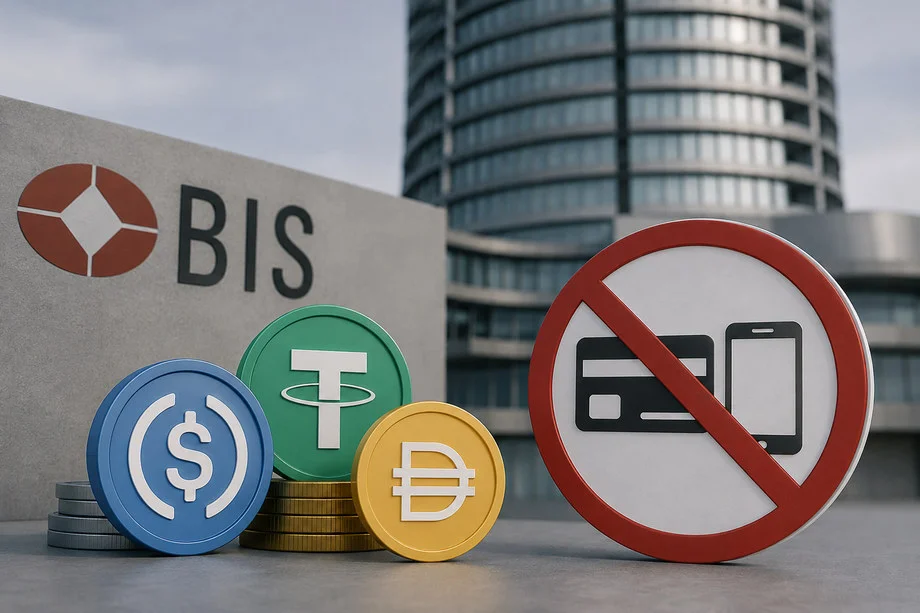
Bank for International Settlements leader says privately issued tokens lack credibility as everyday money while a new study maps sharp differences in global issuer rules
The head of the Bank for International Settlements has renewed skepticism toward stablecoins, arguing they do not function credibly as a means of payment at scale. Speaking at the Federal Reserve’s Jackson Hole Economic Policy Symposium, General Manager Pablo Hernández de Cos said tokenized bank deposits offer a stronger route to capture the benefits of tokenization without undermining the core structure of the monetary system.
Hernández de Cos, who is among candidates to succeed European Central Bank President Christine Lagarde, told the gathering that stablecoins and tokenized deposits could coexist. In his view, however, tokenized deposits should handle the bulk of day-to-day payments while stablecoins remain confined to more specialized uses.
Concerns Over Payments Functionality and Systemic Effects
Hernández de Cos listed several practical shortcomings. Stablecoins break the “singleness” of money because users often cannot move freely between different products at par without selling one asset and buying another. Platforms also lack genuine interoperability, and anti-money-laundering controls prove difficult to apply consistently across systems.
He acknowledged one potential benefit frequently cited by supporters: stablecoins could lower government borrowing costs by driving additional demand for sovereign debt, a point previously raised by US Treasury Secretary Scott Bessent. Yet the same shift carries risks for the banking sector. If customers move deposits into stablecoins, banks may face higher funding costs and pass those expenses on through elevated lending rates for households and businesses.
Growing international use of US dollar-pegged stablecoins raises a further issue. Widespread adoption outside the United States could erode monetary sovereignty in other jurisdictions and reduce the effectiveness of domestic monetary policy.
Regulatory Divergence Across Major Markets
The remarks coincide with the release of a Financial Stability Institute study that compares stablecoin rules in the United States, European Union, United Kingdom, Hong Kong and Singapore. The analysis focuses on which entities may issue stablecoins and what additional activities they may conduct.
The United States and Singapore take relatively restrictive approaches toward non-bank issuers. Under the US GENIUS Act framework, activities such as lending, staking, proprietary trading and custody of third-party crypto assets generally fall outside the scope of what payment stablecoin issuers are allowed to do.
Hong Kong, the United Kingdom and the European Union adopt less restrictive stances. Issuers in those jurisdictions may engage in additional activities provided they obtain separate authorization, regulatory consent or other applicable permissions.
Across all five markets, the restrictions apply to the issuing entity itself rather than the wider corporate group. Other companies within the same group may therefore conduct activities that the stablecoin issuer is prohibited from performing. The study notes that this entity-level approach can complicate risk oversight, particularly for non-bank groups that lack the consolidated supervision already applied to banks.
Broader Context for Digital Money Debates
Policymakers continue to weigh the trade-offs between innovation and financial stability as stablecoin markets expand. Hernández de Cos framed tokenized deposits—structured as bank liabilities and settled in central bank money—as better aligned with existing monetary foundations. He indicated that stablecoins could still play a useful role if issuers strengthen redeemability, improve cross-platform connectivity and tighten integrity controls.
The discussion occurs as jurisdictions worldwide refine frameworks for digital tokens. Differences in permitted activities and the treatment of corporate groups remain a live issue for both regulators and market participants seeking clearer, more consistent rules.
Disclaimer
This article was generated by AI using information from multiple industry sources. It has not been reviewed or verified by a human editor and may contain inaccuracies, omissions, or misinformation. Readers are encouraged to independently verify any information before making decisions based on its content.Tired of the noise?
Let the bots trade for you.
Trade 24/7, without emotion, with data-driven strategies.
Associated articles
Tether CEO Defends Stablecoins as BIS Pushes Tokenized Bank Deposits

BIS Warns $316 Billion Stablecoin Market Threatens Global Monetary System

Bank of England Considers Volume Guardrails as Alternative to Stablecoin Holding Limits

Chainalysis Estimates $457 Billion in Taxable Onchain Crypto Activity, Most Outside CARF Scope

EU Prepares MiCA Changes to Handle Non-EU Stablecoin Issuers
Latest articles

SpaceX and Tesla Set Up Committees to Explore Merger That Would Combine Holdings of Over 30,000 Bitcoins

UK Banks Face Thousands of Complaints Over Crypto Transfer Restrictions
Ripple Backs SEC Proposed Crypto Asset Rules After $150 Million Legal Battle

Blockchain.com Introduces Options Trading on Seven Major Crypto Assets