Newsroom
Australia Sues Telegram Over Alleged Failure to Remove Pro-Terror Content
31 July, 2026 / News / AI / Tags: telegram, esafety, material, australian, content
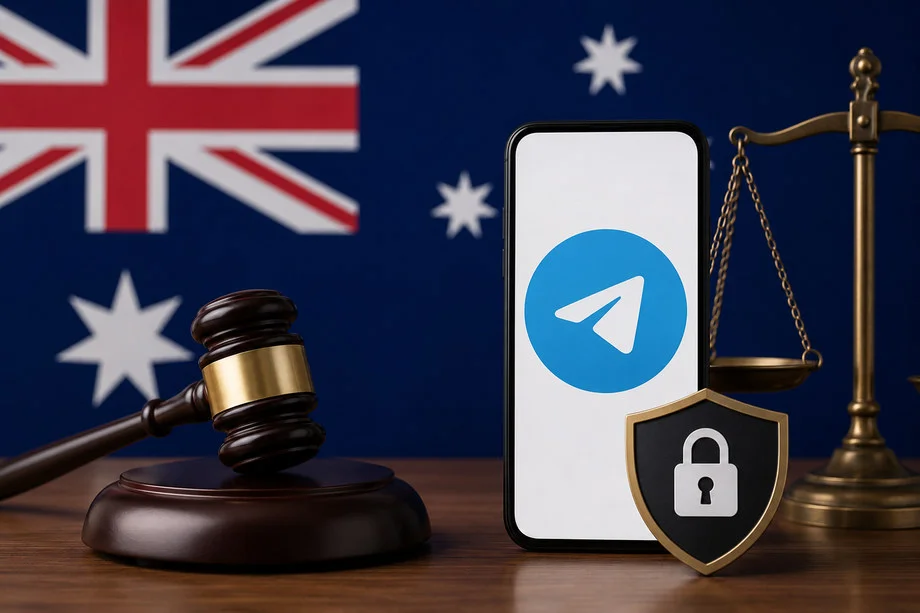
eSafety Commissioner seeks up to A$54.6 million in Federal Court after year-long probe into delayed takedowns of extremist material
Australia’s online safety regulator has launched civil penalty proceedings against Telegram in the Federal Court, alleging the messaging platform breached obligations under the Online Safety Act by failing to remove pro-terror content after receiving user reports.
The eSafety Commissioner filed the action on July 30, 2026, following a year-long investigation. The regulator claims Telegram left certain unlawful material accessible for periods of up to three weeks and did not take adequate steps to prevent repeated distribution through accounts, channels and groups.
Details of the Allegations
According to the regulator, Australian users reported 12 posts containing pro-terror material between July and October 2025. Three of those posts included content already identified as terrorist material. Telegram allegedly left 10 of the 12 posts online and did not suspend or block the accounts that posted them.
The investigation also found that Telegram failed to detect known extremist footage, including material from the 2019 Christchurch mosque shootings and the May 2022 Buffalo mass shooting. In one case, content related to the Buffalo attack remained accessible for nearly three months after it was uploaded.
Further claims include that Telegram did not maintain terms of service clearly prohibiting pro-terror material across all parts of its service and failed to inform users who submitted complaints about the outcomes of their reports.
Inman Grant linked the action to Australia’s domestic security environment, noting the aftermath of the Bondi terror attack and assessments that the national terrorism threat level remains probable. She stated that online radicalisation continues to feature in security investigations.
Telegram reports more than one billion users worldwide and receives an average of 1.5 million monthly visits from Australian users. The platform allows groups of up to 200,000 members and channels with no upper limit on broadcast reach.
Potential Penalties and Prior Action
A breach of the relevant codes and standards under the Online Safety Act can attract civil penalties of up to A$54.6 million, equivalent to approximately US$35.8 million to US$38 million. The figure represents a maximum exposure rather than a fixed fine. The case remains before the court with no hearing date or resolution yet set.
This is the second significant enforcement step by eSafety against Telegram. In February 2025 the regulator issued an infringement notice of nearly A$1 million after Telegram took about five months to respond to a transparency notice concerning measures against terrorist and child sexual abuse material. Telegram is contesting that earlier notice.
Australia does not issue operating licences to platforms. Inman Grant noted that authorities retain the power to apply to the Federal Court for an order that a service be ceased in the country, powers that have never been exercised.
Telegram’s Response
A Telegram spokesperson rejected the allegations and said the company will contest them in court. The spokesperson described the platform’s anti-terrorism efforts as extensive and well documented, citing the blocking of more than 153,000 terrorist-related communities in 2026 alone.
Telegram’s official account on X posted a video captioned “freedom of expression” around the time the Australian proceedings became public. The company has not issued a detailed point-by-point response addressing the specific posts named in the filing.
Broader International Context
The Australian action was filed one day after Russia’s Federal Security Service charged Telegram founder Pavel Durov with facilitating terrorist activity and began procedures to place him on an international wanted list. Russian authorities alleged the platform failed to remove channels, chats and bots used for coordination, recruitment and cyber fraud.
Durov also remains under investigation in France following his August 2024 arrest. French prosecutors have charged him with offences including complicity in the distribution of illegal content related to organised crime. He has denied wrongdoing in the various jurisdictions.
The Federal Court proceedings will determine whether Telegram met the specific statutory standards applying to relevant electronic services under Australian law.

Disclaimer
This article was generated by AI using information from multiple industry sources. It has not been reviewed or verified by a human editor and may contain inaccuracies, omissions, or misinformation. Readers are encouraged to independently verify any information before making decisions based on its content.Tired of the noise?
Let the bots trade for you.
Trade 24/7, without emotion, with data-driven strategies.
Associated articles

Russia Charges Telegram Founder Pavel Durov With Aiding Terrorism, Issues Arrest Warrant

Polish Prosecutors Charge Fifth Suspect in Expanding Zondacrypto Fraud Investigation

Dutch Crypto Broker Knaken Declared Bankrupt With €7 Million Missing

Australia Proposes Extending CFD Rules to Crypto-Settled Derivatives

CFTC Obtains $30 Million Default Judgment in Crypto and Precious Metals Fraud Case
Latest articles

SpaceX and Tesla Set Up Committees to Explore Merger That Would Combine Holdings of Over 30,000 Bitcoins

UK Banks Face Thousands of Complaints Over Crypto Transfer Restrictions

Ripple Backs SEC Proposed Crypto Asset Rules After $150 Million Legal Battle

Blockchain.com Introduces Options Trading on Seven Major Crypto Assets