Newsroom
Russia Charges Telegram Founder Pavel Durov With Aiding Terrorism, Issues Arrest Warrant
29 July, 2026 / News / AI / Tags: telegram, durov, russian, russia, terrorist
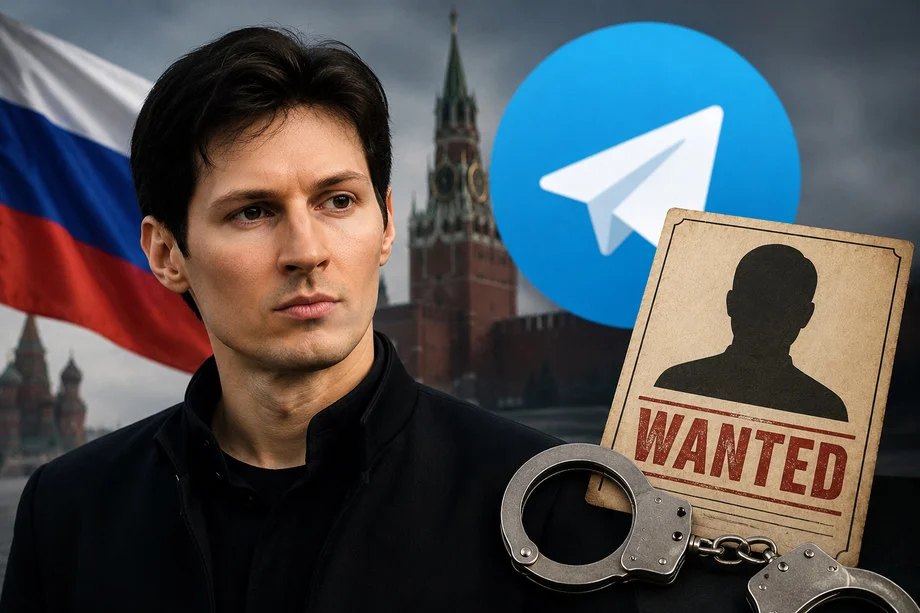
Russia’s Federal Security Service has charged Pavel Durov with facilitating terrorist activity and placed him on an international wanted list, citing alleged failures to remove content on Telegram linked to attacks and recruitment
Russia’s Federal Security Service has formally charged Telegram founder and chief executive Pavel Durov with assisting terrorist activity and issued an international arrest warrant against him. The move, announced on July 29, escalates a criminal case first opened earlier this year and places the Russian-born entrepreneur under heightened legal pressure from Moscow.
According to the FSB, the charges stem from Telegram’s alleged failure to delete channels, group chats and bot accounts that Ukrainian intelligence services, terrorist organizations and extremist groups supposedly used to plan attacks, recruit participants, coordinate sabotage and conduct cyber-fraud operations inside Russia. The agency stated that such activity resulted in deaths, including of women and children, and caused billions of rubles in damage.
Details of the Charges
The case is being pursued under Article 205.1 of Russia’s criminal code, which addresses assistance to terrorist activity and carries a potential sentence of up to 15 years in prison. The FSB identified Durov as the executive responsible for Telegram’s operations. No detailed documentary evidence or specific case files were released publicly alongside the announcement.
Russian authorities reported that, since July 2025, they had detained 46 young users across 16 regions in connection with alleged attacks on police officers and arson incidents carried out under instructions from Ukrainian intelligence. Some accounts described the use of Telegram’s dating service by Ukrainian operatives to approach and later recruit Russian men for such actions. Over the past year, media reports in Russia have linked dozens of arrests to recruitment via the platform for arson on railways, telecom facilities and other infrastructure.
The international wanted listing is a Russian designation. It is distinct from an Interpol Red Notice, which would require formal review under Interpol rules before any broader alert is issued. Durov holds French and Emirati passports, raising questions about the practical reach of any enforcement action outside Russia.
Background of Tensions With Moscow
The latest action follows a criminal investigation first reported in February. At that time Durov stated that Russian authorities were inventing pretexts to restrict access to Telegram and to suppress privacy and free speech. He has not issued a formal public response to the new charges.
On July 27 the Kremlin indicated it was still negotiating with Telegram regarding restoration of service access. Charges were filed two days later. The sequence has been viewed in context of longer-running friction. Durov co-founded the social network VK before leaving Russia in 2014 after declining government demands for user data. Telegram itself later faced attempts at blocking inside the country, while Russian authorities have promoted an alternative government-backed messenger.
In 2017 Russian authorities ordered Telegram to provide encryption keys under anti-terrorism legislation. Durov refused, arguing that creating a master key would compromise user privacy.
Parallel Investigation in France
Durov already faces a separate criminal investigation in France opened in 2024. French authorities arrested him at Le Bourget Airport near Paris in August 2024. Prosecutors examined allegations that Telegram’s moderation practices failed to adequately address organized crime, drug trafficking, cybercrime, fraud, money laundering and child sexual abuse material on the platform.
Travel restrictions imposed after the arrest were lifted in late 2025, though the investigation remains active. Durov has denied wrongdoing, stating that holding a platform’s chief executive responsible for actions by users sets a problematic legal precedent and that Telegram has complied with valid legal requests while maintaining standards comparable to other major services. He has framed the broader disputes as part of a wider debate over digital privacy and government demands for access to private communications.
Market Response
The token associated with Telegram’s blockchain ecosystem, previously known as Toncoin and later referred to as GRAM in some trading contexts, declined following the announcement. Reports indicated drops of more than 3 percent in the immediate hours after the news, extending a weekly decline of around 12 percent in some measurements. Trading volume rose and open interest in related futures contracts fell as market participants reacted. The token remained well below its 2024 peak levels.
Telegram has continued product development, including network updates and fee reductions aimed at supporting wallet services for its large user base. No formal statement from the company or Durov addressing the Russian charges had been released at the time of the FSB announcement.

Disclaimer
This article was generated by AI using information from multiple industry sources. It has not been reviewed or verified by a human editor and may contain inaccuracies, omissions, or misinformation. Readers are encouraged to independently verify any information before making decisions based on its content.Tired of the noise?
Let the bots trade for you.
Trade 24/7, without emotion, with data-driven strategies.
Associated articles
Australia Sues Telegram Over Alleged Failure to Remove Pro-Terror Content

Europol Dismantles AudiA6 Crypto Laundering Network Tied to Ransomware Operations

Moscow Court Orders Pretrial Detention for BitRiver Founder in $12.5 Million Fraud Case

Russia Detains Over 20 in Raids on Unregistered Moscow Crypto Exchanges

Polish Prosecutors Charge Fifth Suspect in Expanding Zondacrypto Fraud Investigation
Latest articles
CoinDCX Confirms Losses After Suspicious $16M Transfers From 2025 Hack Wallets
Robinhood Secures Dubai License for Crypto and Stock Trading, Middle East Launch Delayed to 2027
CZ Warns Crypto Users Over Two Critical PHP Vulnerabilities
Bybit Fintech FZE Receives VARA Licence for Dubai Spot Trading