Newsroom
AMC CEO Questions Robinhood Stock Token Backing as Broker Rejects Issuer Control
14 September, 2026 / News / AI / Tags: robinhood, amc, tenev, aron, shares
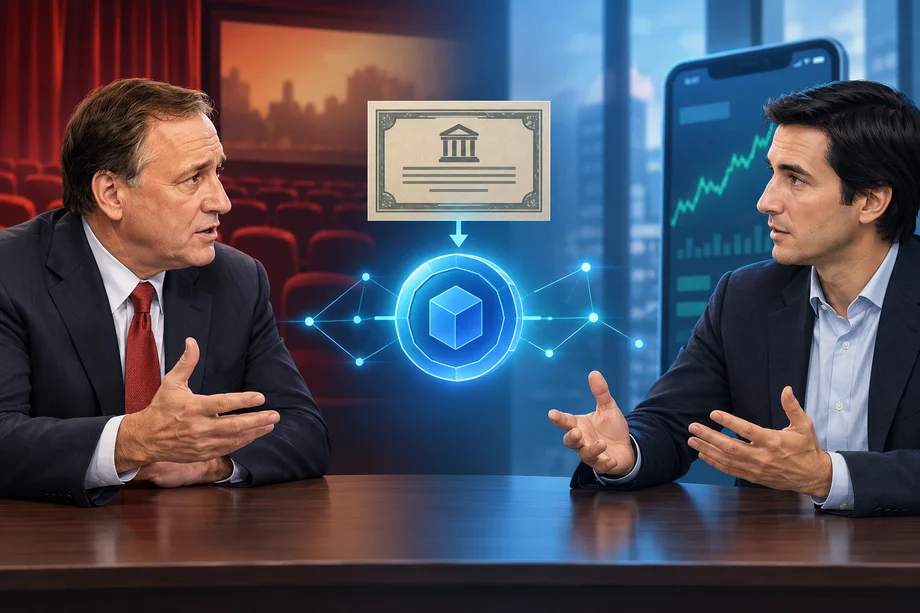
Adam Aron challenges whether shares supporting Robinhood’s AMC-linked tokens could be lent out, while Vlad Tenev insists public companies lack veto power over separate instruments
AMC Entertainment CEO Adam Aron has publicly questioned the one-for-one backing claimed for Robinhood’s stock tokens, asking whether the underlying shares could be lent to short sellers and still support the products as described. The challenge comes amid an ongoing dispute in which Robinhood CEO Vlad Tenev has rejected any automatic right for issuers to block third-party tokens that reference their shares.
Robinhood’s stock tokens are structured as debt securities issued by Robinhood Assets Jersey Limited. Each token is said to be backed by a corresponding share of the referenced equity, held through a U.S.-based custody arrangement. Token holders receive economic exposure to price movements and certain distributions such as dividends, but they do not appear on the company’s shareholder register and hold no voting rights or other legal ownership claims against the issuer of the underlying stock.
Aron Presses on Collateral and Lending
In a series of questions directed at Tenev and Robinhood Chief Legal Officer Dan Gallagher, Aron asked whether a token could still be described as backed one-for-one if the corresponding share were lent to a short seller. He framed the scenario as hypothetical and did not present evidence that such lending currently occurs with the reserve shares. Aron described the overall stock-token model as conflicting with the purpose of public share ownership and raised concerns that customers might misunderstand the rights attached to products promoted with the names and prices of listed companies.
Robinhood’s product documents state that the tokens are backed by underlying securities yet make clear that holders are creditors of the Jersey issuer rather than registered owners of the shares. The company has not published a public reserve register detailing the precise custody and any potential lending of each corresponding share. As of the latest reports, Robinhood had not issued a public response addressing the specific collateral-lending question.
Tenev Rejects Automatic Issuer Veto
Tenev has maintained that public companies control the rights and obligations attached to the shares they issue, but that control does not extend to every independent financial product that references those shares once they are freely transferable. In public comments and a subsequent post, he argued that issuer consent should depend on whether a product alters shareholder rights, creates new obligations for the company or its transfer agent, or changes the authoritative shareholder ledger.
Robinhood uses a third-party model in which a separate instrument is issued and backed by or linked to conventional shares. Tenev compared the structure to unsponsored American depositary receipts, options and other products that can reference publicly traded equities without changing the issuer’s stock or records. He stated that the company selected this approach so it could support many stocks and exchange-traded funds without requiring each referenced company to modify its systems.
No Shareholder Rights and Offshore Structure
Token holders lack voting rights and do not become shareholders of the referenced company. Corporate actions are handled according to the contractual terms set by the Jersey issuer. Robinhood has not publicly detailed how voting power attached to the collateral shares is exercised. The products are not registered under U.S. securities laws and cannot be offered, sold or delivered in the United States or to U.S. persons. Parallel restrictions apply in several other jurisdictions.
Aron previously stated that AMC neither authorized nor endorsed the creation of the AMC-linked token and called on Robinhood to stop offering it. He indicated that the company would consult securities lawyers and raise the matter with regulators. Gallagher responded that Robinhood would not cease the offering and invited AMC to send its lawyers. Tenev separately defended the model in a television interview, reiterating that issuers do not control every separate product built around their stock.
Regulatory and Legal Status Unresolved
No public lawsuit filed by AMC over the stock tokens had been identified. The U.S. Securities and Exchange Commission had not announced an enforcement action involving the AMC-linked product. Staff statements from the agency have distinguished issuer-sponsored tokenized securities from products created by unaffiliated third parties, noting that a linked security may take the form of a debt instrument depending on its terms. Those staff views carry no legal force and do not amend existing securities law.
Robinhood launched the current generation of stock tokens for eligible international customers and has connected the product line with its blockchain network for tokenized assets. The company has indicated interest in eventually offering similar products to U.S. investors once regulatory guidance develops further, while maintaining that the existing instruments remain offshore.
Questions about the precise treatment of reserve shares, the exercise of any associated voting power, and the long-term regulatory treatment of third-party tokenized equity products remain open as the public exchange between the two executives continues.

Disclaimer
This article was generated by AI using information from multiple industry sources. It has not been reviewed or verified by a human editor and may contain inaccuracies, omissions, or misinformation. Readers are encouraged to independently verify any information before making decisions based on its content.Tired of the noise?
Let the bots trade for you.
Trade 24/7, without emotion, with data-driven strategies.
Associated articles

Robinhood CEO Defends Tokenized AMC Shares Against Company Objections
AMC CEO Demands Halt to Robinhood Tokenized Shares as Corporate Feud Escalates
AMC CEO Condemns Robinhood Tokenized Shares as Stock Surges

Robinhood Explores Stock Token Tied to Actively Managed ETF With T. Rowe Price

Binance Wallet Opens Access to PancakeSwap Pre-IPO Token Campaigns
Latest articles
Blockchain Association Presses Congress for Crypto Tax Overhaul Amid Stalled Market Structure Bill
New York AG Seeks $1.37 Billion From NovaTech Founders in Crypto Fraud Case
US Senator Seeks Records on Tether Payments to Firm Tied to Former White House Crypto Adviser

Bitcoin Core Revises Security Policy as AI Tools Simplify Bug Discovery