Newsroom
AMC CEO Condemns Robinhood Tokenized Shares as Stock Surges
4 September, 2026 / News / AI / Tags: amc, robinhood, aron, tokenized, tokens
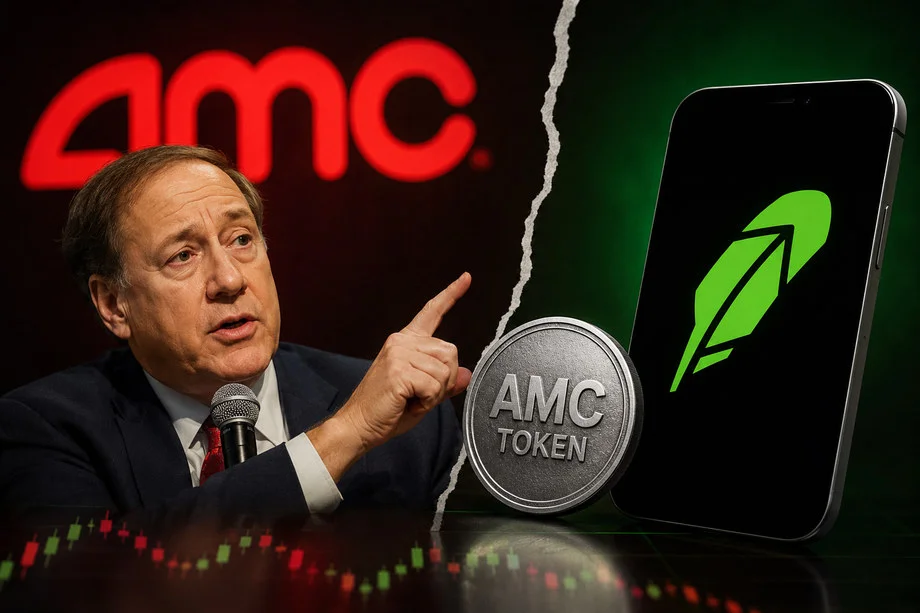
Adam Aron says the theater chain has no link to the synthetic products and is seeking legal review as shares rise sharply in early trading
AMC Entertainment Holdings CEO Adam Aron issued a sharp public rebuke of Robinhood Markets over its tokenized version of AMC shares, declaring that the company had no involvement in the offering and does not approve of it. The criticism, delivered in a post on X, quickly drew attention to the growing market for synthetic equity products that track publicly traded stocks without company authorization.
Aron stated that Robinhood is behind an effort involving tokenized real-world assets, including Stock Tokens tied to AMC. He emphasized that AMC has no connection whatsoever to the product and does not condone it. He described the practice in strong terms, calling it contemptible, outrageous, disgusting, detestable, inexcusable and vile, while questioning how such tokens could be legal given that they are not registered under U.S. securities laws.
AMC plans to instruct outside securities counsel to examine the matter immediately. The episode has revived broader discussion about competing approaches to bringing stocks onto blockchain systems, particularly products that offer economic exposure without conferring ownership or voting rights.
Nature of Robinhood’s Stock Tokens
Robinhood’s Stock Tokens function as derivatives rather than actual shares. They are structured as tokenized debt securities issued by Robinhood Assets (Jersey) Limited. Holders receive economic exposure to the price performance of the underlying U.S. stocks or exchange-traded funds but obtain no legal or beneficial ownership interest in those securities and no rights against the issuing companies.
The products are unavailable to U.S. persons and are offered under frameworks that rely on exemptions for offshore sales. Robinhood states that the tokens cannot be offered, sold or delivered in the United States or to U.S. residents. They exist as ERC-20 assets, enabling transfer on blockchain networks and potential integration into decentralized applications. The brokerage’s European platform has listed tokens linked to more than 190 stocks and ETFs, with continuous trading available during the week.
Robinhood has expanded its tokenization efforts through the launch of its own blockchain, known as Robinhood Chain, an Ethereum Layer 2 network. The infrastructure supports trading of these tokens alongside other onchain activities. Volume linked to tokenized stocks on the network has grown since the rollout earlier this year.
Response and Market Reaction
Robinhood CEO Vlad Tenev replied briefly on X, asking simply what the concern was. The exchange underscores differing views on whether companies should control or approve financial products that reference their share prices.
AMC shares closed the prior session lower before rebounding in subsequent trading. Reports indicated premarket gains of roughly 14 percent, with the stock moving higher overnight in some accounts by as much as 21 percent. The move followed Aron’s comments and the accompanying attention on the tokenized products.
Broader Context of Tokenized Equities
The dispute mirrors an earlier episode involving OpenAI. Last year the artificial-intelligence company publicly rejected Robinhood tokens that referenced its private equity, stating that the instruments were not OpenAI shares and had received neither partnership nor endorsement. Robinhood described those tokens as providing indirect exposure through a special-purpose vehicle.
Different models for tokenized stocks continue to develop across the industry. Some offerings are pure derivatives that track prices. Others hold conventional shares with a custodian and issue tokens backed by those holdings. A further approach involves issuer-sponsored tokenization in which a company places its registered shares directly onchain with its consent. Robinhood has focused primarily on the derivative-style products as part of its international expansion strategy.
Financial firms have pursued tokenized equities because blockchain systems can support around-the-clock trading, faster settlement and wider distribution. At the same time, the products have prompted questions about investor understanding of what is actually being purchased and about the rights, if any, that issuers retain over the use of their corporate names in such instruments.
Aron’s intervention places a publicly traded company at the center of the debate that previously centered more heavily on private firms. AMC’s decision to engage outside counsel signals that at least some corporate issuers intend to scrutinize these offerings more closely as the market for onchain equity exposure continues to expand.

Disclaimer
This article was generated by AI using information from multiple industry sources. It has not been reviewed or verified by a human editor and may contain inaccuracies, omissions, or misinformation. Readers are encouraged to independently verify any information before making decisions based on its content.Tired of the noise?
Let the bots trade for you.
Trade 24/7, without emotion, with data-driven strategies.
Associated articles
AMC CEO Demands Halt to Robinhood Tokenized Shares as Corporate Feud Escalates

Robinhood CEO Defends Tokenized AMC Shares Against Company Objections
AMC CEO Questions Robinhood Stock Token Backing as Broker Rejects Issuer Control
Crypto.com Launches Tokenized Derivatives for 1,500 U.S. Stocks and ETFs

LSE Partners with Payward to Tokenize 100 Largest UK Stocks for Global Onchain Access
Latest articles
Blockchain Association Urges Clarity on DeFi and Stablecoin Rules Under GENIUS Act
XRP Launches Official X Account, Jointly Managed by Ripple and XRPL Foundation

ESMA Expands MiCA Register to 375 Providers as BingX, YouHodler and Openbank Join

France Narrowly Approves Crypto-to-Stablecoin Tax from 2027