Newsroom
AMC CEO Demands Halt to Robinhood Tokenized Shares as Corporate Feud Escalates
5 September, 2026 / News / AI / Tags: amc, robinhood, aron, tokens, gallagher
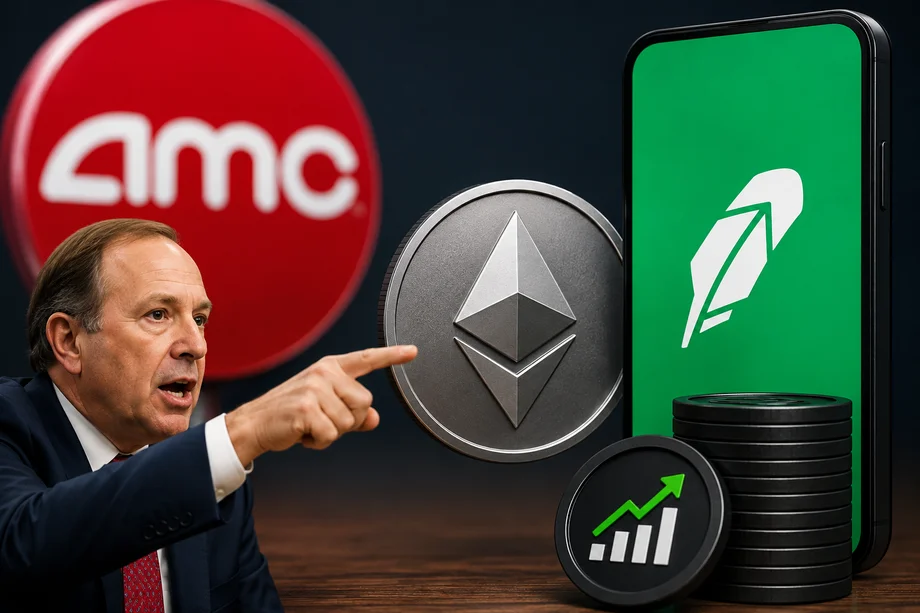
Adam Aron calls the products contemptible and threatens SEC action after discovering unauthorized AMC stock tokens on Robinhood Chain; brokerage refuses and stands by its offerings
AMC Entertainment CEO Adam Aron launched a sharp public attack on Robinhood after learning the brokerage had issued tokenized versions of AMC stock without the cinema chain’s knowledge or approval. The dispute, which unfolded across social media posts, has drawn attention to the legal status of synthetic equity products that track public company shares while granting holders none of the rights of traditional ownership.
Aron’s Strong Response to Unauthorized Tokens
Aron stated that AMC had no connection to or approval of the tokenized AMC shares offered through Robinhood. He described the practice as “contemptible, outrageous, disgusting, detestable, inexcusable, vile” and questioned how such instruments could be legal. The company has instructed outside securities counsel to examine the matter and plans to raise concerns with the U.S. Securities and Exchange Commission.
In follow-up comments, Aron characterized the situation as almost existential for public companies. He argued that AMC spends millions of dollars each year on SEC compliance, filings, audits and legal obligations, while Robinhood had created parallel economic exposure from an offshore jurisdiction without those costs or accountability. Aron said the tokens could undermine a company’s control over capital raising, confuse investors about shareholder rights and create distrust in financial markets.
He formally called on Robinhood to cease trading of AMC stock tokens and indicated the company would explore whether it could compel a halt.
Robinhood Rejects the Demand
Robinhood CEO Vlad Tenev responded to Aron’s initial criticism by asking, “What’s the concern?” The brokerage’s chief legal officer, Dan Gallagher, a former SEC commissioner, later rejected the cease demand. Gallagher wrote that Robinhood knows U.S. securities laws and would not stop, inviting AMC to send its lawyers so they could be educated on the matter. Tenev reinforced the position, stating that the company stands behind its Stock Tokens.
Robinhood has made clear it has no intention of removing the AMC-linked product or similar offerings for other companies.
How the Stock Tokens Are Structured
Robinhood’s Stock Tokens are issued by Robinhood Assets (Jersey) Limited, a Channel Islands affiliate. They are structured as tokenized debt securities rather than shares of the underlying companies. Holders receive economic exposure to the price movements of the referenced stock or ETF but obtain no legal or beneficial ownership, no voting rights and none of the shareholder protections under U.S. securities law.
The tokens are not registered under the U.S. Securities Act and cannot be offered, sold or delivered to U.S. persons. Restrictions also apply in certain other jurisdictions including Canada, the United Kingdom and Switzerland. Robinhood states the tokens are backed one-for-one by underlying shares held with a licensed custodian, with redemption available after identity and anti-money laundering checks. Corporate actions such as dividends and stock splits are handled through on-chain adjustments.
Robinhood Chain, the proprietary blockchain supporting these products, went live on July 1. More than 190 companies have been tokenized through the Jersey entity. The products trade continuously, including when traditional U.S. equity markets are closed.
Market Reaction and Token Price Volatility
AMC shares rose nearly 21 percent in overnight trading to about $3.07 following Aron’s posts. The listed stock later closed near $2.65 after a more conventional session.
Separately, the AMC-linked token on Robinhood Chain experienced extreme volatility. It briefly traded as high as $18.04 while the underlying shares remained below $3, before retreating toward parity as additional tokens entered circulation and arbitrage activity increased. One liquidity pool recorded more than $10 million in volume during the hour of the spike. Outstanding token supply expanded significantly over a short period, helping narrow the premium.
The episode illustrated both the continuous trading capability of the on-chain instruments and the potential for temporary disconnects from the cash equity market.
Broader Questions for Tokenized Equities
The confrontation has focused attention on a core unresolved issue in the growing market for tokenized stocks: the extent of control public companies have over third-party instruments that reference their shares. Robinhood’s model relies on an offshore structure that places issuance outside U.S. securities registration requirements. Other approaches involve holding actual shares in custody and issuing tokens backed by them, or issuer-sponsored tokenization with the company’s direct participation.
Tokenized equity value has expanded rapidly, reaching several billion dollars across multiple platforms. Robinhood ranks among the larger providers by number of assets and reported value. Industry participants have noted that consent and registration questions are likely to shape which models endure as regulators examine the space.
An SEC staff statement earlier in the year distinguished between issuer-sponsored tokenized securities and those created by unaffiliated third parties. The latter may not confer ownership interests or direct claims against the referenced company and can introduce additional risks tied to the token provider. An SEC roundtable on 24-hour trading, scheduled for mid-September and involving major market participants including Robinhood, has taken on added significance amid the dispute.
No formal lawsuit or enforcement action had been announced at the time of the latest exchanges. Aron has framed the products as creating a synthetic parallel market that operates without the obligations borne by U.S. public companies. Robinhood maintains the instruments are properly structured under the applicable offshore framework and continues to offer them.

Disclaimer
This article was generated by AI using information from multiple industry sources. It has not been reviewed or verified by a human editor and may contain inaccuracies, omissions, or misinformation. Readers are encouraged to independently verify any information before making decisions based on its content.Tired of the noise?
Let the bots trade for you.
Trade 24/7, without emotion, with data-driven strategies.
Associated articles

Robinhood CEO Defends Tokenized AMC Shares Against Company Objections
AMC CEO Condemns Robinhood Tokenized Shares as Stock Surges
AMC CEO Questions Robinhood Stock Token Backing as Broker Rejects Issuer Control
Crypto.com Launches Tokenized Derivatives for 1,500 U.S. Stocks and ETFs

Robinhood Explores Stock Token Tied to Actively Managed ETF With T. Rowe Price
Latest articles

SkyAI Exits Solana Holdings Completely, Launches $201 Million Share Buyback
Strategy Buys 267 Bitcoin and Raises Preferred Share Buyback Cap to $3 Billion

Dormant 2013 Bitcoin Wallets Shift Over $67 Million After More Than a Decade

Binance Rolls Out AI Pro Tool for Chat-Based Automated Trading Strategies